REVIEW · MONTREAL
Exclusive Tour of the Montreal Olympic Games by MTL76
Book on Viator →Operated by Le Montréal olympique · Bookable on Viator
You’ll walk the Olympic story in 90 minutes. This tour takes you from the Olympic cauldron and rings to the places that shaped the 1976 Montreal Games, with smart context and lively guiding.
I especially love how the route keeps moving, so you never feel stuck reading signs. And I really like that the guide’s presentation is energetic and clearly rooted in Olympic culture, not just facts.
The one thing to plan around: the Olympic Stadium can’t be entered right now due to major renovations, so you’ll see it from outside.
In This Review
- Key Highlights to Look For
- A 90-Minute Olympic Walk in Montreal Olympic Park
- Starting Point at 2705 Bd Pie-IX: Getting Oriented Quickly
- The Olympic Cauldron and Rings: The Games in Context
- Esplanade Stories: How Montreal Secured the Games
- The Former Athletes’ Village: Political Stakes and Twists
- Olympic Stadium From the Outside: Secrets, Construction, and Legacy
- Nadia Comaneci Square: Performances You’ll Remember
- Finishing at the Olympic Rings: Photos and a Clean Wrap-Up
- Price and Value: What $22.41 Really Buys You
- Who This Tour Suits Best (And Who Might Skip It)
- Should You Book This Exclusive Tour?
- FAQ
- How long is the Exclusive Tour of the Montreal Olympic Games?
- Is the tour offered in English?
- What’s the group size limit?
- Can I enter the Olympic Stadium during the tour?
- Do I need to print a ticket?
- Where do I meet and where does the tour end?
- Is there free cancellation?
Key Highlights to Look For
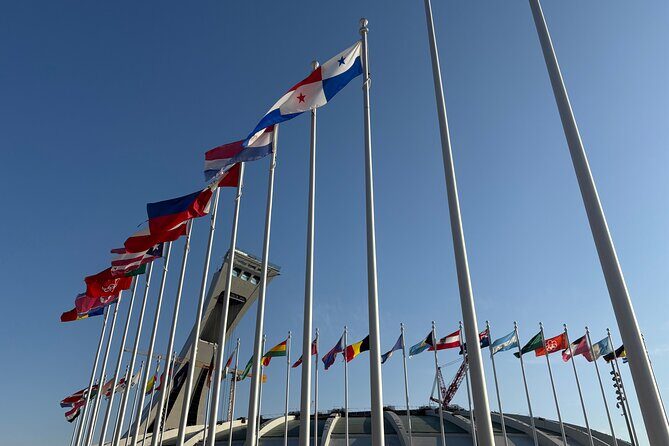
- Small group feel (up to 10 people) makes it easier to ask questions and keep the pace comfortable
- Photo-friendly finish at the Olympic rings so you end with something you can actually use
- Guide-led stop-by-stop storytelling ties each location to the bigger picture of the Games
- Jean Drapeau and Montreal’s bid story gives you the local politics behind the spectacle
- Nadia Comaneci Square focus helps you connect performances with the lasting reputation of the event
A 90-Minute Olympic Walk in Montreal Olympic Park
This is one of those tours that respects your time. About 1 hour 30 minutes is long enough to make the Olympic Park meaningful, but short enough that it fits easily into a half-day plan in Montreal.
I like that it’s a walking experience with clear waypoints, rather than a “stand in one spot and listen” format. You get to see the Olympic spaces where the story happened, and your guide stitches it together with the kind of context that makes the whole place click. If your brain loves connections—city ambition, sports drama, and big ideas—this tour plays to that.
For value, the price is $22.41 per person, and admission is included along with fees and taxes in your reservation. That matters because it’s not one of those experiences where you budget for extras once you arrive. You’ll also get a mobile ticket, which is handy in a city where you’ll probably be juggling phone navigation and metro times.
One practical note: the tour is offered in English, and the group size is capped at 10 travelers. That cap is a real benefit for pacing and questions.
If you're still narrowing it down, here are other tours in Montreal we've reviewed.

Starting Point at 2705 Bd Pie-IX: Getting Oriented Quickly
You’ll meet at 2705 Bd Pie-IX, Montréal, QC H1V 2E8. That’s close to the Olympic Park area, so you’re not wasting your energy commuting before the tour even begins.
The end point is Aréna Maurice-Richard, 2800 Rue Viau, Montréal, QC H1V 3V4. This matters because it affects your next move. If you’re planning a follow-up activity, it’s nice to know you may finish near an arena area rather than back where you started.
And here’s a detail I appreciate: the guide can escort you back toward the original meeting point, to the nearest metro station, or help point you to your next activity. When a tour ends in a different place, that kind of guidance keeps the day from feeling like it dropped you into a new map with no instructions.
The Olympic Cauldron and Rings: The Games in Context
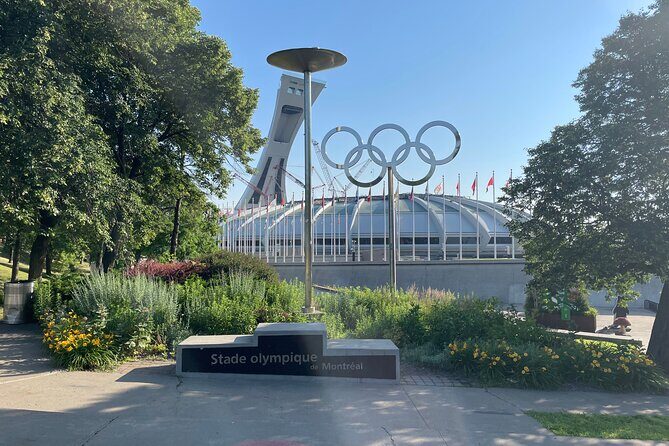
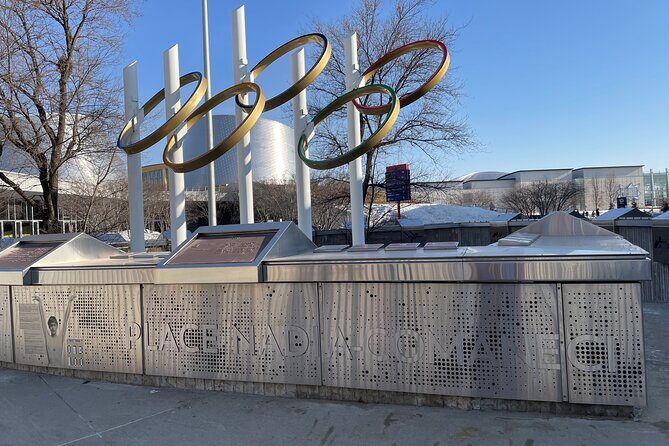
Your tour starts right where the Olympic symbolism is loud and clear: next to the Olympic cauldron and rings. This first stop is the right move because it sets the “why” before you move into the “where.”
Your guide shares history from the ancient origins of the Games to the modern evolution. That brief framing helps you read the rest of the Olympic Park with better eyes. You stop seeing it as just impressive architecture and landscaping, and start understanding it as a place designed for messages—competition, identity, and international attention.
This is also where the tour’s tone clicks. The guide is described as dynamic and passionate, and that matches what you want in a 90-minute walk. Olympic sites can feel big and distant if the guide is flat. Here, the energy helps you stay engaged while still learning in a structured way.
If you’re the type who likes to understand how a city sells an event to the world, this opening will give you the foundation.
Esplanade Stories: How Montreal Secured the Games
Next comes the Esplanade of the Olympic Park, where you’ll hear how Montreal—and then-Mayor Jean Drapeau—managed to secure the Games.
I like this stop because it shifts the focus from the athletes to the people who made the event possible. It turns the Olympic Park into a story about ambition, planning, and decisions that happened long before the first medal was awarded.
Even if you already know Montreal hosted the Olympics, the “how did they pull it off” angle is what makes this more than sightseeing. You start noticing the park as a long-term bet by a city, not just a temporary venue.
And it’s a smart rhythm choice, too. After the opening symbolism, this stop gives you a grounded local anchor.
The Former Athletes’ Village: Political Stakes and Twists
You’ll stop in front of the former athletes’ village, and this is where the tour leans into the human reality of hosting major events.
The context here is marked by political stakes and unexpected twists. That phrasing is important because it doesn’t pretend sports history is isolated from the world around it. You get a sense that the Games unfolded in a tense, high-attention atmosphere—one where outcomes and narratives were shaped by more than training schedules.
This stop is valuable for two reasons. First, it helps you picture what the athlete experience might have felt like, beyond TV highlights. Second, it connects the physical spaces of the Olympic Park to the broader forces that orbit big international events.
If you enjoy stories that connect sport to society, you’ll probably find this one of the most memorable sections of the walk.


Olympic Stadium From the Outside: Secrets, Construction, and Legacy
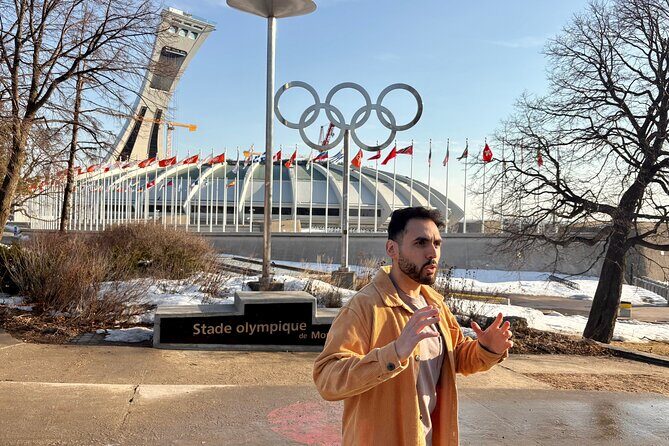
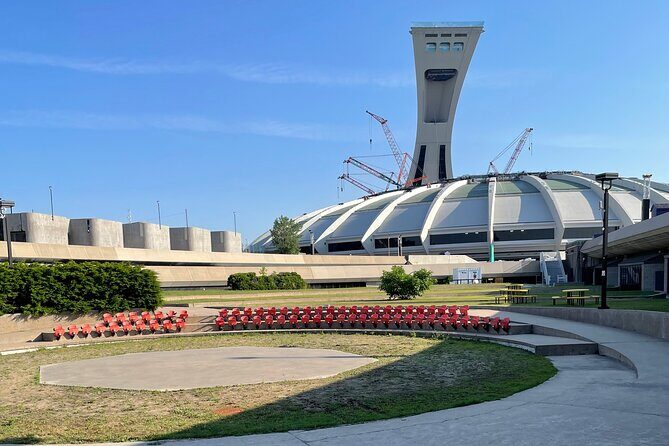
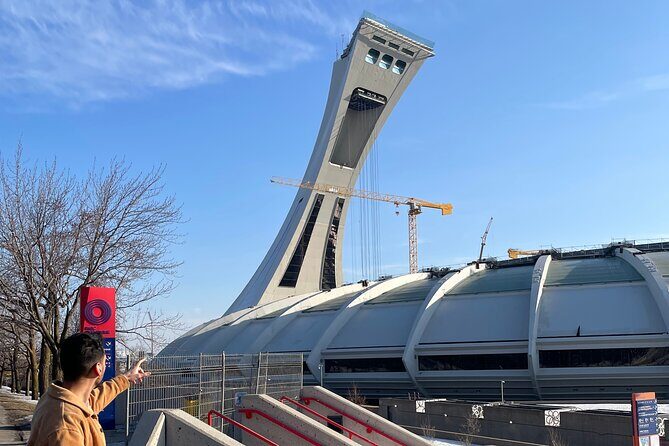
At the foot of the Olympic Stadium, you’ll learn surprising anecdotes and practical details about its construction and long-term legacy.
There’s one major consideration: since the stadium is undergoing significant renovations, you cannot enter. You’ll see it from outside, and your guide will still work the stop into the story so you understand why the structure matters.
For me, this is still a worthwhile stop. Seeing the stadium in person gives you scale and perspective that photos often miss. Even without entry, you can appreciate how the building was designed to function as a signature icon for the event and a lasting Montreal landmark.
Just go in with the right expectation: treat this as a “watch and listen” architectural moment, not a stadium tour.
Nadia Comaneci Square: Performances You’ll Remember
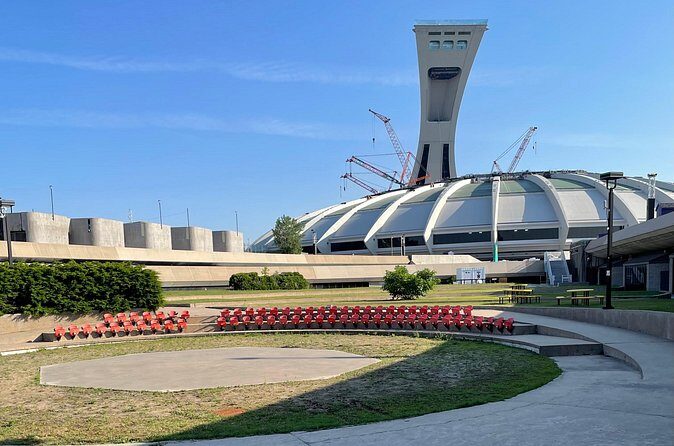
Then you reach Nadia Comaneci Square, a stop built around unforgettable performances that helped define the Games.
This is one of those locations where the name alone pulls you toward a bigger story, and your guide adds the context to connect why those performances resonated. It’s not only about the athletes; it’s about how a moment becomes part of Olympic legend.
I like that this stop gives a clear payoff after the more political and structural parts of the tour. You’ve been learning how the city organized and how the event sat inside a world context—and now you return to the sports side of what the Olympics are actually for.
If you’re a casual Olympics fan, this is where the tour can turn into something personal. If you’re a serious fan, it’s a focused way to connect names and locations.
Finishing at the Olympic Rings: Photos and a Clean Wrap-Up
The tour ends in front of the Olympic rings, where you can capture photos that actually match the story you just heard.
Finishing here makes sense. The rings act like a final bookmark: you start with the symbolism, you move through the context, and then you close with the iconic visuals. It’s also a naturally satisfying place to stand because it’s easy to frame and quick to capture from multiple angles.
If you want help after the tour, the guide can escort you back toward the meeting point or help you reach the nearest metro station. That kind of support is useful in Montreal, where a short walk can turn into a long one if you’re tired and hungry.
Price and Value: What $22.41 Really Buys You
At $22.41 per person, this is a straightforward walking tour with a few smart advantages baked in.
First, admission is included and all fees and taxes are covered in your reservation. Second, you’re not just paying for access—you’re paying for interpretation: a guide who keeps the story moving from the ancient origins of the Games to what mattered in Montreal.
And third, the small group size (up to 10 people) changes the experience. You’re more likely to get quick answers, keep the pace comfortable, and feel like you’re part of a conversation rather than an audience.
If you’re deciding between this and another Olympic-related option, I’d compare the kind of learning you want. A museum or self-guided wander is great if you want total flexibility. But if you want the Park to make sense in a short time, a guided route is usually the best value.
Who This Tour Suits Best (And Who Might Skip It)
This tour is a strong match if you:
- Like guided walking tours that explain what you’re seeing
- Want context for the 1976 Montreal Olympics beyond the medal stories
- Prefer a group capped at 10 for a more personal feel
- Enjoy learning about how a city sells and builds for a massive event
It might be less ideal if you:
- Expect to enter the Olympic Stadium (you won’t, due to renovations)
- Hate walking or standing outdoors for short stops (it’s an outdoor route throughout)
- Want a long, museum-style experience with lots of indoor exhibits
For most people, though, this is a very practical way to see Olympic Park and leave with a better mental map.
Should You Book This Exclusive Tour?
I’d book it if your goal is simple: understand the Montreal Olympics on your feet, in an hour and a half, with a guide who clearly cares. The best reason to go is the way the route connects places that look similar in photos—rings, cauldron, stadium area, squares—into a story with cause and effect.
Even with the stadium entry limitation, the tour keeps its focus. You’ll get the Olympic symbolism, the Montreal ambition story tied to Jean Drapeau, the athlete village context shaped by political pressure and surprises, and a performance-focused stop at Nadia Comaneci Square. Then you finish where it all began for photos.
One more small tip: because it’s described as being booked around 26 days in advance on average, I wouldn’t leave it to the last minute if your schedule is tight.
FAQ
How long is the Exclusive Tour of the Montreal Olympic Games?
It runs for about 1 hour 30 minutes.
Is the tour offered in English?
Yes. The tour is offered in English.
What’s the group size limit?
The tour has a maximum of 10 travelers.
Can I enter the Olympic Stadium during the tour?
No. Due to significant renovations, it will not be possible to enter the Olympic Stadium.
Do I need to print a ticket?
No. You’ll use a mobile ticket.
Where do I meet and where does the tour end?
You start at 2705 Bd Pie-IX, Montréal, QC and end at Aréna Maurice-Richard, 2800 Rue Viau, Montréal, QC.
Is there free cancellation?
Yes. You can cancel for a full refund if you cancel up to 24 hours in advance.