REVIEW · MONTREAL
The Original Old Montréal Walking Tour by Guidatour
Book on Viator →Operated by Guidatour · Bookable on Viator
Old Montréal has a plot twist in every corner. This guided walk turns the streets around Notre-Dame Basilica, Place Royale, and Bonsecours Market into a clear, human story you can follow fast. It’s a smart way to get your bearings without spending your whole day hunting for what matters.
I love the small group size (around 15, max 16). It keeps the pace friendly and makes it easy to ask questions as you go. I also like that the tour is led by a 100% guaranteed official city-certified guide, so you’re not stuck with vague facts.
One consideration: the tour focuses on the basilica’s exterior architecture, and it does not go inside. If you want interior time, plan a separate stop.
In This Review
- Key Highlights You’ll Notice Right Away
- Two Hours of Old Montréal: What This Walk Covers
- Start at 206 Pl. d’Youville: Easy to Find, Central to Begin
- Stop 1: Old Montréal and the Orientation Moment
- Place Royale: The Historic Square Feel You’ll Want to Return To
- Notre-Dame Basilica Exterior: Gothic Revival Details Without Interior Time
- Place d’Armes to the Royal Bank: French Heritage and City Power
- Montreal City Hall and Bonsecours Market: Two Landmarks Built to Last
- Historic Square Moments and St Paul Street Photo Energy
- Why the Best Part Is the Guide: Ask, Compare, Then Move On
- Group Size, Pace, and Who This Tour Fits Best
- Price and Value: $26.34 for an Official Guide in the Core
- Should You Book This Old Montréal Walking Tour?
- FAQ
- How long is the Original Old Montréal Walking Tour?
- Is the tour offered in English?
- Does the tour go inside Notre-Dame Basilica?
- Where do I meet for the tour?
- Where does the tour end?
- How large is the group?
- Does the tour run year-round and in bad weather?
- Are tips included in the price?
- What is the cancellation window for a refund?
Key Highlights You’ll Notice Right Away
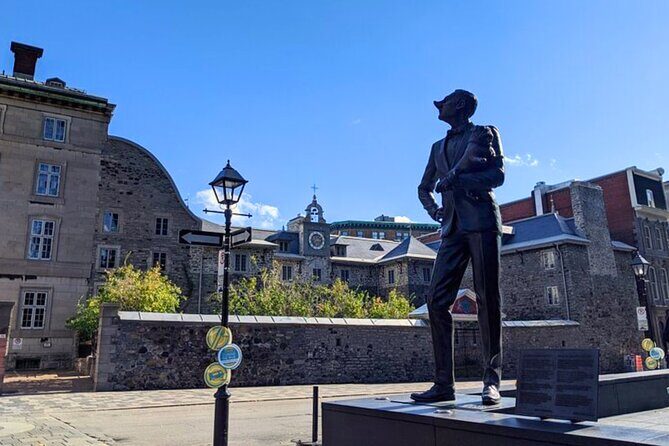
- Official city-certified guides: You get structured explanations, not just a casual stroll.
- A tight 2-hour route: Ideal when time is short but you still want the big picture.
- Core Old Montréal landmarks: Expect stops tied to major squares, streets, and civic buildings.
- Exterior-first architecture viewing: Great for photos, with clear prompts for what to look for.
- Local tips at the end: Ask your guide what to do next while the history is fresh.
- Built for real weather: Rain or shine, and it runs year-round.
Two Hours of Old Montréal: What This Walk Covers
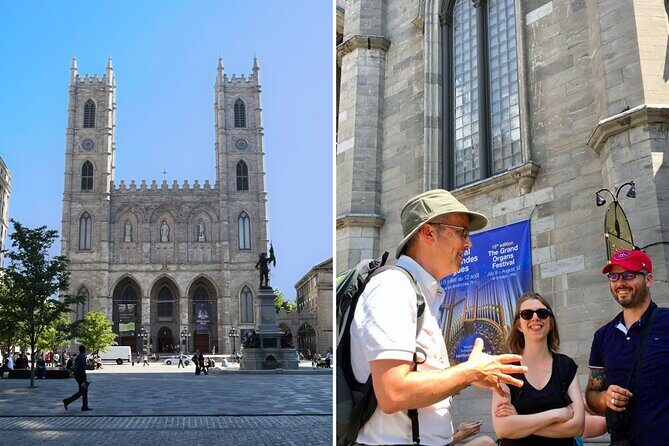
This is an orientation-style walking tour. In about 2 hours, you’ll move through Old Montréal’s most recognizable spaces and learn what connects them: power, language, trade, and the city’s shifting identities.
The route is designed for people who want a guided “map in motion.” You’re not just taking in buildings; you’re getting the why behind them. As you pass key spots like Notre-Dame Basilica and public squares, your guide frames what you’re seeing in plain terms.
It’s also an excellent format if you travel with limited energy. The group stays small, the stops are short, and the pace works well for first-time visitors who don’t want to waste time.
Other Old Montreal tours we've reviewed in Montreal


Start at 206 Pl. d’Youville: Easy to Find, Central to Begin
You meet at 206 Pl. d’Youville, Montréal, QC H2Y 2B4. That’s a central Old Montréal location, close enough to major sights that you won’t spend half your tour crossing town.
There’s no hotel pickup, so you’ll want to show up a few minutes early and start warm. The tour doesn’t mention any special gear, but it’s smart to dress for the weather. It runs rain or shine, and Old Montréal streets can get slick when it pours.
One practical win: you’ll have a mobile ticket. That cuts down on paper fuss and makes it easier to keep moving.
Stop 1: Old Montréal and the Orientation Moment
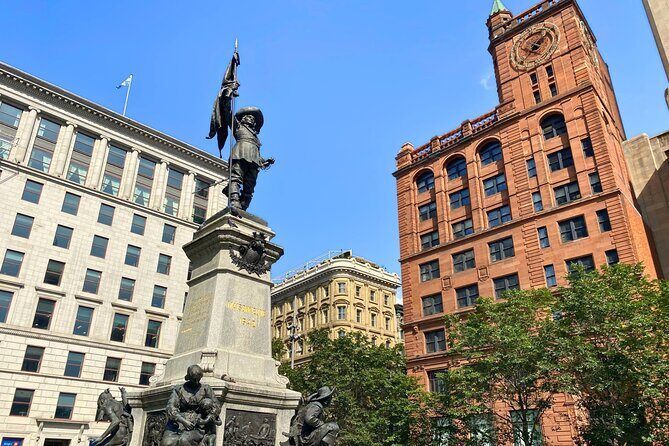
The first stage is simply getting oriented in Old Montréal. You’ll spend the opening portion walking through the area’s sights and getting a sense of where everything sits relative to each other.
This matters more than it sounds. Once you understand the layout, the rest of the trip becomes easier. Squares make sense, streets connect logically, and you’ll know what to revisit later when the day is calmer.
If you’re visiting for the first time, this early framing helps you stop treating Old Montréal like a random cluster of photo spots. It becomes a walk with structure.
Place Royale: The Historic Square Feel You’ll Want to Return To
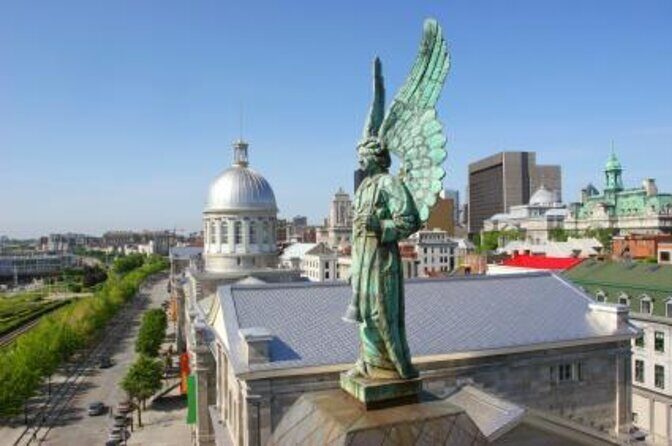
One of the best early stops is Place Royale. This is Old Montréal’s historic core in a very walkable form: a square where centuries of stories overlap—markets, civic life, and royal-era references that shaped the neighborhood.
What I like about this stop is that it’s not just about dates. Your guide’s explanations help you read the square like a living space. Even if you’ve seen similar European plazas before, Place Royale feels Montreal-specific—less “theme park,” more “this is where real decisions were made.”
This is also a good moment to slow down, take a few photos, and watch the rhythm around you. Your guide’s stories give you a lens for what you’re seeing.
Notre-Dame Basilica Exterior: Gothic Revival Details Without Interior Time
The tour includes a close look at Notre-Dame Basilica’s Gothic Revival architecture, but it does not go inside.
That can be a deal-breaker if you’re hoping for interior viewing. Still, I think exterior-focused architecture tours work well because you get time to notice proportions, stonework style, and how the building anchors the surrounding streetscape.
A useful way to think about this: the tour is designed to keep momentum. You’ll cover multiple landmarks in 2 hours, instead of spending the whole window inside one place. If you want the interior experience too, use the tour to decide whether that’s a must-do on your own later.
Other walking tours we've reviewed in Montreal





Place d’Armes to the Royal Bank: French Heritage and City Power
As you roam, you’ll connect Old Montréal landmarks like Place d’Armes and the Royal Bank area to the larger story of Montreal.
This is where the tour often feels most “Montreal.” You hear about French heritage and how the city’s identity shaped what happened on these streets. The guide also helps you understand what you’re looking at when it comes to civic and economic influence, not just architecture.
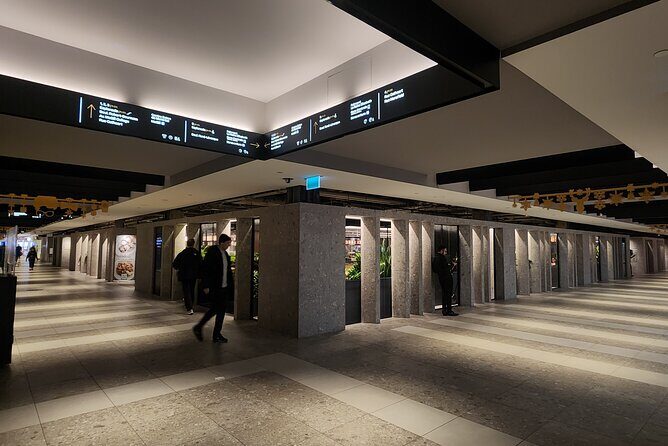
One standout detail from guide storytelling: near the bank area, some guides include a sneak peek reference to the subterranean passages. Even if you don’t walk into an underground section, it’s a useful concept for understanding why Montreal has this hidden layer below street level.
Montreal City Hall and Bonsecours Market: Two Landmarks Built to Last
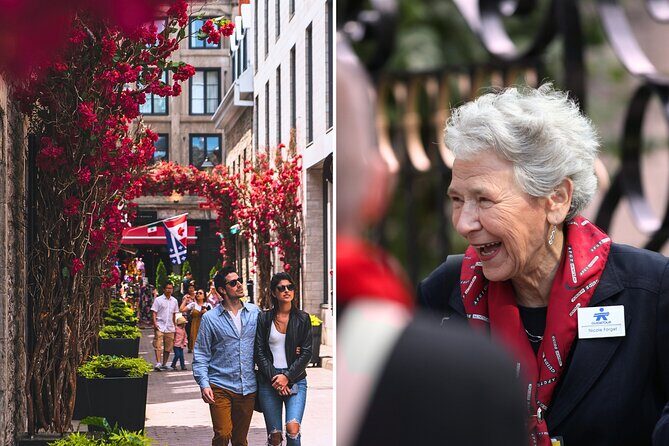
Next up are Montreal City Hall and Bonsecours Market, and both are worth your attention for different reasons.
City Hall gives you a clear look at Montreal’s civic presence. It’s the kind of building that helps you understand how authority and identity were visibly expressed in the city’s public spaces. Your guide points out what to notice so it doesn’t feel like just another impressive façade.
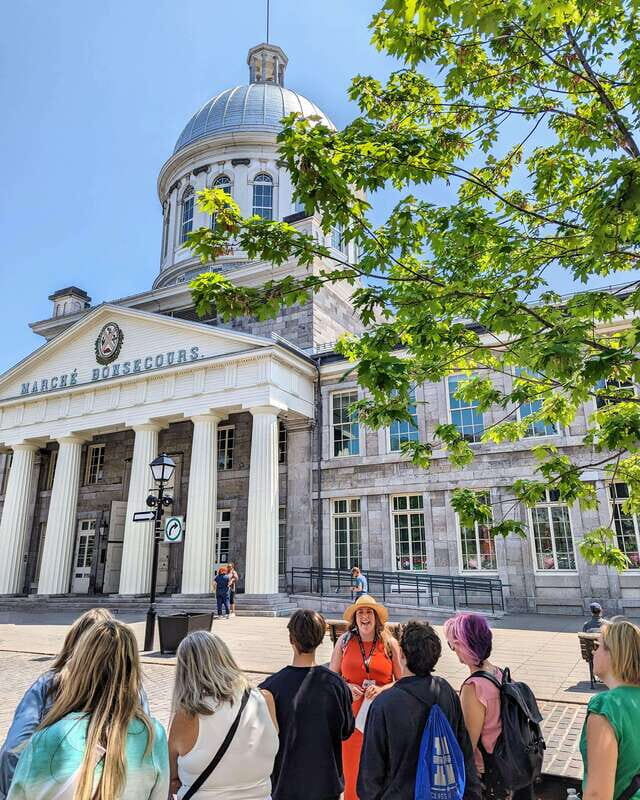
Then there’s Bonsecours Market. This is a signature Old Montréal stop, and it has a lot of staying power. It’s been Montreal’s main public market for more than 100 years, and that longevity makes it feel less like a souvenir photo stop and more like a place with a job to do.
If you like architecture and want something practical, this market stop is a strong payoff. It’s one of the easiest places to turn your history knowledge into real-world ideas for the rest of your visit—snacks, browsing, and a good sense of what’s still active in the area.
Historic Square Moments and St Paul Street Photo Energy
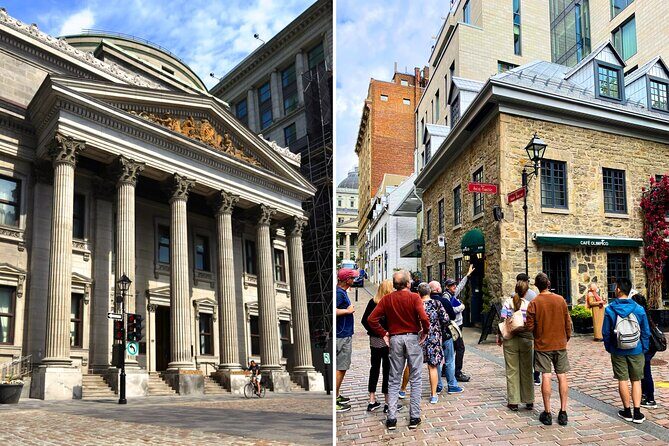
After the market, you’ll see a lively historic square known for street performers, charming terraces, and strong views toward the Old Port and City Hall area. This is the part of the tour where the atmosphere becomes part of the lesson.
St Paul Street is the final stretch highlight. It’s one of the most picturesque streets in Montreal, and you’ll get a guided walk along it that makes the street feel intentional, not just scenic.
If you’re a photographer, ask your guide for quick photo tips as you go. You’ll get more usable shots if you know what angle or detail to target instead of taking everything from one spot.
Why the Best Part Is the Guide: Ask, Compare, Then Move On
The most praised element here is the guide experience—people consistently mention excellent delivery, lots of details, and a guide who makes the group feel included.
You’ll also find that guides vary in style, but certain names show up with strong notes: David is highlighted for being a delight and sharing thoughtful context; Angelina is praised for keeping history interesting while answering group questions; Pierre and Pierre G. come up for passion and strong insight; François stands out for storytelling and multilingual skills (English, French, and even Spanish have been noted); Sarah is described as funny and kind; JoAnne and Thomas are both mentioned for strong historical context and smooth pacing; Fred also gets called out for being a wonderful guide.
Even when guides differ, the tour’s goal stays the same: you leave with a clearer understanding of where things are and what to do next. Don’t just listen—use the time. Ask your guide what to see if you only have 6 hours left, what streets are best at night, and what local experience fits your pace.
Group Size, Pace, and Who This Tour Fits Best
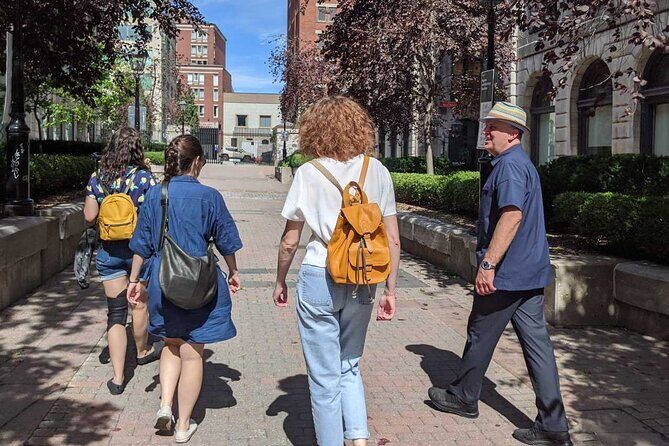
This is a small-group walk, planned for about 15 visitors. That number is not random. It’s what lets you hear the guide clearly, move as a unit, and still ask questions without feeling like you’re interrupting.
The tour also works well across ages. People mention it being enjoyable for families, and the structure makes it easy to follow even if you’re traveling with kids or anyone who gets restless on long walks.
It’s also a good choice for you if you’re:
- visiting for the first time and want quick orientation
- short on time but want more than a basic highlights route
- into architecture, language context, and how the city evolved
- the type who likes turning the walking tour into a plan for later
The one group I’d steer away from is the person who only cares about interiors. Since the basilica stop is exterior-only, you’ll want to add a separate church visit if that’s your priority.
Price and Value: $26.34 for an Official Guide in the Core
At $26.34 per person for about 2 hours, this is priced like an efficient orientation experience. You’re paying for a guided interpretation of the neighborhood’s major landmarks, plus an official city-certified guide.
The value part is not only the cost. It’s what you get for your time: a coherent route, stops that connect into one story, and the chance to ask practical questions while you’re already in the center of Old Montréal. For many people, that’s the difference between wandering for hours and knowing exactly what to prioritize next.
Also, the tour is offered in English, with confirmation received at booking time. If you’re planning around a tight schedule, note that it’s often booked in advance (on average, about 15 days ahead). If your dates are fixed, booking early is the smart move.
Should You Book This Old Montréal Walking Tour?
If you want a quick, well-structured Old Montréal overview, I’d book it. The route hits the major landmarks you’ll keep hearing about later—Place Royale, Notre-Dame Basilica’s exterior architecture, Place d’Armes, Montreal City Hall, and Bonsecours Market—and it does it in a way that helps the neighborhood make sense.
Skip it only if your top goal is interior access (because the basilica stop is exterior-only) or if you hate walking for 2 hours even in light rain. If you can handle a weather-dressed stroll, this is one of the easiest ways to get grounded and then explore the rest of the city with confidence.
FAQ
How long is the Original Old Montréal Walking Tour?
The tour lasts about 2 hours.
Is the tour offered in English?
Yes, the tour is offered in English.
Does the tour go inside Notre-Dame Basilica?
No. The tour admires the basilica’s Gothic Revival architecture from the outside, and it does not go inside.
Where do I meet for the tour?
You meet at 206 Pl. d’Youville, Montréal, QC H2Y 2B4, Canada.
Where does the tour end?
The tour ends at Bonsecours Market Street (Bonsecours Market St, Montreal, QC H2Y 1J3, Canada).
How large is the group?
The experience is sized for about 15 visitors, with a maximum of 16.
Does the tour run year-round and in bad weather?
Yes. It operates year-round and goes on rain or shine.
Are tips included in the price?
Tips aren’t mandatory, but they’re a nice way to show appreciation for your guide.
What is the cancellation window for a refund?
You can cancel for a full refund up to 24 hours in advance. If you cancel less than 24 hours before the start time, the amount paid isn’t refunded.