REVIEW · MONTREAL
Old Montreal Small-Group Walking Tour | Max 10 | by MTL Detours
Book on Viator →Operated by MTL Detours · Bookable on Viator
Old Montreal gets easier when streets don’t behave. This small-group Old Montreal walking tour (max 10) gives you a guided path through the city’s key sights in about two hours, with practical food-and-culture recommendations that help you plan the rest of your trip. One thing to consider: it’s mostly outdoors on uneven cobblestones and stairs, so winter cold (or summer heat) is real.
I like that the tour is built for first-timers and people who want context fast. You’ll hear stories that connect architecture, government, religion, and trade—plus you get a paper handout with places to eat, see, and explore, along with a small local treat and a parting gift. On colder days, reviews mention guides lining up warm indoor spots, and even hand warmers from guides like Louise.
For me, the biggest trade-off is simple: there isn’t much sitting time. Even though it’s a short tour, you’ll be walking and standing for most of it, and the route requires a steady pace. If you have mobility limits, this one may be too much.
In This Review
- Key highlights to know before you go
- Why Old Montreal feels confusing without a guide
- Marché Saint Laurent to Bonsecours Market: how the route starts and ends
- The 2-hour walking route: what you’ll see and why it matters
- The silver-domed civic landmark: why it mattered to everyday Montreal life
- Montréal’s oldest street: cobblestones, façades, and the pace of the past
- Place Jacques-Cartier area: the Old Port viewpoint and the square’s energy
- A grand Second Empire building: reading a style like a clue
- Outside-only at Montréal’s most famous landmark: why the exterior is still worth it
- Canada’s oldest bank: when Montreal became a financial center
- The former governor’s residence: colonial power in plain sight
- The Sailors’ Church: why a chapel is connected to the Old Port
- The birthplace of Montréal: hearing how the city started
- Canada’s Wall Street: the former financial district in walking form
- What makes the guide experience work: stories, pace, and small details
- Price and value: what $44.40 buys you in real terms
- Timing and weather: how to dress so the tour stays fun
- Who should book this tour (and who should skip it)
- Tips to get the most from your 2 hours
- Should you book MTL Detours Old Montreal Walking Tour?
Key highlights to know before you go
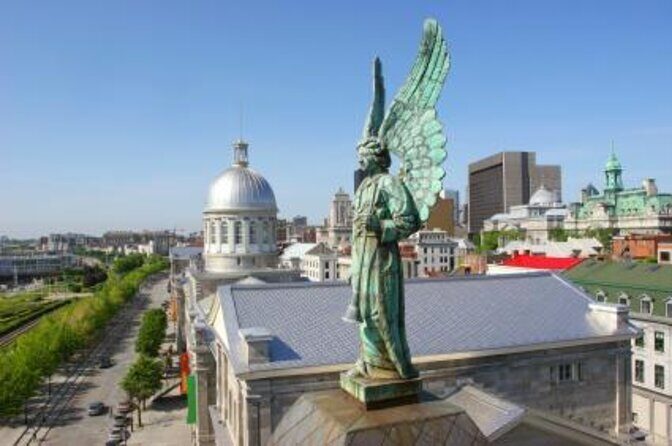
- Max 10 people keeps the tour interactive and helps you actually ask questions.
- A guided story through civic, religious, and financial Old Montreal turns landmarks into a timeline you can remember.
- Local paper handout plus a small treat and parting gift gives you something usable after the walk.
- Mostly outdoors, with limited seating means dressing for weather matters more than you think.
- Outside-only at the famous landmark helps set expectations so you won’t show up wanting to tour inside.
- A licensed local guide with a City permit keeps the pacing and facts solid (and the listening easy).
Why Old Montreal feels confusing without a guide

Old Montreal isn’t laid out on a simple grid. That’s part of the charm, but it also means you can easily wander in circles and miss the connections that make the area click.
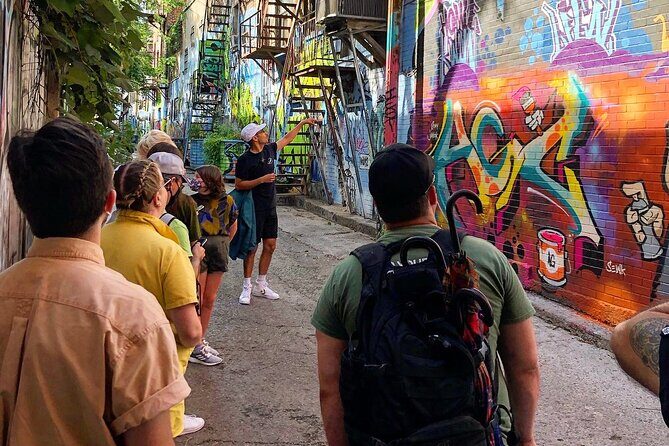
This tour is designed to solve that. You’re guided along the neighborhood’s historic backbone—cobbled streets, landmark viewpoints, and the squares that overlook the Old Port area. Instead of just seeing pretty buildings, you learn what role each one played: civic decisions, colonial power, religious life tied to maritime traffic, and the old financial district that locals once compared to Canada’s Wall Street.
And because the group is capped at 10, the guide can adjust—answer questions on the spot, explain details at your pace, and keep the route moving without steamrolling the slower walkers.
Other Old Montreal tours we've reviewed in Montreal


Marché Saint Laurent to Bonsecours Market: how the route starts and ends
The walk begins at Marché Saint Laurent, 503 Pl. d’Armes. The tour ends near Bonsecours Market, 350 Rue Saint-Paul E, in the vicinity of Place Jacques-Cartier.
This is handy for trip planning. If you’re using public transit, the start and finish are in the Old Montreal core, so you’re not stuck on the edge of town. It also means you can treat the walk like a first-day orientation: after the tour, you’re already close to the streets, cafés, and lanes you’ll want to revisit.
One logistics note that matters on real trips: there’s no hotel pickup or drop-off. You’ll want to arrive a few minutes early and be ready to move right away.
The 2-hour walking route: what you’ll see and why it matters
You’re looking at a tight, story-driven circuit. Expect a mix of street-level views, exterior looks at major buildings, and a few key squares where the guide ties everything together.
The silver-domed civic landmark: why it mattered to everyday Montreal life
The tour kicks off with an iconic silver-domed landmark, explained in terms of how it shaped civic life in Old Montreal. Even if you’ve seen the building from afar, the guide’s framing helps you understand what the “wow” moment was really for—public life, major gatherings, and the city’s identity taking physical form.
Practical tip: stand where the guide tells you to, not where you instinctively want a photo. Old Montreal has lots of angles, and the “right” perspective often makes the story easier to grasp.
Montréal’s oldest street: cobblestones, façades, and the pace of the past
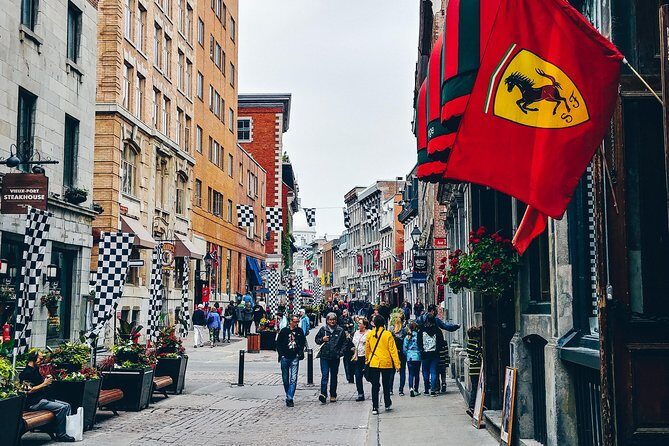
Next comes the walk along the oldest street, known for cobblestones and historic façades. This is where you feel how Old Montreal used to work at walking speed: the street narrows the way it would for merchants, neighbors, and visitors moving between key areas.
The guide also uses this stop to explain architectural choices—so the façades stop looking random and start looking intentional. If you’re the type who loves to spot differences (rooflines, materials, the way buildings face the street), you’ll enjoy this part.
Drawback to remember: cobblestones can be slippery and slow your step, especially in winter. Good shoes are not optional here.
Other walking tours we've reviewed in Montreal




Place Jacques-Cartier area: the Old Port viewpoint and the square’s energy
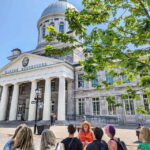
Then you hit a historic square overlooking the Old Port area, known for animation and atmosphere. A square like this isn’t just scenery—it’s a stage where people gather, events happen, and the city’s pulse becomes visible.
The guide’s job here is to connect the physical layout to how the city functioned: who used the space, what it represented, and why it became one of the “must-see” points of Old Montreal.
A grand Second Empire building: reading a style like a clue
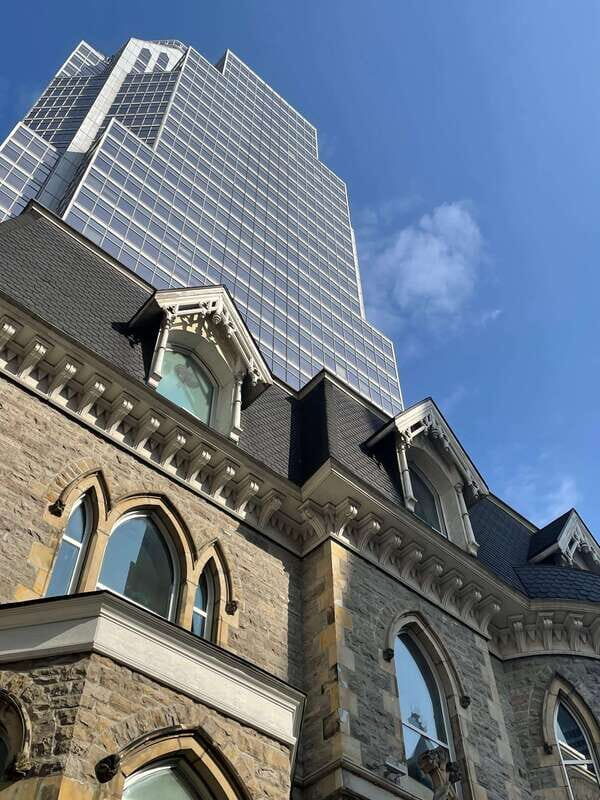
You’ll admire a Second Empire-style building, with key moments in Montreal’s history explained alongside what you’re looking at. Second Empire isn’t just fancy architecture; it signals status, ambition, and who held power when the city was expanding.
This stop is useful if you tend to skip architecture details. The guide gives you a simple way to “read” the building—so it feels less like looking at random ornament and more like understanding a chapter of city growth.
Outside-only at Montréal’s most famous landmark: why the exterior is still worth it
You’ll get a look at the exterior of Montreal’s most famous landmark, with the story behind its creation. Important expectation-setting: this is outside only, and interior entry is not included.
That said, the exterior storytelling is often the point for a short walk. The guide shows you what to look for on the façade and explains how the building’s reputation grew alongside the city’s changing identity.
Practical tip: if you later want to tour inside, the walk helps you know what questions to bring.
Canada’s oldest bank: when Montreal became a financial center
Another stop focuses on Canada’s oldest bank, and how Montreal became the country’s financial hub. This is one of those “wait, that makes sense” moments. Once you see the building in the context of trade and investment, the financial district stops being abstract history and becomes physical geography.
If your itinerary includes money-themed walks or you just like seeing how cities organized themselves, this part lands.
The former governor’s residence: colonial power in plain sight
Then comes the former governor’s residence, tied directly to Montreal’s colonial past. This is where Old Montreal can feel less romantic and more real—authority, decisions made behind walls, and the day-to-day political structure that shaped who lived here and how.
The guide doesn’t just name dates. You get a sense of how “the past” shows up in layout and building purpose.
The Sailors’ Church: why a chapel is connected to the Old Port
A particularly memorable stop is a chapel known as the Sailors’ Church, explained through its connection to the Old Port. This is the kind of detail that makes a tour feel worth it, because it reframes the building: it’s not only religious architecture, it’s tied to the rhythms and risks of maritime life.
If you care about cultural connections—how communities formed around work—this stop is a strong one.
The birthplace of Montréal: hearing how the city started
You’ll stand near the birthplace of Montréal, with the founding story explained. This is a classic “the map in your head changes” moment.
Even if you’ve read about Montreal’s beginnings, a guide can make the founding story feel less like a textbook paragraph and more like a turning point you can picture.
Canada’s Wall Street: the former financial district in walking form
Finally, you’ll walk through Old Montreal’s former financial district, once known as Canada’s Wall Street. The guide ties the street’s role back to the earlier bank and civic power stops—so by the end, you can see the whole system instead of isolated sights.
This ending is satisfying because it gives you a clear storyline: from governing and religion to commerce and investment, all within walkable Old Montreal blocks.
What makes the guide experience work: stories, pace, and small details
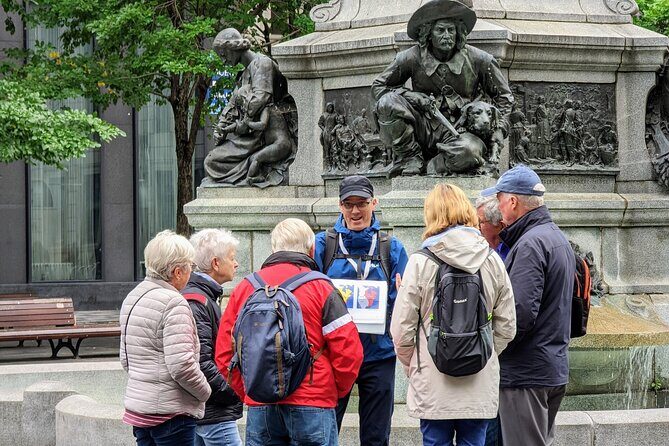
The tour is led by licensed local guides with the required City of Montréal permit, and the result is a smoother experience than generic audio tours. You’re not just reading plaques—you’re getting guided explanation and a sense of what to notice next.
Names that come up in the experience reviews include Louise, Amélie, Darren, Elise, and Silvia. Different guides have different speaking rhythms, but the pattern is consistent: clear storytelling, good answers to questions, and a pacing that helps you cover a lot without getting lost.
On cold days, a standout detail in the reviews: guides may plan short warm-up moments indoors. In one winter review, Louise even brought hand warmers for the whole group, which is exactly the kind of thoughtful touch that turns a chilly walk into a comfortable one.
And at the end, you’ll get local recommendations you can actually use—places to eat, drink, and explore—plus a small local treat and a parting gift.
Price and value: what $44.40 buys you in real terms
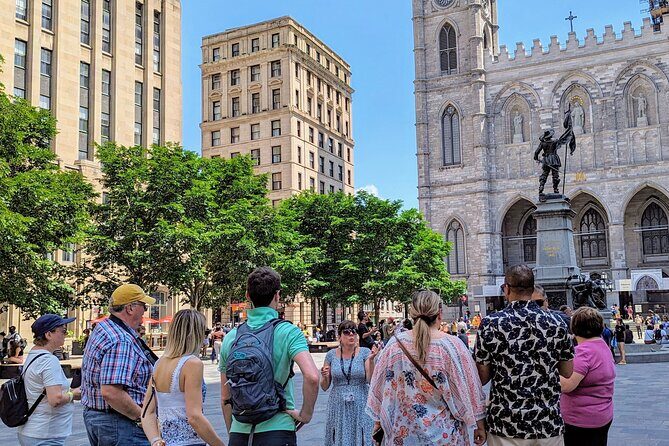
At $44.40 per person for about two hours, this tour sits in a mid-range category for Old Montreal experiences. The price feels fair because you get more than a route.
You’re paying for:
- A small group size (max 10), meaning more interaction and fewer one-sided lectures.
- A licensed, permitted guide who can connect history to what you can see.
- A curated paper handout with food, shops, and places to return to.
- A small treat and parting gift, which adds a bit of local flavor without turning the walk into a shopping trip.
Also worth noting: the tour is described as a walking tour with no admission needed (and the famous landmark stop is outside only). So you’re not getting nickeled-and-dimed for entry fees during your short window in the city.
Timing and weather: how to dress so the tour stays fun
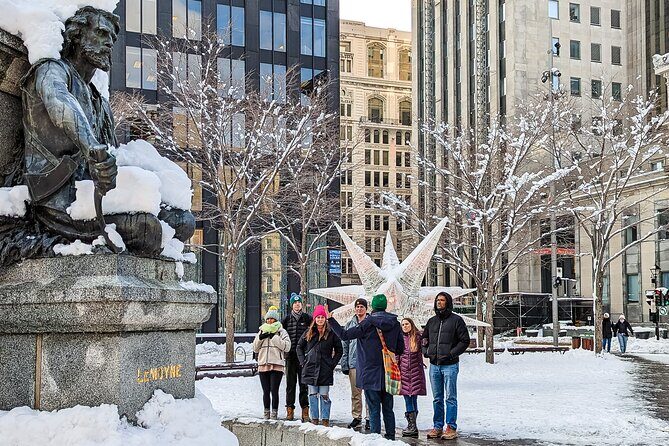
This is a rain, shine, or snow style tour and it’s mostly outdoors. There’s limited seating, and the terrain includes uneven cobblestones and stairs, with a moderate walking requirement.
Here’s how I’d plan it:
- Wear shoes with solid grip (cobblestones can be slick).
- Dress in layers. Montreal weather changes fast.
- Expect to stand and walk more than you’d do on a museum visit.
- On winter days, bring gear for real cold exposure—because even locals talk about how sharp it can get.
The good news is that guides often build in warm breaks. Still, you’ll have the best time if you arrive already dressed to handle the outdoors.
Who should book this tour (and who should skip it)
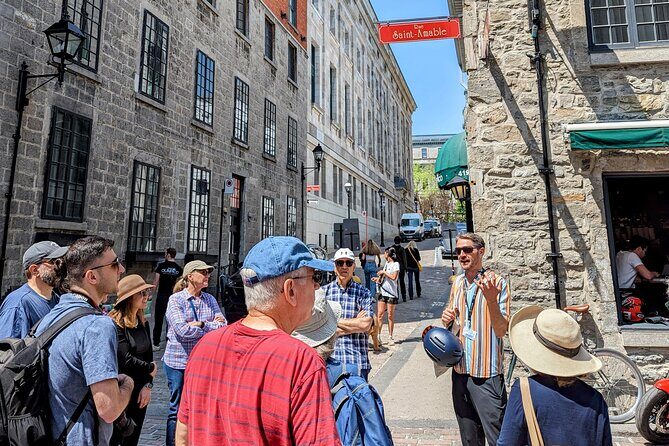
This tour is a great fit if:
- You’re doing Old Montreal as one of your first stops and want quick orientation.
- You like history that connects to what you see: civic buildings, religious sites tied to the port, and the financial story behind Montreal’s growth.
- You want local recommendations that go beyond the obvious postcards.
It’s less ideal if:
- You have significant mobility restrictions or difficulty maintaining a steady walking pace.
- You need long periods of seating, because the tour is mostly standing and walking.
- You’re expecting interior visits to major landmarks. The famous landmark stop is outside only.
Tips to get the most from your 2 hours
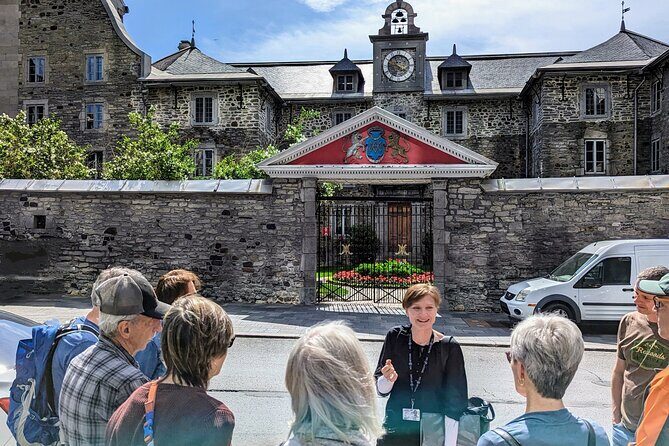
A couple small choices make a big difference:
- Arrive early at the meeting point by Marché Saint Laurent so you can settle in before walking begins.
- If you like a caffeine start, one review notes that having coffee at a nearby meeting-area café can be a nice warm-up before you head out.
- Keep your questions ready. The small group size is where you get real value—ask about what you’re looking at, not just the “big facts.”
- After the tour, use the paper handout right away to plan your next meal or museum visit while everything is still fresh.
Should you book MTL Detours Old Montreal Walking Tour?
Yes, I think this is a strong booking for the right kind of traveler. If you want a focused, guided walk that turns Old Montreal’s confusing streets into a clear story, the small group size (max 10) and licensed local guide are the big reasons to choose it. The added paper handout, local treat, and parting gift make it feel like more than just a route.
But if you hate uneven walking surfaces, need lots of seating, or want interior access to major attractions, you’ll likely feel constrained. The tour is built for movement and exterior viewpoints, not museum-style comfort.
If you’re flexible with weather and you want a smarter first day in Old Montreal, this one is an easy yes.