REVIEW · MONTREAL
Montreal Scavenger Hunt and Highlights Self Guided Audio Tour
Book on Viator →Operated by World City Trail · Bookable on Viator
Riddles on Montreal streets, at your pace. This self-guided audio scavenger hunt turns a simple walk into a choose-your-own adventure, using your phone for GPS directions and puzzle clues. You can start 24/7, pause anytime, and let the app guide you through key city highlights like the Notre-Dame area, City Hall, and more.
I especially like the flexibility: you’re not stuck to a tour schedule, and you can reorder stops, skip bits, and take breaks without messing up your progress. I also like that it works well for mixed groups, including kids—direction and puzzle-solving feel built for handing the phone back and forth.
One drawback to know up front: the scavenger “clues” can be hard to interpret. If you like super-clear instructions that tell you exactly what to find, you might find some of the puzzle prompts a bit vague, so patience helps.
In This Review
- Key things I’d plan for
- How This Self-Guided Audio Hunt Works (Without Feeling Complicated)
- Price and Value: Is $10.80 a Good Deal for Montreal?
- Start at Mary, Queen of the World Cathedral for the Best Flow
- The Walk Itself: What the 4.7 km Route Tests
- Stop-by-Stop: What You’ll See at Each Named Highlight
- 1) La Grande Roue de Montreal
- 2) Place du Canada
- 3) Mem – Centre Des Memoires Montrealaises
- 4) Cote-des-Neiges—Notre-Dame-de-Grace
- 5) Notre-Dame-de-Bon-Secours Chapel
- 6) La Grande Roue de Montreal (again)
- Building Your Own Breaks: Metro Art, Old Port Snacks, and Better Timing
- Tech Requirements and Support: Make Sure Your Phone Can Do Its Job
- Languages, Audio/Text Mode, and How to Use Headphones Effectively
- Who Should Book This (and Who Might Want a Guided Tour Instead)
- Should You Book This Montreal Scavenger Hunt?
- FAQ
- How do I start the Montreal scavenger hunt?
- Do I need a live guide?
- How long should I plan for?
- Can I pause and resume during the hunt?
- What do I need on my phone?
- Can I change the route or finish point?
Key things I’d plan for

- 24/7 start, no live guide: you’re in charge of timing, pace, and breaks
- GPS audio navigation via the World City Trail app (bring data, not just Wi-Fi)
- Puzzle stops across central Montreal, built around observation and riddles
- A route you can reshape: reorder, skip stops, and choose where you end
- Works across languages: EN, DE, FR, ZH, ES
- Family-friendly interactive play you can do without special gear
How This Self-Guided Audio Hunt Works (Without Feeling Complicated)

This experience is designed for people who want movement and stories, but not the pressure of keeping up with a group. After booking, you download the World City Trail app, then log in using your 10-digit booking reference. From there, the phone becomes your guide: you follow the route with GPS, listen to the audio, and answer riddles using what you’re seeing.
The biggest practical win is that you’re not waiting on anyone. There’s no fixed start time, so you can do it when your energy matches Montreal’s mood—morning, afternoon, or evening. The walking portion is about 4.7 km, and your total outing averages around 3 hours once you factor in puzzles and breaks (your pace decides the rest).
The tour also supports a “pause and come back later” mindset. You can stop for food, duck into a shop, or just sit for a minute—and then resume exactly where you left off. Access lasts for a full year, which is helpful if you’re traveling with flexible plans.
Other guided tours in Montreal



Price and Value: Is $10.80 a Good Deal for Montreal?
At $10.80 per person, this is priced like an easy add-on activity rather than a big-ticket guided tour. That’s fair, because you’re not paying for a live guide’s time—you’re paying for a structured route, audio storytelling, and puzzle challenges delivered through your phone.
For value, it helps to think about what you’re getting:
- You get a full “walk + game” format that turns sightseeing into an activity you can actually participate in.
- You control timing, which means you’re less likely to waste money if your day shifts due to weather or transit delays.
- The app includes local restaurant and shop tips, so you can use the walk as a springboard for where to eat and what to browse next.
If you’re the type who enjoys self-guided exploration and doesn’t mind relying on a smartphone, the price feels sensible. If you need a human guide to explain puzzles clearly, you’ll want to consider whether the app clues will feel too indirect.
Start at Mary, Queen of the World Cathedral for the Best Flow

The tour strongly suggests starting at Mary, Queen of the World Cathedral (1085 Rue de la Cathédrale). That’s not a random landmark pick. It’s described as a minor basilica and a one-fifth scale model of St. Peter’s in Rome. Even if you’ve never seen St. Peter’s, it’s a fun way to begin: your first stop has “main character” energy right away.
Starting here also gives you a clean anchor for navigation. Since the route can be started anytime and you don’t have to meet anyone, having a well-known address helps you get oriented fast. The route also notes that the start point is a good launch pad, even though you can choose where you start and finish in the app.
One small thing to consider: the provided info says the tour can end wherever you choose, but the activity details also mention it ends back at the meeting point. In practice, I’d treat this as an app behavior to confirm once you’re inside the route screen—so you don’t plan to head off in a direction that fights your end point.
The Walk Itself: What the 4.7 km Route Tests
This hunt is built on a simple formula: walk, observe, solve. The app gives you audio and navigation, then throws riddles at you. The best strategy is to slow down at the puzzle stops instead of rushing for the next location.
You’ll move through a route that covers major Montreal landmarks and neighborhoods, including areas tied to:
- the Notre-Dame district feel (and other central highlights)
- City Hall-type civic sightseeing
- storytelling stops like Museum of Archaeology and Notre-Dame Chapel (these are listed as examples of where you’ll get legends and context via text or audio)
You’re not just collecting facts. The game asks you to use imagination and what you see in front of you. That’s why it can work well with kids: it’s not only about reading plaques. It’s about noticing details and turning them into an answer.
Time-wise, plan for more than two hours unless you’re very fast. The walking distance is about 4.7 km, but the overall experience averages around 3 hours. If you want time for a snack break—plus a couple of quick photo stops—that longer timeline makes the day feel relaxed, not rushed.
Stop-by-Stop: What You’ll See at Each Named Highlight
Below is what I’d pay attention to at each listed stop, and what each one adds to the game.
A few more Montreal tours and experiences worth a look




1) La Grande Roue de Montreal
You start the named itinerary with the big wheel area. This is a good “first puzzle” zone because it’s visually distinctive—easy to spot, easy to use as a reference point, and a natural place to begin the pattern of reading clues and moving to the next location.
Practical tip: take 2 minutes to get your bearings, then listen closely when the audio shifts into the riddle phase. When clues depend on what you’re observing, being rushed in your first stop tends to create extra backtracking.
2) Place du Canada
Next up is Place du Canada, which helps keep the route feeling connected instead of random. This stop works as a mid-walk anchor where the puzzle stops start to feel like a real sequence instead of a series of unrelated sights.
This is also where you can start deciding how you’ll handle breaks. If you know you’ll want to stop for poutine later, Place du Canada is a good point to mentally plan the timing.
3) Mem – Centre Des Memoires Montrealaises
Here the hunt shifts toward more cultural storytelling. Mem – Centre Des Memoires Montrealaises is one of those places that can make a self-guided route feel smarter, because it’s not just about architecture and views—it’s about the city’s memory and meaning.
Expect the audio/text component to add context for your riddles. If you’ve got headphones, this is the stop where I’d use them, because it’s easier to catch details without competing street noise.
4) Cote-des-Neiges—Notre-Dame-de-Grace
This segment is your neighborhood feel—more lived-in, less “one icon” sightseeing. It’s a helpful contrast because a scavenger hunt should keep you from tuning out after the first big landmark.
In a practical sense, this is also a reminder to keep an eye on your phone’s GPS. Urban routes can sometimes create small navigation quirks, especially with changing street layouts, and this is a zone where accuracy matters so you don’t wander.
5) Notre-Dame-de-Bon-Secours Chapel
Now you’re back in classic Montreal-at-a-walk pace territory. Notre-Dame-de-Bon-Secours Chapel is a great stop for slowing down, both for photos and for story listening. Chapel-style architecture often contains details that show up in clues—so give yourself a little time to look up and around.
If you’re doing this with kids, this is also a strong “keep interest alive” stop. It tends to make the hunt feel like more than a tech trick.
6) La Grande Roue de Montreal (again)
The itinerary returns to La Grande Roue de Montreal, which gives the route a loop-like finish. The value of a return stop is that it makes the experience feel complete—you’re not forced to scramble across town at the end.
If you’re planning dinner nearby, you’ll also find this useful. The end point being close to a recognizable area helps with “what now?” planning.
Building Your Own Breaks: Metro Art, Old Port Snacks, and Better Timing
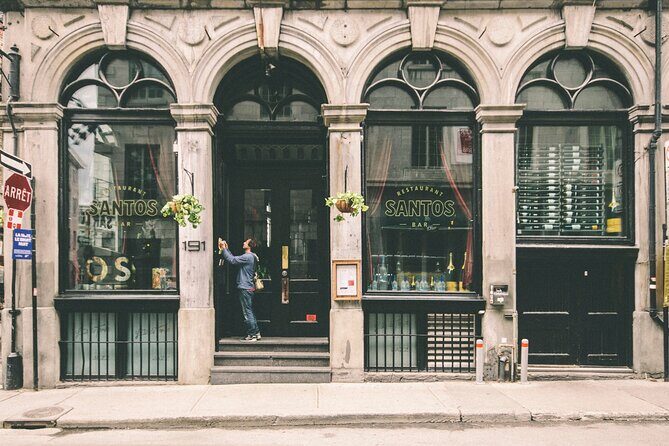
The tour guidance encourages you to personalize the route with real-life stops. Two suggestions show up as “good break ideas”:
- Admiring the Art Nouveau metro entrance at Victoria Square
- Grabbing a poutine in the Old Port
Even though these aren’t named as the core puzzle stops, they fit the format perfectly. Because you can pause and resume, you don’t lose your place. You can treat the scavenger hunt like a backbone for a broader Montreal afternoon.
Timing advice that actually helps:
- If you want the best odds of relaxed photos, plan your longer snack break for the middle of the walk rather than the very end.
- If you’re visiting in cooler weather, start with the bigger sights first, then save more “browse time” for later.
And yes—use your phone’s speaker if you must, but headphones generally make the audio puzzles easier to follow.
Tech Requirements and Support: Make Sure Your Phone Can Do Its Job

This is one of those experiences where your smartphone is the real gear. You need:
- a fully charged smartphone
- an active mobile data connection
Avoid the temptation to rely on public Wi-Fi. The instructions specifically say to disable any VPN and avoid public Wi-Fi, because those can cause app malfunctions. If you normally travel with a VPN for privacy, turn it off for the duration of the hunt.
Also plan for a small practical reality: if your battery drops, your game stops being fun fast. Bring a power bank if you’re the type who takes lots of photos.
Good news: support is there. There’s 24/7 live assistance via chat, and service animals are allowed. Phone support isn’t mentioned, so chat is your path.
Languages, Audio/Text Mode, and How to Use Headphones Effectively
This audio tour supports multiple languages: EN, DE, FR, ZH, ES. That’s a real convenience if you’re traveling with friends who prefer different languages, or if your group mixes comfort levels.
The story delivery can include both text and audio depending on the site and prompt. When you’re solving riddles, audio helps you get the narrative flow. When you’re trying to spot something visual, text can sometimes be easier to reread.
My practical suggestion: if a clue feels unclear, don’t guess randomly. Re-check what the audio says right before the puzzle. Many app-based scavenger hunts work like that—one extra sentence changes the answer.
Who Should Book This (and Who Might Want a Guided Tour Instead)
This works best if you like:
- walking as an activity, not just transit
- puzzles and observation
- flexibility to pause, skip stops, or reshuffle the order
- using a phone for directions without needing a human guide
It’s also a solid option for families because the format supports shared play. Kids can help with clues, and adults can handle the navigation side.
You might reconsider if:
- you strongly dislike app-based navigation
- you want a live guide to explain anything confusing on the spot
- you need very literal, easy-to-follow puzzle instructions every time
Remember: one key piece of feedback tied to this experience is that clues can be difficult to understand and may not clearly spell out what you’re searching for. That doesn’t ruin the concept, but it’s a clear signal that you should approach the puzzles with a bit of patience.
Should You Book This Montreal Scavenger Hunt?
Book it if you want a low-stress way to see central Montreal while still doing something interactive. The $10.80 price feels fair for a phone-guided walk that can stretch into a full outing with breaks, plus added local tips for where to eat and shop. Starting at Mary, Queen of the World Cathedral gives you a memorable launch point, and the route structure helps you feel like you’re progressing, not wandering.
Don’t book it (or plan a Plan B) if you hate unclear instructions or you’re worried about tech reliability. You’ll be relying on phone GPS, mobile data, and working app prompts. If your group prefers straight answers from a person, a guided tour will likely feel easier.
If you want to turn it into a great day: start earlier in your route planning, keep headphones handy, and give yourself time for one intentional break (Old Port poutine, or that Victoria Square metro entrance). That way, the game feels like a fun backbone—not a task you rush through.
FAQ
How do I start the Montreal scavenger hunt?
Download the World City Trail app, then use your 10-digit booking reference to log in. Select Create to start. You can start at any time since it is self-guided.
Do I need a live guide?
No. This is 100% self-guided, so no one will meet you. The app provides audio and GPS navigation.
How long should I plan for?
The walking distance is about 4.7 km, and the total activity lasts around 3 hours on average depending on your pace and breaks.
Can I pause and resume during the hunt?
Yes. You can pause for breaks and resume later, and there is no fixed time limit. Your access lasts for a full year.
What do I need on my phone?
You need a fully charged smartphone and an active mobile data connection. Avoid public Wi-Fi and disable any VPN because they can cause app malfunctions.
Can I change the route or finish point?
The tour information says you can reorder places, skip stops, and choose where to end in the app. The activity details also note the tour ends back at the meeting point, so check the finish option in the app for your route.