REVIEW · MONTREAL
Montreal to Quebec City Tour with Private Transportation
Book on GetYourGuide →Operated by Tourisme Dt · Bookable on GetYourGuide
Four people, one car, Quebec in a day. This private Montreal-to-Quebec City tour is built around private transport and a licensed English guide, so you’re not stuck chasing landmarks or translating signs all afternoon. It’s the kind of day trip that lets you cover the big hitters—Old Québec, Montmorency Falls, and Île d’Orléans—while still getting explanations that actually make the streets feel alive.
I also like the way the guide sets context, then works with your pace. You’ll hear the long story of Quebec’s past—French and British conflict, the 1759–1760 invasion, and the Act of Quebec in 1774 that allowed Catholic practice and French language—so places like Place Royale and the Plains of Abraham make sense instead of feeling like a checklist. One possible drawback: it’s a long day with about 3 hours each way by car, and some key costs (like Montmorency Falls entrance and lunch) are not included.
Finally, because this is a private group, the itinerary can shift last-minute for traffic and your preferences. That flexibility is great—but it also means you should expect the exact timing to move around a bit as you go, especially in busier seasons.
In This Review
- Key highlights worth planning around
- Private transport from Montreal: why the day feels easier
- Quebec City highlights: Place Royale, ramparts, and the streets that tell the story
- Plains of Abraham and National Assembly: where politics and conflict meet views
- Montmorency Falls: the best timing for a strong viewpoint
- Île d’Orléans: chocolate, wine, and the village feel you can actually slow down for
- Lunch and pacing: how this tour avoids the most common private-tour mistake
- Price and value: what you’re paying for (and what costs extra)
- Who should book this Quebec City private day trip
- Should you book it
- FAQ
- How long is the Montreal to Quebec City tour?
- Is this a private tour?
- What’s the pickup and transportation like?
- What language is the guide in?
- How many people can be in the group?
- What stops are included in the itinerary?
- Is Montmorency Falls entrance included?
- Is lunch included?
- Can the itinerary change during the day?
- What’s the cancellation and payment flexibility?
Key highlights worth planning around

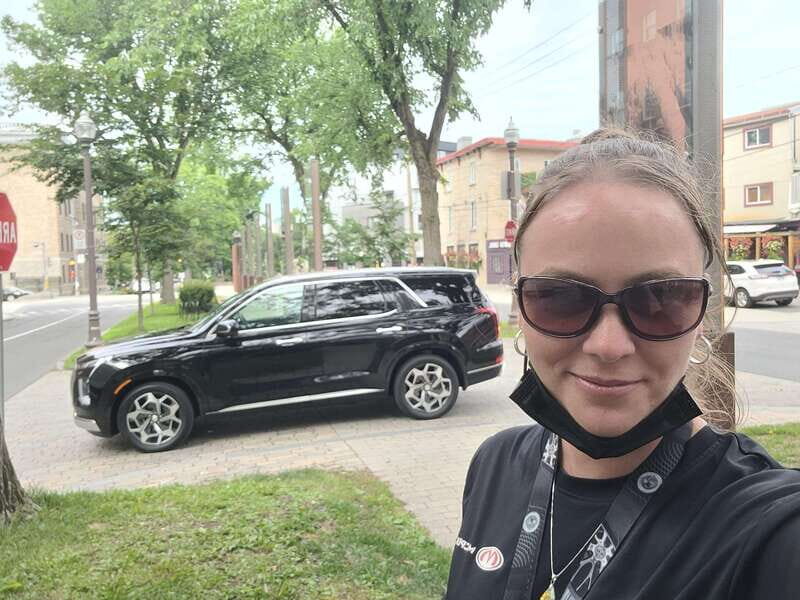
- Private, door-to-door transport in a black Hyundai Palisade 2021 with a professional driver
- Old Québec walks that connect to real history, from Place Royale to Château Frontenac area
- Montmorency Falls photo stop from the bottom viewpoint (entrance not included)
- Île d’Orléans food and views: Sainte-Petronille chocolate factory, Saint-Pierre vineyards
- Your pace matters: the guide adjusts stops, including possible extra village time if there’s room
- A long but structured day: roughly 8 hours on the ground plus drives to and from Montreal
Private transport from Montreal: why the day feels easier
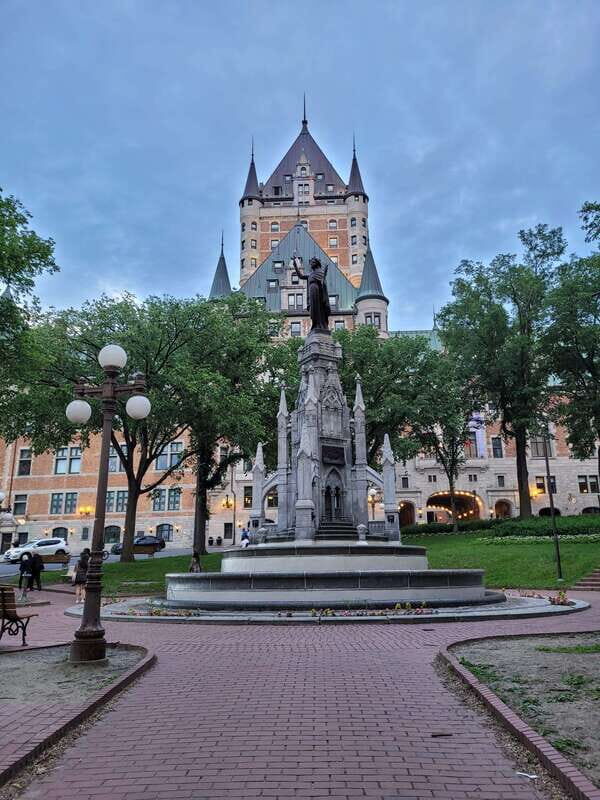
The biggest practical win here is that you’re not commuting like a bus tour. You’re picked up by a professional driver in a black Hyundai Palisade 2021, and you go straight to Quebec City with someone who can answer questions and handle the road. That matters because Quebec City isn’t right around the corner—plan for a major chunk of time just getting there and back.
Your day is essentially two “bookends” of driving:
- Drive to Québec City: about 3 hours
- Return to Montreal at night: another 3 hours of driving
Then the working part of the day is built for sightseeing: the plan describes a full day of exploring with about 8 hours on the ground. Even if the schedule shifts a bit, the structure is clear. You’ll get to see a lot without spending the day figuring out transportation, parking, and getting from one end of the city to another.
If you’re someone who hates wasting time, this setup helps. You spend your energy on stops that are planned, explained, and timed—not on logistics.
Other Quebec City & Montmorency Falls day trips from Montreal

Quebec City highlights: Place Royale, ramparts, and the streets that tell the story
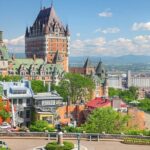
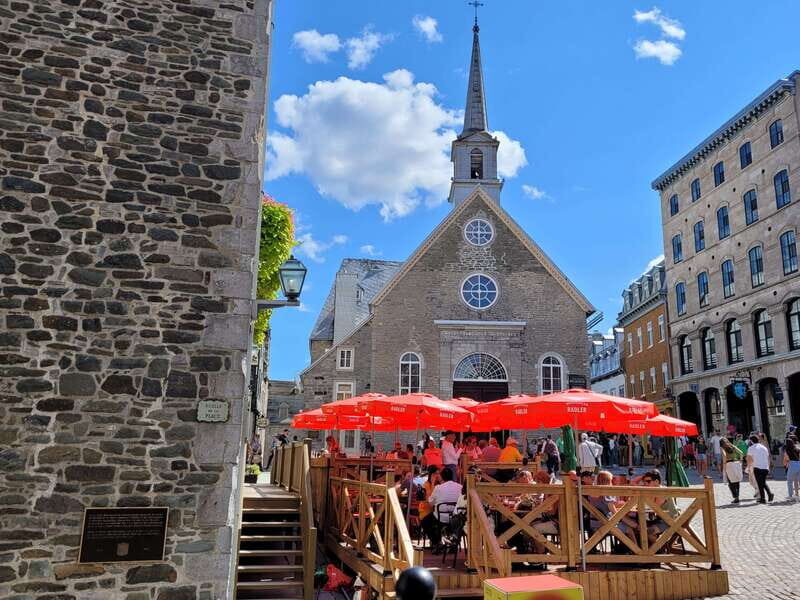
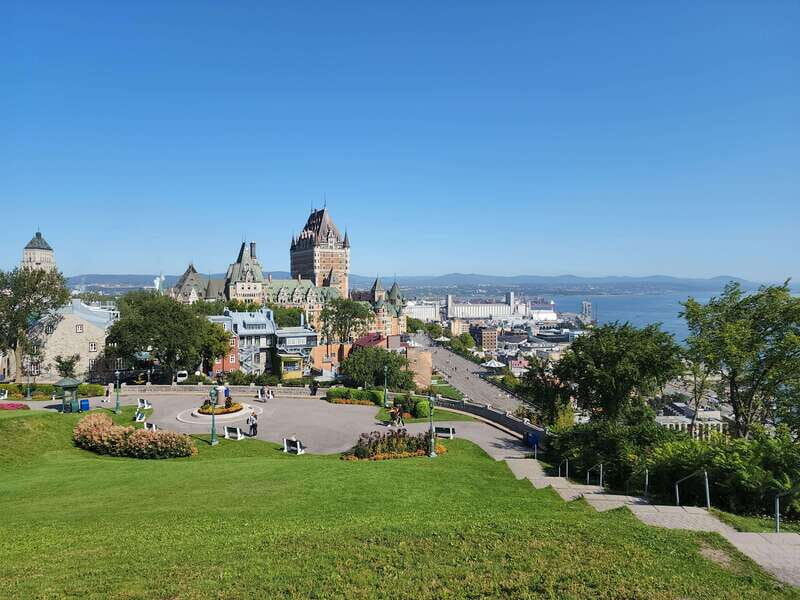
When you reach Old Québec, the tour starts at a strong anchor: Place Royale. It’s one of the best places to begin because the area gives you a sense of the city’s early French roots. From there, the route includes key viewpoints and walkable streets that reveal how the city grew around its strategic location on the St. Lawrence River.
Here’s the rhythm you can expect in the core Old Québec portion:
- Little Champlain Street: a classic photo-and-walk stretch that helps you orient fast
- Rempart Street (ramparts): a look at the fortification feel of the city
- Place d’Armes and Dufferin Terrasse: the kind of squares and terraces where you can pause and look up at major landmarks
- Château Frontenac area: you’ll see why this building is the city’s visual signature
- St-Louis Gate: a gateway moment that reinforces the old-city layout
The tour doesn’t just point. It adds meaning. The history briefing is a big part of why this works. Quebec’s story here is tied to geography—ship traffic, deep-water harbor activity, and how importing and exporting shaped daily life for many years. Then you get the turning points: the English invasion of Quebec in 1759 and 1760, followed by the Act of Quebec (1774), which mattered because it allowed residents to continue practicing Catholicism and kept French language use. That background gives you a reason to care when you stand in front of government buildings and war-related sites.
If you’re traveling with teenagers, this kind of narrative tends to be the difference between walking and actually learning without feeling like homework. The tour description also stresses that the guide builds the day around what you want, so you’re not locked into a rigid script.
Plains of Abraham and National Assembly: where politics and conflict meet views

After the Old Québec streets and architecture, the itinerary moves into a more “big picture” zone: the Plains of Abraham and the National Assembly area. This part is valuable because it turns a landscape into a historical timeline.
The Plains of Abraham stop is one of those places where your brain naturally asks, so what happened here? That’s where the guide’s context helps. Knowing about the conflict between powers (French and British) and the later changes under British rule gives the space more weight. Even if you only spend a short time at each stop, you’ll leave with a clearer understanding of why the area matters.
The National Assembly (Parliament) stop also adds a modern layer. It’s not just about battles and invasions; it’s about how Quebec’s identity and politics evolved over time. Standing in that setting makes the earlier history feel connected rather than random facts.
One practical note: if you’re traveling in warmer months, plan for sun. If it’s cooler, plan for wind. The Plains area can feel exposed depending on the weather. You’ll enjoy it more if you dress for that reality rather than thinking it’s “just a quick stop.”
Montmorency Falls: the best timing for a strong viewpoint
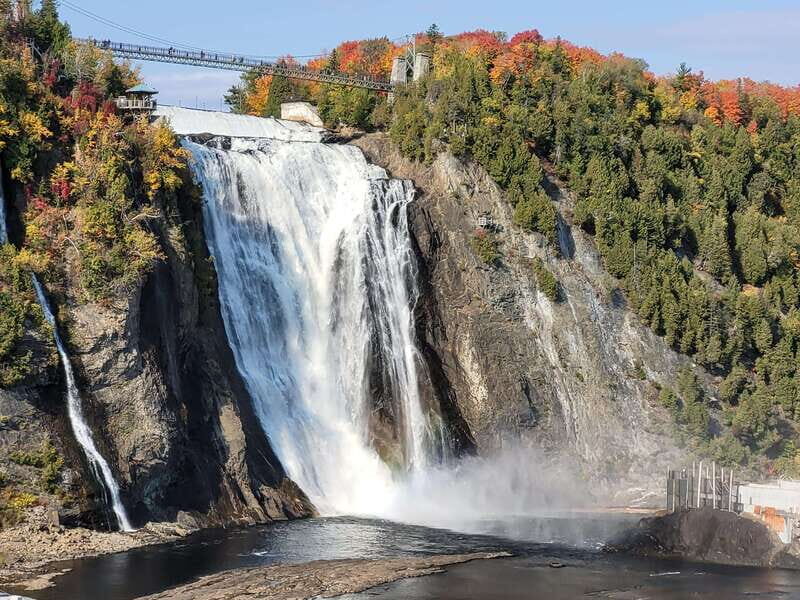
After Quebec City, you head toward the Montmorency Falls area. The tour description is specific here: you’ll stop at the bottom of the falls to make sure you get a good viewpoint. That’s the difference between seeing falls as a distant landmark and actually feeling their scale.
Montmorency Falls are described as the tallest falls in Quebec province at 83 meters high, and they’re about 15 minutes by drive from downtown Québec City. That timing matters. You’re not far away, which helps protect the energy you’ve built up from the morning’s walking.
Important cost note: Montmorency Falls entrance is not included. So if you’re budgeting, factor in the ticket cost. It’s also worth checking what level of access that entrance gives you, because you might want to plan your photo time around where you can get the view you want.
This stop also has an easy connection to the next part of the day. The description notes that the falls are near the bridge leading toward Île d’Orléans, so the geography flows naturally. You’re not hopping around randomly; you’re moving with the river.
Île d’Orléans: chocolate, wine, and the village feel you can actually slow down for
If Old Québec is the city story, Île d’Orléans is the change of pace. The island is positioned as about 20 minutes from Old Québec, and that matters because it makes the transition from urban history to countryside scenery feel smooth.
The tour typically includes:
- Driving on the bridge to the island
- A stop for the chocolate factory in Sainte-Petronille
- A glass of fresh wine at vineyards of Saint-Pierre
- Optional add-ons if time allows: the maritime village of Saint-Laurent and a jam factory
There’s also a built-in flexibility option: if the timing works and traffic cooperates, the guide may take you to St-Jean, described as a favorite village with amazing geology and river views. That kind of “if there’s room, we’ll try” planning is exactly what you want in a private tour. It gives you the chance to add something memorable without losing control of the day.
Here’s what makes Île d’Orléans especially smart for a short trip:
- You get a mix of food stops (chocolate, wine, jam possibilities)
- You get scenic river and farming context, not just storefront sightseeing
- The tour can adjust based on your interests, so you’re not forced into the same sequence regardless of your tastes
Because your time on the island is not framed as endless wandering, you get a taste of the island culture without burning your whole afternoon. That’s huge if you’re also doing Montmorency Falls and the major Old Québec sights.
Other city tours we've reviewed in Montreal


Lunch and pacing: how this tour avoids the most common private-tour mistake
A private tour can go one of two ways: either it’s truly personalized, or it’s just a regular schedule with fewer people. This one tries to stay in the first category.
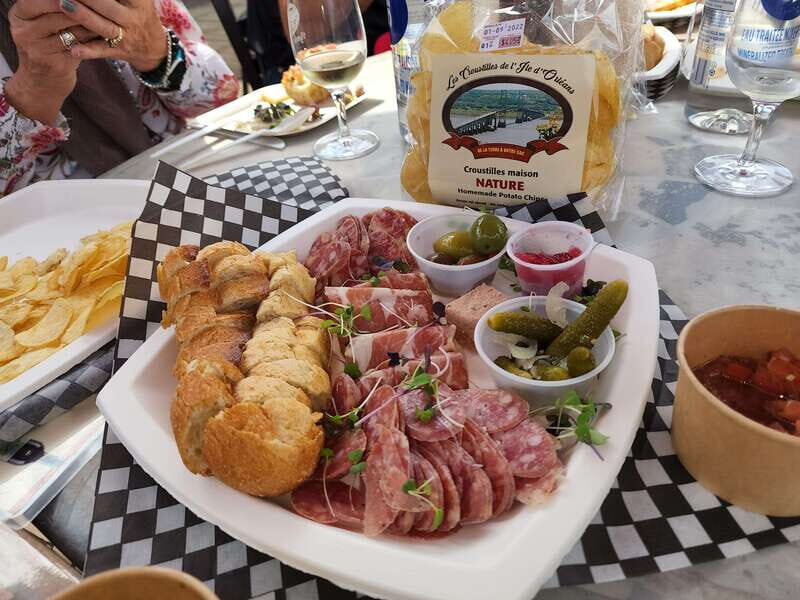
You’ll get a planned 1-hour lunch stop, and you decide together where it happens and whether you want it at all. The description also says the guide is ready to share the table if you allow it. That small detail is a hint at the style: less stiff, more conversational, and designed to keep you comfortable through a long day.
You also need to know the tour isn’t a rigid “every minute is fixed” situation. The description openly states the itinerary can change last minute due to traffic and other situations. More importantly, it says the guests decide what they prefer—whether to stop somewhere or move on, and even whether you want some shopping or free time.
I like that approach because Quebec City can tempt you to linger. If you love photography, you’ll want time. If you’re more into architecture or specific neighborhoods, you’ll want focus. This guide’s structure is set up so you can choose the balance instead of being dragged past your priorities.
That said, be realistic about energy. With 3-hour drives plus hours of walking, you’ll probably feel better if you treat lunch like a reset, not a rushed meal before you sprint back into sightseeing.
Price and value: what you’re paying for (and what costs extra)
The price is $1,336 per group up to 4 (the description also mentions up to 4–5 people), and the tour includes transport from Montreal to Quebec City and back at night, plus a professional driver and a licensed English guide.
For value, here’s what you get for your money:
- Private transportation for your group (not shared seats)
- An English live guide
- A structured full-day route that covers major sights across two main areas (Old Québec and Île d’Orléans)
- The ability to customize stops within the tour framework
What you don’t get:
- Montmorency Falls entrance
- Lunch (though you’ll have a 1-hour lunch stop planned, you pay separately)
When you compare this to standard group day trips, the math usually works like this: you pay more, but you buy back time, comfort, and clarity. With Quebec City, that clarity matters because the city looks beautiful, but the history can feel tangled if nobody explains the why behind the what.
Also, a private group makes sense when you have specific priorities—architecture fans, teens who want a story not just photos, couples who want pacing control, or anyone traveling with limited tolerance for crowds.
If you’re traveling solo, the cost-per-person gets harder to justify. If you’re traveling as a small group, it’s much easier to see the logic.
Who should book this Quebec City private day trip

This tour is a good match if you:
- Want a one-day hit list without the stress of transportation planning
- Prefer guided history with specific context (not just names and dates)
- Travel as a small group and care about pacing
- Like the idea of mixing Old Québec sights with a countryside change of scenery on Île d’Orléans
It may be less ideal if you:
- Want a short day only. This one is long by nature: roughly 12 hours total mentioned, with long drives.
- Don’t want to pay extra for attractions. Montmorency Falls entrance is not included, and lunch is not included.
- Need certain mobility accommodations. The tour notes that non-folding wheelchairs and electric wheelchairs are not allowed.
One more practical point: plan your clothing like you’ll be outside a lot. Old Québec walking and the falls area both call for comfortable shoes and layers.
Should you book it
Book it if you want the best use of time. This tour is designed for people who want Quebec City’s major landmarks plus the nearby countryside story of Île d’Orléans, all with a private car and a guide who connects the dots.
I’d especially recommend it for first-time visitors to Quebec City who want more meaning than a photo stop and more control than a fixed group itinerary. The structure is clear: Old Québec anchors your morning, Montmorency Falls adds dramatic scenery, and Île d’Orléans adds food and views—then you’re back in Montreal that evening.
If you hate long drives or want everything fully included (tickets plus lunch), look at cheaper options first. For a small group that’s okay with paying a bit extra for comfort and clarity, this is one of the more sensible ways to do Quebec in a day.
FAQ
How long is the Montreal to Quebec City tour?
The experience is described as about 12 hours total, with roughly 3 hours driving to Quebec and 3 hours driving back to Montreal, plus about 8 hours of touring during the day.
Is this a private tour?
Yes. It’s a private group experience.
What’s the pickup and transportation like?
Pickup is included, and you travel in a black Hyundai Palisade 2021 with a professional driver.
What language is the guide in?
The live tour guide is in English.
How many people can be in the group?
The tour is priced for up to 4 people per group, and the information also mentions up to 4–5 persons.
What stops are included in the itinerary?
You’ll visit Quebec City highlights such as Place Royale and the Château Frontenac area, plus Montmorency Falls (with a viewpoint stop), and Île d’Orléans including Sainte-Petronille and Saint-Pierre.
Is Montmorency Falls entrance included?
No. The entrance at Montmorency Falls is not included in the price.
Is lunch included?
No. Lunch is not included in the price, though the tour includes a planned 1-hour lunch stop during the day.
Can the itinerary change during the day?
Yes. The itinerary can be changed last minute depending on traffic and other situations, and the guide adjusts based on what your group prefers.
What’s the cancellation and payment flexibility?
The tour offers free cancellation up to 24 hours in advance for a full refund, and it includes a reserve now and pay later option.