REVIEW · MONTREAL
Irish Famine in Montreal Walking Tour
Book on Viator →Operated by Haunted Montreal · Bookable on Viator
This walk links Montreal to a tragic migration. In about two hours, you’ll move through three very specific places connected to Irish Famine refugees, with a guide pointing out what matters and where it happened. You start at the Montreal Museum of Archaeology and History and finish at the Montreal Irish Monument near Rue Bridge.
I like that this tour is focused instead of scattershot. Two things I especially appreciate are the way the guide helps you locate the Lachine Canal mass grave site and the chance to end at the Black Rock monument, the gravesite of over 6,000 Irish Famine refugees. It also feels practical for visitors: a small group, English-only, and a mobile ticket.
The main thing to consider is the subject matter and the time limit. It’s a short walk with only a few stops, so if you’re hoping for lots of extra historical background beyond what the guide covers, you may want to do a bit of reading before or after.
In This Review
- Key highlights you’ll care about
- Two hours of Montreal you won’t forget
- Price and timing: what $20.23 buys you
- Starting point: Montreal Museum of Archaeology and History
- Stop 1 at the Old Port: refugees and the port connection
- Stop 2 at the Lachine Canal: the mass grave location
- Stop 3 at the Black Rock monument: a gravesite of 6,000+
- What the route teaches you (and what it doesn’t)
- Who should book this walking tour
- Weather and comfort: small details that matter
- Should you book the Irish Famine in Montreal Walking Tour?
- FAQ
- Where is the meeting point for the tour?
- What time does the tour start?
- How long is the Irish Famine in Montreal walking tour?
- How much does it cost per person?
- Is the tour offered in English?
- What ticket format do I receive?
- Where does the tour end?
- Is admission required for the stops?
- What are the key rules if weather is bad or I need to cancel?
Key highlights you’ll care about
- Three purposeful stops tied to Irish Famine refugees, all on foot in roughly two hours
- Exact-location guidance at the Lieu Historique National du Canal-de-Lachine mass-grave area
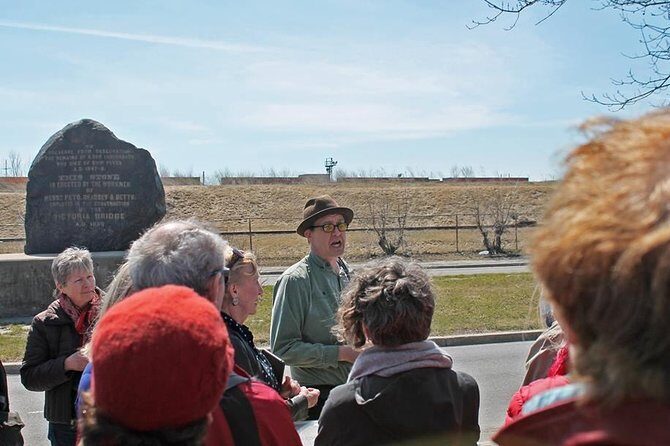
- Black Rock monument visit connected to the gravesite of over 6,000 refugees
- English mobile ticket format, with confirmation at booking
- Small-group feel with a maximum of 40 travelers
- Free admission at each stop, so your money goes to the guide time
Two hours of Montreal you won’t forget
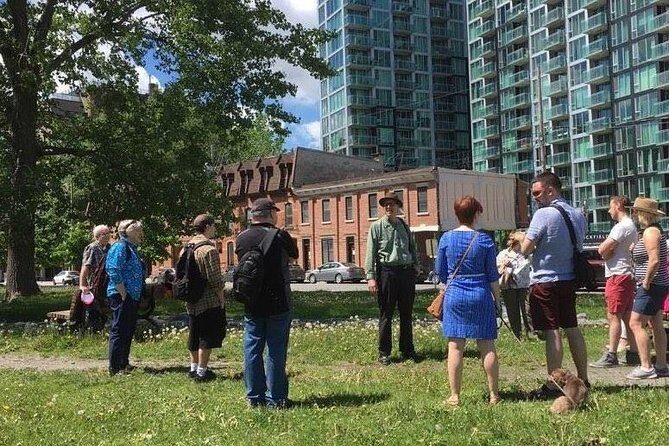
If you only do the usual sightseeing in Montreal, you’ll miss a darker layer of the city’s past. This walking tour is built around one idea: showing you where Irish Famine refugees were connected to Montreal, using real sites you can stand at. And because you’re walking, you get to clock the distance and geography instead of just reading about it.
I found the pacing respectful and clear. You get a longer first stop at the Old Port, a quick but important moment at the Lachine Canal historical site, then you end at the monument at Black Rock. It’s the kind of route that helps you connect the dots without turning the day into a marathon.
Still, because this is a graves-and-memory kind of experience, come ready to slow down. Bring comfortable shoes and an open mind. This isn’t about checking off photo spots.
Other walking tours we've reviewed in Montreal



Price and timing: what $20.23 buys you
The tour runs for about 2 hours and costs $20.23 per person. For that price, you’re paying mainly for guided interpretation and the route itself, not for entry fees, since the listed stops are free to visit.
It’s also offered in English, with a mobile ticket. That matters because you can spend less time fussing with papers and more time actually being in the places the story connects to.
The start time is 2:00 pm, and the meeting point is the Montreal Museum of Archaeology and History (350 Pl. Royale, Montréal, QC H2Y 3Y5). The end point is the Montreal Irish Monument at Rue Bridge (Montréal, QC H3K 1X8). If you’re planning the rest of your afternoon, I’d treat it like a solid “activity block” rather than a quick stroll.
Group size is kept to a maximum of 40 travelers, which usually helps the guide manage the flow and keep the stops from getting chaotic.
Starting point: Montreal Museum of Archaeology and History
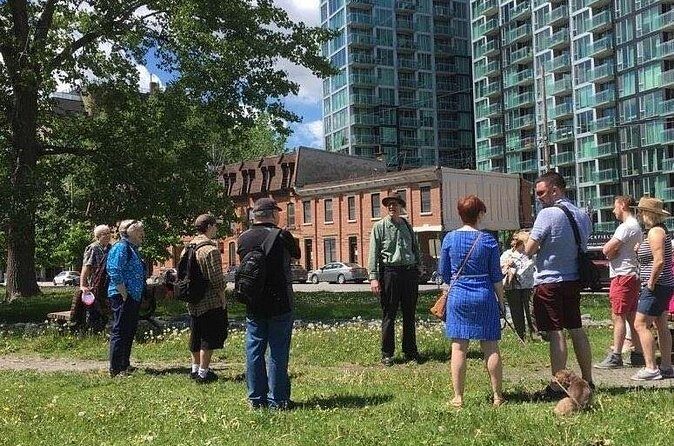
You begin at the Montreal Museum of Archaeology and History on Pl. Royale. I like this kind of start for two reasons. First, it sets a tone that this is about place and evidence, not just storytelling. Second, it’s easy to get oriented in a well-known area before you head into the walk.
From here, you’ll head toward the Old Port area. Expect an early rhythm where the guide sets expectations for what you’ll see and what you should pay attention to. If you’re the type who asks a lot of questions, this is a good time to do it while everyone is still gathered.
Also note: the experience is listed as near public transportation, so you’re not stuck if you need to route around something last-minute.
Stop 1 at the Old Port: refugees and the port connection
The tour’s first stop is the Old Port of Montreal, with about 30 minutes and free admission. This is your longer setup stop, which makes sense because the guide explains how the Old Port relates to Irish Famine refugees.
What I find helpful about starting here is that the Old Port area is the kind of space where you can actually sense movement. You’re in a location tied to arrivals and departures in a way you can understand even if you’re not a history expert. The guide’s job is to connect the specific refugee story to the setting, and this part of the tour is where you get the most framing.
Practical tip: wear shoes you can stand in comfortably. Thirty minutes is enough time for a careful explanation and a bit of looking around, not just a quick “over there, next.”
Stop 2 at the Lachine Canal: the mass grave location
Next you head to Lieu Historique National du Canal-de-Lachine, where the guide focuses on a mass grave located near the Lachine Canal. This stop is brief—about 5 minutes—and free to access.
The point here isn’t sightseeing. It’s accuracy and respect. The listing notes that the guide will show you the exact location of the mass grave. That’s a big deal, because it turns something abstract into something you can locate with your own eyes. It also helps prevent the common problem of people walking by serious sites without truly noticing them.
Because this segment is short, you’ll want to pay attention right away. Don’t spend the first minute looking for where to stand or scrolling your phone. Let the guide do the pointing, then take a moment to absorb what you’re seeing.
One consideration: this stop can be emotionally heavy. If you’re sensitive to memorial sites or the idea of mass graves, plan your mood accordingly.



Stop 3 at the Black Rock monument: a gravesite of 6,000+
The final stop is the Montreal Irish Monument at the Black Rock, described as the gravesite of over 6,000 Irish Famine refugees. Expect about 10 minutes here, with free admission, and the tour ends at this location.
This is the moment the whole tour bends toward. After the Old Port framing and the Lachine Canal location, the Black Rock monument gives you a clear, concrete end point. For me, the impact comes from seeing scale in a physical place. When a site is connected to thousands of people, it feels different than a single memorial plaque.
You’ll also get directions at the end. The end address is near Rue Bridge, so if you’re heading back to a hotel or toward dinner, your guide can help you figure out the easiest way out.
If you want to remember this part well, give yourself an extra minute before you rush off. Ten minutes goes fast when you’re trying to process what you’ve just learned.
What the route teaches you (and what it doesn’t)
I like that the tour concentrates on specific, named places rather than vague “history lessons.” The stops are tied to real locations: Old Port, the Lachine Canal national historic site, and the Black Rock Irish monument. That makes the experience more useful for your brain, because you leave knowing where to stand and what the story connects to.
At the same time, the tour is only about two hours. Some visitors clearly want more attention to the subject. That’s not a knock on the tour; it’s just math. With three stops, the guide can cover the essentials, but you may still want extra context if you’re the type who reads everything you can about a topic.
My practical advice: treat this tour as a strong starting point. Then, if you care about learning more afterward, you’ll know exactly what to research next because you’ll have the three sites firmly in your mind.
Who should book this walking tour
This tour is a good fit if you want a guided walk that focuses on memory, location, and meaning. You’ll likely enjoy it if you like:
- Montreal history that goes beyond the usual tourist route
- Irish heritage topics and how they show up in Quebec
- Visiting memorials in a structured, explained way
It’s also listed as requiring moderate physical fitness. That usually means you should be comfortable walking through streets and being on your feet for a couple of hours, not that it’s an intense hike. Service animals are allowed, which is also a plus for many visitors.
If you’re looking for light entertainment or quick photo stops, this might feel too serious. On the other hand, if you want a respectful, guided way to learn, it’s the right tone.
Weather and comfort: small details that matter
This experience requires good weather. That’s worth planning around because you’re outside for multiple stops, including outdoor points near the canal and the final monument area.
Since the tour is short, it’s tempting to pack lightly. Still, I’d bring a jacket that works in Montreal afternoons and comfortable walking shoes. When a tour is only two hours, you don’t want to spend any of it thinking about sore feet.
Also, check the forecast for the day you go. If weather cancels the tour, you’ll be offered a different date or a full refund, so you don’t lose money, but you do lose time.
Should you book the Irish Famine in Montreal Walking Tour?
I think you should book if you want a compact, guided walk that uses real locations to connect Montreal to the Irish Famine refugee story. The value is strong: $20.23 for about two hours, English, a mobile ticket, small group size up to 40, and free admission at each stop. It’s also a great choice when you want meaning over volume.
Skip it if you’re expecting a broad, long-form history lecture or a “fun sightseeing” vibe. The tour doesn’t try to cover everything in one go. It focuses on three locations and the essential connections between them.
If you do book, I’d go in ready to pay attention. This is the kind of tour where the best souvenir isn’t a photo. It’s knowing exactly what you saw, where you saw it, and why it matters.
FAQ
Where is the meeting point for the tour?
You’ll meet at the Montreal Museum of Archaeology and History, 350 Pl. Royale, Montréal, QC H2Y 3Y5, Canada.
What time does the tour start?
The start time listed is 2:00 pm.
How long is the Irish Famine in Montreal walking tour?
It runs for about 2 hours.
How much does it cost per person?
The price is $20.23 per person.
Is the tour offered in English?
Yes. The experience is offered in English.
What ticket format do I receive?
You get a mobile ticket, and you’ll receive confirmation at the time of booking.
Where does the tour end?
The tour ends at the Montreal Irish Monument near Rue Bridge, Montréal, QC H3K 1X8, Canada.
Is admission required for the stops?
The stops are listed as free, with admission ticket free for each location on the tour.
What are the key rules if weather is bad or I need to cancel?
The experience requires good weather. If it’s canceled due to poor weather, you’ll be offered a different date or a full refund. You can cancel for free up to 24 hours in advance for a full refund.