REVIEW · MONTREAL
Le Bateau-Mouche Sightseeing Cruise in Montreal
Book on Viator →Operated by Le Bateau-Mouche au Vieux-Port Inc. · Bookable on Viator
One hour on the St. Lawrence changes your view. This Le Bateau-Mouche sightseeing cruise is a simple way to get your bearings in Montreal, with big landmarks seen from the water. I like the fast, first-timer-friendly route and the comfortable, city-sightseeing pace. One consideration: the onboard audio and commentary can be hard to follow, so plan to be flexible about how much history you pick up.
You’ll choose between two ride lengths (about 1 hour to 1 hour 30 minutes), then settle in for passes by the Olympic Tower, La Ronde, the Biosphere, Pont Jacques-Cartier, Habitat 67, and the Clock Tower area. Drinks and snacks are available to buy onboard, and the tour runs in English. With a maximum of 50 travelers, it’s not a cattle-car experience, but you still want to show up with enough time to get seated where you can see.
If your main goal is water-level photos and skyline angles you don’t get from street corners, this is a good fit. If you’re hunting for a deep, slow, lecture-style history tour, you might feel the experience moves too quickly.
In This Review
- Key points to know before you go
- A Montreal water-view intro that beats rushing on foot
- Price and what $33.67 buys you in real value
- Where you board at Vieux-Port (and the one logistics tip that matters)
- Your route: what each stop is really doing for your photos
- Olympic Tower first: the instant “Montreal landmark” moment
- La Ronde rollercoasters: amusement-park energy from the river
- The Biosphere by Saint Helen’s Island: Expo 67 in one glance
- Pont Jacques-Cartier: bridge views you can’t fake from land
- Habitat 67: modern architecture that reads like a city model
- The port Clock Tower: a memorial you’ll notice once you know it’s there
- Onboard experience: comfort, sound, and how to manage the “commentary gap”
- Drinks, snacks, and what to budget for
- How long you should expect (and why timing sometimes surprises people)
- Who this cruise suits best (and who may want another option)
- Should you book Le Bateau-Mouche?
- FAQ
- How long is the Le Bateau-Mouche sightseeing cruise in Montreal?
- Where does the cruise start?
- Is the cruise in English?
- How much does it cost?
- Are drinks and snacks included?
- Can I buy alcoholic drinks onboard?
- What payment methods are accepted for purchases on the boat?
- How big is the group?
- Are service animals allowed?
- What happens if the cruise is canceled due to weather?
Key points to know before you go
- St. Lawrence sightseeing in under 90 minutes: a quick “see the city” win.
- Pass-by highlights: Olympic Tower, La Ronde, Biosphere, Pont Jacques-Cartier, Habitat 67, and the port Clock Tower.
- Small-ish group (max 50): easier to move around and find your view.
- Audio quality can be hit or miss: sit where you can hear clearly.
- Bring a little patience with timing: some sailing changes and shorted durations have been reported.
- Plan for purchases onboard: snacks and drinks are not included.
A Montreal water-view intro that beats rushing on foot
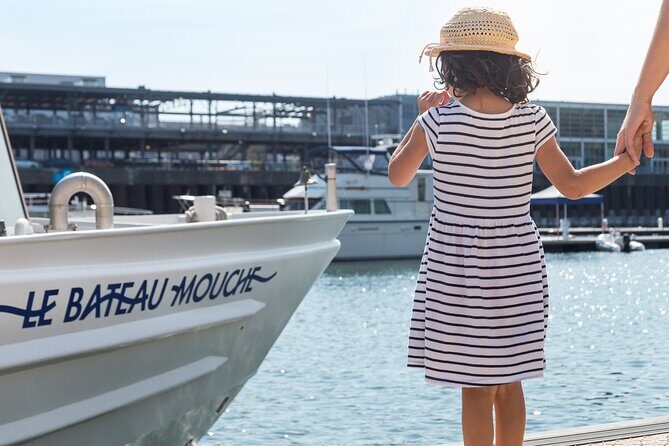
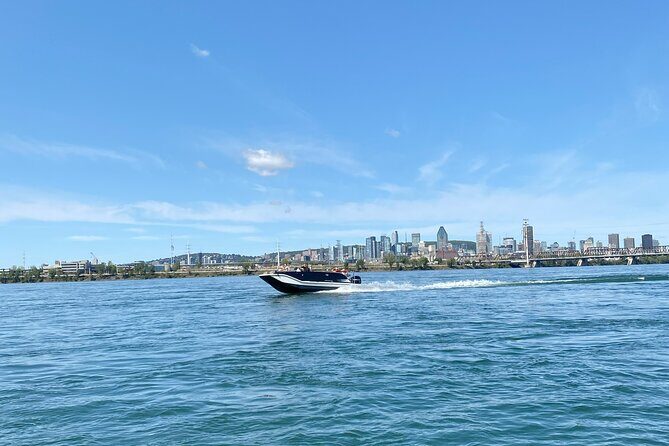
A boat cruise is one of those Montreal activities that works even when your schedule is tight. You start at the Vieux-Port de Montréal, then get a moving perspective on the riverfront and bridges. That matters because Montreal’s “wow” moments often hit differently from water: angles are wider, the skyline feels taller, and you notice the way neighborhoods connect.
I like that this feels like an itinerary built for orientation. You pass by major landmarks that act like visual anchors. Even if you don’t catch every detail from the commentary, you still leave with a mental map. That helps for the rest of your trip, whether you’re heading into Old Montreal, planning more architecture walks, or choosing where to eat.
Other St Lawrence River cruises in Montreal
Price and what $33.67 buys you in real value
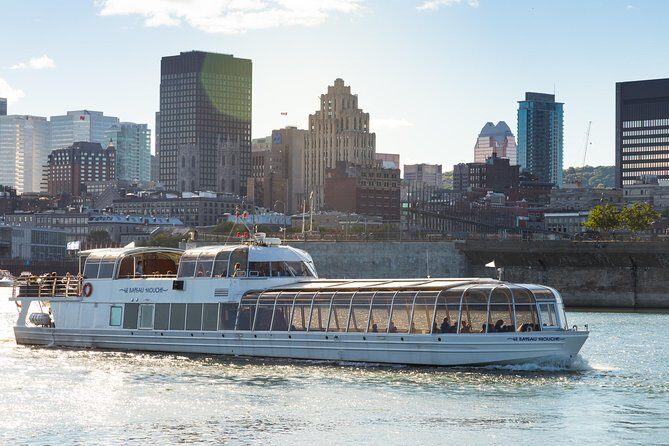
At $33.67 per person, this cruise sits in the “reasonable for a short attraction” category. You’re paying for three things: time on the water, a route that strings together big sights, and a guide-led narration (in English).
What’s not included is important. Alcoholic drinks and snacks aren’t part of the ticket price. If you plan to buy drinks, set aside extra money. The upside is you can choose what you want onboard instead of paying for a fixed package you won’t touch.
Here’s how to judge value for yourself: if you want a quick skyline-view break with minimal effort, the price makes sense. If you want a long ride with heavy storytelling or a route that stays scenic the whole time, you may feel the cost is too high for the limited time.
Where you board at Vieux-Port (and the one logistics tip that matters)
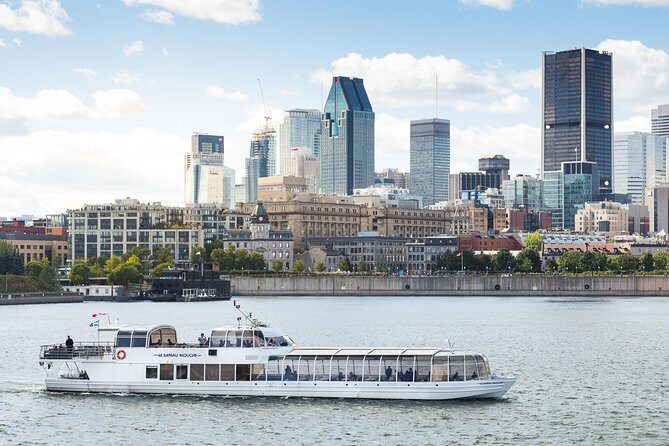
Your start point is the Vieux-Port de Montréal, 55 Quai d’accostage. The cruise returns back to the same place. It’s also described as near public transportation, which is helpful if you don’t want to fight for parking.
The practical move: arrive early and confirm you’re boarding the correct sailing. Some visitors have reported confusion about which boat to get on, plus cases where the scheduled time changed or the ride ended up shorter than expected. You can’t control that, but you can reduce stress by building in extra buffer time.
If you bought online, do the “ticket check” step before line pressure hits. One common mistake in ports like this is assuming your mobile ticket is enough for immediate entry and seating. A better approach is to ask at the ticket counter what needs to be scanned and whether you should pick up physical ticket stubs. It can affect where you end up on the boat.
Your route: what each stop is really doing for your photos
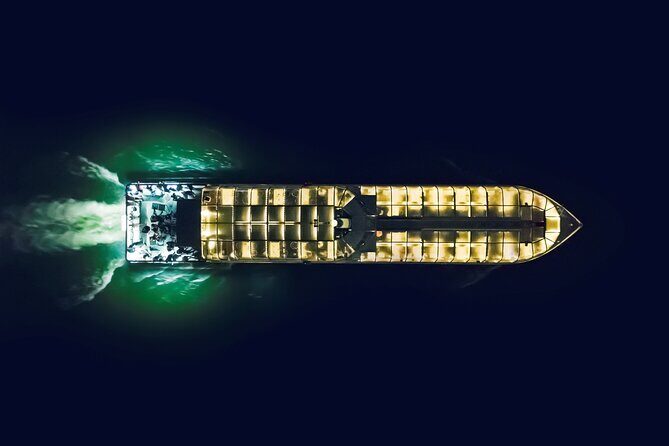
This cruise works like a highlight reel. You don’t stop for long. You pass by landmarks so you can see them, photograph them, and keep moving. The upside is speed. The downside is that you’re not lingering. Think of it as a guided “look” more than a guided “visit.”
Olympic Tower first: the instant “Montreal landmark” moment
Early on, you get a glimpse of the 1976 Olympic Tower, known as the tallest inclined tower in the world. Even if you’re not an Olympic-nerd, it’s the kind of structure your brain recognizes quickly. From the water, the tower has a more dramatic tilt and scale than it does from ground-level streets.
If you want photos, this is one of the best places to grab them early—before people settle in fully and wind up blocking some angles.
Other boat tours in Montreal
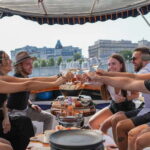

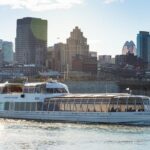
La Ronde rollercoasters: amusement-park energy from the river
You’ll also see the rollercoasters at La Ronde, described as Quebec’s largest and one of its most exciting theme parks. From water, the park’s shape reads differently. Instead of “rides on land,” it becomes a skyline component—bright, angular, and very Montreal.
It’s a fun pass-by if you’re traveling with kids, teens, or anyone who likes seeing what’s happening around the city without committing to an all-day theme park plan.
The Biosphere by Saint Helen’s Island: Expo 67 in one glance
You’ll pass the Biosphere, a museum dedicated to the environment in Montreal, located in Parc Jean-Drapeau on Saint Helen’s Island. It’s housed in the former United States pavilion built for Expo 67.
This is one of those places where the quick sighting still sticks. Even without a deep explanation, you’re looking at a piece of Expo-era architecture repurposed for environmental education. It’s a reminder that Montreal likes to reinvent buildings instead of wiping them out.
Pont Jacques-Cartier: bridge views you can’t fake from land
Pont Jacques-Cartier is the kind of bridge that can feel “ordinary” from a sidewalk viewpoint. From the river, you get depth—arches, lines, and the bridge’s relationship to the water and shoreline.
For photographers, this is where your perspective starts to look less like a postcard and more like a real travel photo. The river frames the structure, and you get a sense of direction through the shot.
Habitat 67: modern architecture that reads like a city model
You’ll pass by Habitat 67, the architectural gem designed by Moshe Safdie. It’s the kind of design that’s hard to fully appreciate from a distance—unless you’re viewing it from a moving angle where you can see the patterns and layers.
From water, Habitat 67 tends to feel more “planned” and less like random shapes. You can also spot how it sits in its setting, not just on a brochure.
The port Clock Tower: a memorial you’ll notice once you know it’s there
The itinerary includes a stop near the port area where you see a 45-meter-tall Clock Tower. It marks the entrance to the port and serves as a memorial to sailors lost at sea in wartime. The design dates to 1919 to 1922, credited to Montréal-based engineer Paul Leclaire.
This is a good example of why a quick commentary matters. Without context, you might just see a tower. With context, you understand it as a memorial—something Montreal uses the built environment to remember.
Onboard experience: comfort, sound, and how to manage the “commentary gap”
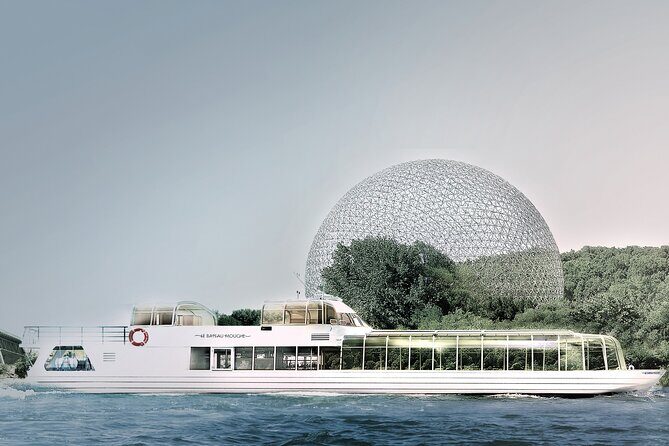
The boat ride itself is the core product. Most people are there for the scenery, then listening to whatever they can catch from narration.
Here’s what I’d plan around:
- Audio clarity can be uneven. Some people report hard-to-hear commentary or narration spoken too fast to understand. If the guide’s mic or pacing doesn’t work for you, you may miss historical details.
- Some sights may feel more industrial than scenic. One complaint is that a lot of the visible time can be seaport areas rather than pure “pretty waterfront.”
- Heat control may matter. The boat has air conditioning, but on hot days people have said it may not keep up.
Practical fix: don’t assume you’ll catch everything through the speakers. Take your cue from what you can clearly see. If you’re the kind of traveler who likes background details, spend a bit of time before you go reading up on Olympic Tower, Habitat 67, and the Biosphere so the passing glimpses connect to something you already know.
Drinks, snacks, and what to budget for
Drinks and snacks are available to purchase onboard, with payments accepted via VISA, Mastercard, or cash. Alcoholic drinks are also available for purchase (not included in the ticket).
So if you’re building a trip budget, count on additional spending if you want a beer, wine, soda, or snacks during the cruise. The benefit is choice: you buy what you want instead of paying for a package.
How long you should expect (and why timing sometimes surprises people)
The cruise runs about 1 hour to 1 hour 30 minutes, and you can pick between two tour durations. But multiple reports point to situations where the actual experience ran shorter or where sailing times didn’t match what people expected from their booking details.
The takeaway is simple: arrive early, and treat the departure time you see on any booking page as a starting guess, not a promise. If there’s any doubt, confirm on site before you commit yourself to the dock.
That’s how you protect your day. When the timing slips, you don’t lose your whole schedule to guesswork.
Who this cruise suits best (and who may want another option)
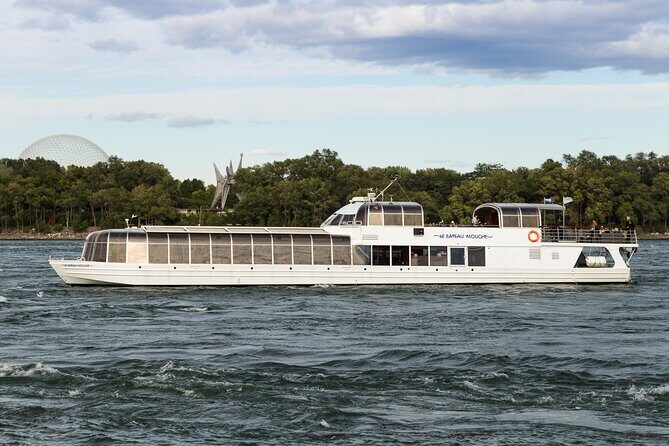
This cruise fits best if you want:
- a quick Montreal introduction from the water
- photo-friendly passes of big landmarks
- a low-effort activity between neighborhoods
- an English-guided overview without a full-day commitment
It may feel less satisfying if you:
- want heavy, slow commentary and lots of stopping time
- expect every moment to be scenic rather than working-waterfront views
- are very sensitive to missed audio due to microphone clarity or speaking speed
Should you book Le Bateau-Mouche?
I think you should book this cruise if your top priority is water-level sightseeing with major Montreal markers in a short time. It’s a solid “first days in Montreal” activity. The boat ride is comfortable enough for an easy break, and the landmark list gives you a strong mental map for the rest of your trip.
Skip it or choose another format if you’re hunting for an in-depth historical lecture. If you do book, show up early, confirm your sailing on site, and don’t rely on hearing every word through the speaker system.
If you’re planning around bridges, design, and river views, this is one of the easiest ways to see a lot without needing reservations for multiple stops.
FAQ
How long is the Le Bateau-Mouche sightseeing cruise in Montreal?
The tour is listed at about 1 hour to 1 hour 30 minutes.
Where does the cruise start?
It starts at Vieux-Port de Montréal, 55 Quai d’accostage, Montréal, QC H2Y 2E2, Canada.
Is the cruise in English?
Yes. The experience is offered in English.
How much does it cost?
The price is $33.67 per person.
Are drinks and snacks included?
No. Drinks and snacks are available to purchase onboard.
Can I buy alcoholic drinks onboard?
Yes, alcoholic drinks are available to purchase onboard.
What payment methods are accepted for purchases on the boat?
Alcoholic drinks and snacks are available with VISA, Mastercard, or cash.
How big is the group?
The tour has a maximum of 50 travelers.
Are service animals allowed?
Yes, service animals are allowed.
What happens if the cruise is canceled due to weather?
If canceled due to poor weather, you’ll be offered a different date or a full refund.