REVIEW · MONTREAL
Underground city & Downtown. Great way to stay warm!
Book on Viator →Operated by Tours Montréal · Bookable on Viator
Montreal has a city under your feet. This 2-hour walk is a fast, very practical way to get oriented while staying warm in winter, moving through tunnels, metros, and downtown landmarks with a licensed guide. You also get a strong hit of modern architecture and public art along the way, so it is not just transit trivia. Underground City energy is the main draw here.
I love that you start with big visual payoff right away, like the Ring installation—great for photos and quick street-level fun. Then you go deep enough into downtown to understand how the system works, not just where to walk. A second reason I like this tour: the stops line up with major downtown anchors—Place Ville-Marie and other key districts—so you leave knowing what you are looking at above ground too.
One thing to consider: there is lots of walking, plus escalators and stairs. If you use a walker, crutches, or a cane, this one is not recommended, and it is not listed as accessible for limited mobility.
In This Review
- Key highlights you’ll feel fast
- A warm way to understand Downtown Montreal
- Stop 1: The Ring installation for quick, modern Montreal vibes
- Stop 2: Underground City tunnels and how the network actually works
- Stop 3: Place Ville-Marie and the I.M. Pei connection
- Stop 4: Centre-Ville districts, from Chinatown to the Golden Square Mile
- Stop 5: Place des Arts for performing-arts Montreal
- Stop 6: Montreal World Trade Centre, indoors meets outdoors
- The tour vibe: why the guide matters
- Price and value: $66.69 for a 2-hour orientation win
- What to wear and expect (so the tunnels feel easy)
- How to plan your day around this tour
- Should you book this Underground City and Downtown tour?
- FAQ
- How long is the Underground City & Downtown tour?
- Where does the tour start and end?
- What time does the tour begin?
- What is the price per person?
- What language is the tour offered in?
- Is this tour accessible for people with limited mobility?
- Is the tour mostly indoors?
- Are alcoholic beverages included, and is there an age limit?
- Is cancellation free?
Key highlights you’ll feel fast
- A small group (max 10): easier questions, less crowd pressure in tight tunnel spaces
- Warmth strategy: a major portion of the experience is indoors, ideal on cold days
- Real downtown orientation: you connect landmarks from the Underground City to street level
- Architecture stops that matter: including I.M. Pei’s Place Ville-Marie
- Curious extras mentioned by past guests: several notes include a 24-hour metro pass and a gift card after the tour
A warm way to understand Downtown Montreal
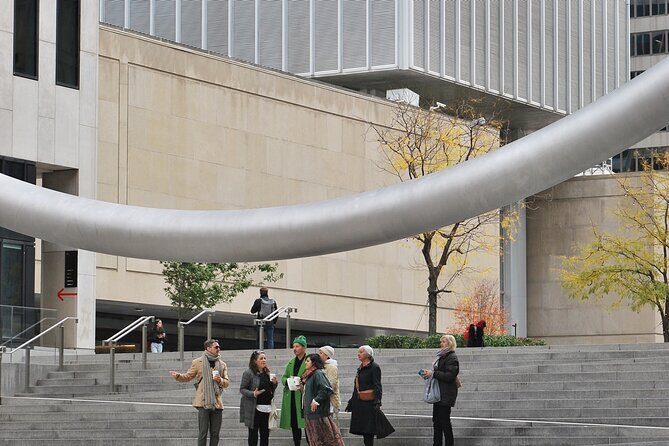
If your plan is to land in Montreal and then immediately wonder where everything is, this tour helps. The “Montreal hack” isn’t flashy. It is simple: learn the pedestrian underground network and the downtown blocks it links to, so you can travel efficiently while staying comfortable when the weather turns.
The format is also friendly for first-timers. It runs about 2 hours and stays focused on central sights. You meet in downtown near 1000 Rue De la Gauchetière O and the tour ends close to Centre de commerce mondial, which is a great area for continuing your day toward Old Montréal, Chinatown, and a lot of dining.
And yes, the tour is especially handy in winter. But even in milder months, it gives you a clear mental map of how the city functions. Once you understand the connections, you stop feeling like you are walking through a maze. You start seeing it as a system.
Other RESO Underground City tours in Montreal


Stop 1: The Ring installation for quick, modern Montreal vibes
You begin with The Ring, a large-scale modern art installation. This first stop is short—around 5 minutes—but it sets the tone.
Why it works so well: it is a low-effort way to start seeing Montreal as contemporary, not only historic. It also gives you a chance to settle in before the underground walking begins. If you like photos, this is the easiest spot on the route for a dramatic frame without needing to navigate any complex paths.
Potential drawback: it is brief. If you are hoping for a long art explanation, you won’t get that here. The main purpose is a strong opener and a quick visual landmark.
Stop 2: Underground City tunnels and how the network actually works
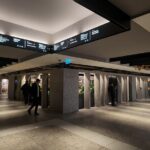
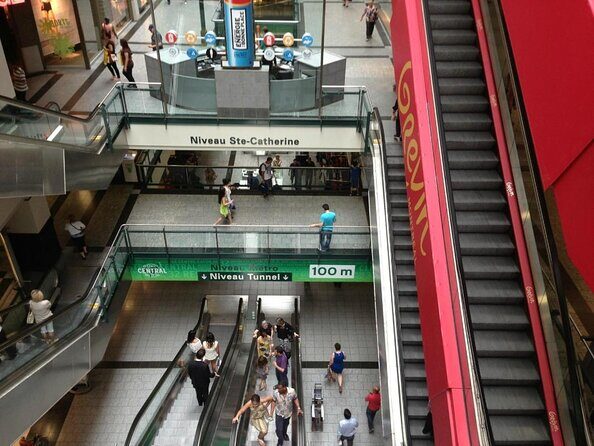
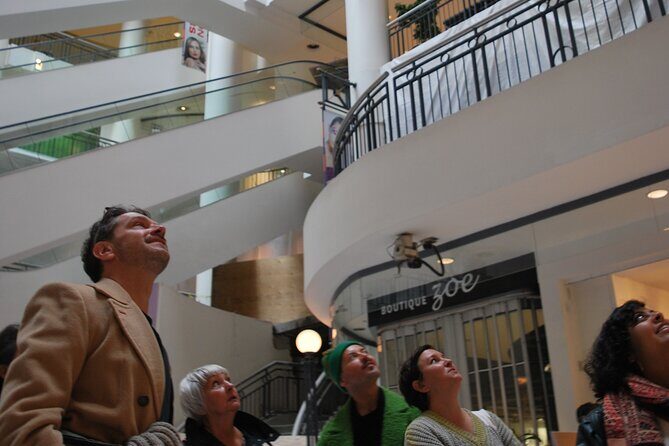
Now for the heart of the experience. Your licensed guide leads you through the Underground City—tunnels, pedestrian pathways, and links that connect to downtown life.
Here is what makes this part special for your day-to-day travel: the Underground City is not just “a place to be when it’s cold.” It is an urban-planning solution that helps people move between major areas with fewer weather headaches. In other words, you learn not only the route, but the logic behind the system.
The tour is designed to make it feel less intimidating. Past notes specifically highlight that after the walk, people felt comfortable exploring on their own. That is the goal. You should finish knowing where you are in relation to downtown, and how the tunnels tie into the street-level grid.
Practical tip: expect stairs and escalators as part of this segment. That is not a criticism of the tour—it is part of how the network is built. If you prefer flat walking only, plan accordingly.
Stop 3: Place Ville-Marie and the I.M. Pei connection
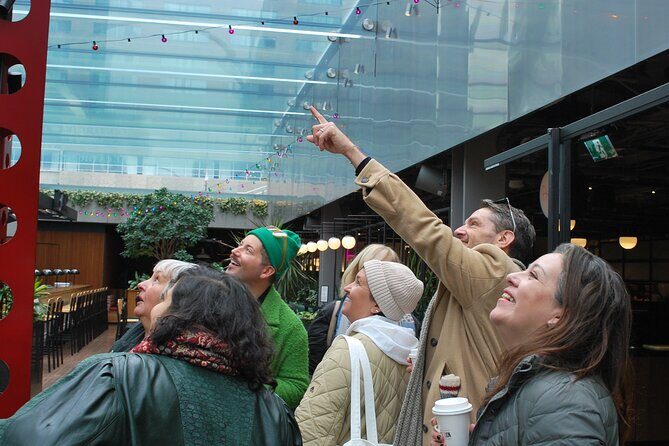
Next is Place Ville-Marie, described as the heart of downtown and closely tied to the Underground City. This is where the tour switches gears from “how to get around” to “why this place feels like Montreal.”
A key feature here is the architecture. You are looking at a mid-century modern masterpiece associated with architect I.M. Pei. Even if you do not call yourself an architecture person, this stop gives you something useful: a landmark that anchors your mental map.
Why that matters: when you later walk through downtown on your own, you will recognize what you are seeing faster. Instead of guessing, you will have a reference point.
Possible drawback: the stop is listed around 10 minutes. Like The Ring, it is efficient. If you want a longer explanation of the building itself, you may want to follow up later with self-guided reading or another targeted architecture tour.
Stop 4: Centre-Ville districts, from Chinatown to the Golden Square Mile
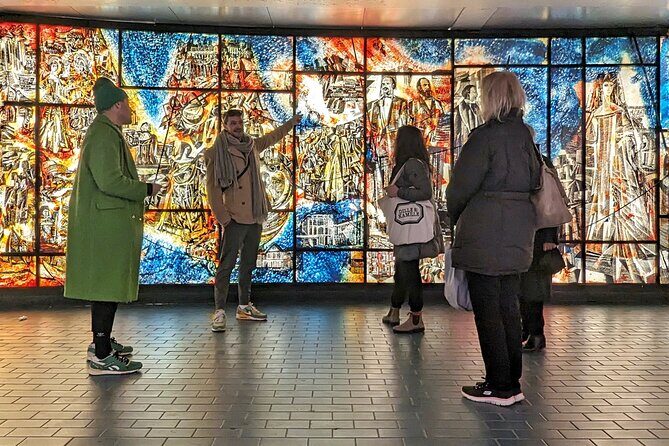
Then you get a broader downtown scan at Centre-Ville, with a guided look at how the city is organized by neighborhood character.
This part covers a lot of well-known zones, including:
- Quartier des spectacles (Entertainment District)
- Chinatown
- International Quarter
- Financial District
- Golden Square Mile
You also get a mix of architectural time periods: centuries-old neo-Gothic cathedrals positioned near modern skyscrapers. That contrast is one of Montreal’s defining traits, and it is much easier to appreciate when you understand where each district sits relative to the others.
You will also hear about the kinds of energy downtown brings—shopping streets, lively nightlife areas, festival grounds and museums, plus the presence of universities and hockey arenas. Even if sports are not your thing, it helps to know why certain neighborhoods feel busy on different days.
Practical note: this segment is about 15 minutes, so it is a guided “orientation view,” not a long neighborhood crawl.
Other city tours we've reviewed in Montreal





Stop 5: Place des Arts for performing-arts Montreal
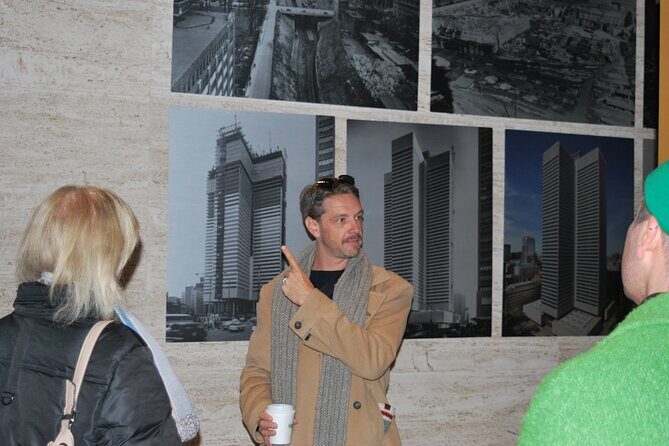
At Place des Arts, the focus shifts again. This is the modern performing arts center tied to major cultural institutions.
You will connect the Underground City experience to a very “above ground” Montreal idea: the city’s creative scene. The tour notes the home of the Grand Ballets Canadiens, Opéra de Montréal, and the Orchestre Symphonique de Montréal.
Why this stop is valuable even if you do not plan to attend a show: it helps you understand Montreal’s cultural gravity. Many visitors think of Montréal as food + old streets. This reminds you there is a strong modern arts core too.
Potential drawback: if you are expecting hands-on museum access, you might be disappointed, since this is a pass-through stop rather than a deep ticketed visit.
Stop 6: Montreal World Trade Centre, indoors meets outdoors
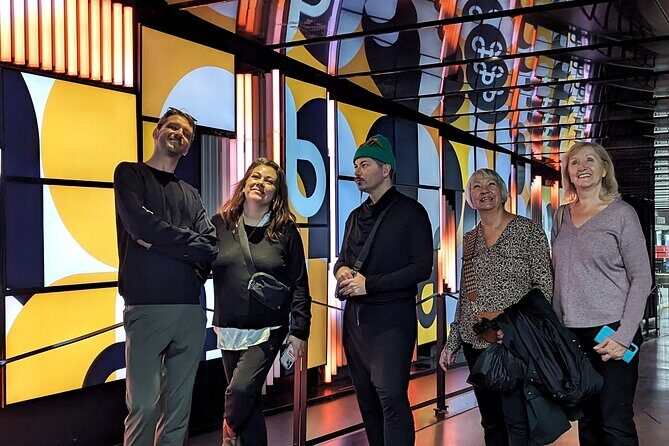
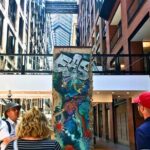
The final stop is Montreal World Trade Centre, described as where indoors meets outdoors. You also see fountains and a slab of the Berlin Wall—an attention-grabbing piece that makes the Underground City feel bigger than tunnels.
This is a neat wrap-up moment. After learning how the underground network connects downtown, you end at a spot that reinforces that Montreal mixes history and global references in public spaces.
Practical benefit: the tour ends near transit and in a zone that makes it easier to keep going. You will be positioned close to areas like Old Montréal and Chinatown, plus plenty of places to eat.
The tour vibe: why the guide matters
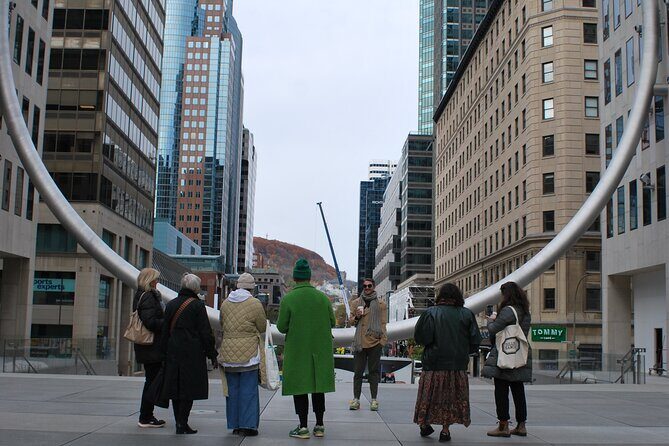
A lot of the praise in past experiences comes down to the guide style. Multiple notes name Thom and describe him as engaging, passionate, and excellent at making architecture and downtown connections feel alive.
That matters because this tour has a lot of information in a short time. In tunnels, it is easy to feel lost or bored. A strong guide turns it into a clear story: how the system works, why these landmarks matter, and how to walk with confidence afterward.
Also, the pace seems designed for questions. Several people mention being given time to ask things and get explanations, which is exactly what you want on a first visit.
Price and value: $66.69 for a 2-hour orientation win
At $66.69 per person for about 2 hours, this is not the cheapest activity in Montreal. But it can be strong value if you treat it as an orientation tool.
Here’s why that logic holds up:
- You get a licensed guide and a structured walk across multiple downtown anchors.
- The stops you hit are mostly free admission as listed, so you are paying mainly for guiding and time.
- Being in a small group (max 10) makes it easier to learn the routes without feeling lost in the crowd.
- Several past reviews mention a 24-hour metro pass and a gift card included as part of the experience. If that is your kind of bonus, it can stretch your trip budget.
If you already know Montreal well and you prefer to roam without structure, you might not see the value. But if you are arriving cold, new to the city, or just want to get your bearings quickly, this tour often pays off in saved time and fewer wrong turns.
What to wear and expect (so the tunnels feel easy)
This is where you can make the difference between a smooth experience and an annoying one.
You should plan for:
- Lots of walking
- Escalators and stairs (normal for this kind of route)
- A route that mixes indoor and outdoor elements
Also, the tour is not recommended for people using walkers, crutches, or canes, and it is not marked as accessible for limited mobility. If that is your situation, you might need a different format with fewer vertical steps.
Good news: the tour is described as near public transportation, and you are meeting in a central downtown area. So even if you finish and want to swap plans, you are not stuck in the middle of nowhere.
How to plan your day around this tour
This kind of tour works best early in your visit. Start it at 10:30 am, and you can spend the rest of the day using what you learned.
Because the end point is near Centre de commerce mondial, you can naturally continue toward:
- Old Montréal
- Chinatown
- Downtown dining streets
If you end up with a 24-hour metro pass (mentioned in multiple past reviews), you can use it that same day to keep exploring without constantly rethinking transport. Even if you only use it for a single extra ride, it often feels like a nice bonus.
Should you book this Underground City and Downtown tour?
I think you should book it if:
- You want a fast, organized way to learn how downtown connections work
- You are visiting in winter or on a cold day and want to stay comfortable
- You prefer small groups and clear guidance
- You like architecture and public landmarks, not just shopping streets
I would skip or rethink it if:
- You do not like stair-heavy routes or you need step-free mobility
- You hate walking lots in a short window
- You already have a strong plan for navigating downtown independently and do not want a guided structure
If you are on your first day in Montreal and you want to get your bearings fast, this is one of the better bets. It does what good orientation tours should do: after 2 hours, you feel like you can move through the city without guessing.
FAQ
How long is the Underground City & Downtown tour?
It runs for approximately 2 hours.
Where does the tour start and end?
It starts at 1000 Rue De la Gauchetière O, Montréal, QC H3B 4W5, and ends at 747 Rue du Square-Victoria suite 700, Montréal, QC H2Y 3Y9.
What time does the tour begin?
The start time is 10:30 am.
What is the price per person?
The price is $66.69 per person.
What language is the tour offered in?
The tour is offered in English.
Is this tour accessible for people with limited mobility?
No. It is not recommended for travellers with walkers, crutches or canes.
Is the tour mostly indoors?
It’s a great option for cold weather because you spend a lot of time in the Underground City and there is lots of indoor walking.
Are alcoholic beverages included, and is there an age limit?
Alcoholic beverages are offered for ages 18 and above.
Is cancellation free?
Yes. You can cancel up to 24 hours in advance for a full refund.