Old Montreal rewards people who slow down. This private, story-led walk strings together the big landmarks and the smaller “how did this place work?” moments, all with a licensed guide. I like that the route gives you clear context instead of just pointing at pretty buildings, and I like the private setup where the guide can shape the pacing to your group.
One thing to consider: at $167.45 per person, it’s best when you’re sharing with others or you truly value guided explanation. It’s also a moderately paced walk with some uneven ground or steps, so comfortable shoes matter.
The best part is how the tour hits Old Montreal’s working history: sailors, trade, civic power, religion, and even what used to be a Stock Exchange site. I especially like the way the ending focuses on the view-and-story combo around Notre-Dame and Place d’Armes, plus the architecture you’ll notice after the guide points it out. If you’re on a tight schedule and catching another train or heading to Québec, plan a little buffer, because you don’t want to gamble on meeting-point timing.
In This Review
- Key highlights worth your time
- Why this Old Montreal walk works (even if you hate long tours)
- Getting started at Hygie Hotel: quick orientation, no hotel tour needed
- Stop 1: Hygie Hotel area—why the guide starts where they do
- Stop 2: Notre-Dame-de-Bon-Secours Chapel to Bonsecours Market (Sailors’ Church stories)
- Stop 3: Montreal City Hall, Place Jacques-Cartier, and Rue Saint-Paul
- Stop 4: Notre-Dame Basilica surroundings, Art Deco cues, and Place d’Armes
- Optional extension (3-hour option): Centaur Theatre and more Rue Saint-Paul West
- Price and value: what you’re paying for at $167.45 per person
- Tour pace, walking reality, and what to wear
- Logistics that matter: private tour, mobile ticket, and meeting-point timing
- Who this tour is best for (and who should skip it)
- Should you book? My practical verdict
- FAQ
- How long is the Old Montreal highlights private walking tour?
- Where does the tour start?
- Is the tour private or do I join a larger group?
- What language is the tour offered in?
- Are attraction tickets included?
- How much walking should I expect?
- Can I cancel for a full refund?
Key highlights worth your time
- Licensed private guide experience in English, with pace adjusted for your group
- Old Montreal architecture made practical, from Sailors’ Church to Notre-Dame’s surroundings
- A strong “outside the buildings” plan, so you’re not stuck buying tickets
- Optional extended route (3-hour option) adds Centaur Theatre and more of Rue Saint-Paul West
- A focus on neighborhood context, ending near Chabad of Old Montreal and Griffintown
Why this Old Montreal walk works (even if you hate long tours)
Old Montreal is full of stone, viewpoints, and photos. The problem is most self-guided walking turns into a blur: you see the façade, you move on, and the city never really clicks.
This tour is designed to make the places connect. You’ll start with a very specific meeting point in the Old Port area, then move toward places tied to maritime life, commerce, city governance, and major religious architecture. By the time you reach the grand finish around Notre-Dame, you understand what the neighborhood was built to do—and who had power there.
Also: it’s private. Even when the schedule stays structured, the guide can slow down for questions. That’s a big deal in Montreal, where street names and building functions can look similar unless someone explains them.
The tour lasts about 2 to 3 hours, and it’s moderately paced. You won’t be sprinting from stop to stop, but you will be walking some cobbled streets and dealing with a few steps.
Other Old Montreal tours we've reviewed in Montreal
Getting started at Hygie Hotel: quick orientation, no hotel tour needed
Your meet-up is in front of Hygie Hotel at 401 Notre-Dame St. East. You do not need to enter the hotel. The staff isn’t informed about the tour, so keep it simple: stand outside at the meeting point and check for your guide.
This matters more than it sounds. Old Montreal streets can look similar, and timing is tight if you’re also using public transit. If you want the smoothest start, arrive a few minutes early and stay at the designated location.
You’ll also get confirmation at booking, and you should check your email the day before the tour for operator details. That’s where you’ll likely find any day-specific reminders—important if the weather shifts or if your exact start time is adjusted.
And yes, it’s near public transportation, which helps if you’re pairing this with a longer day of sightseeing.
Stop 1: Hygie Hotel area—why the guide starts where they do
Hygie Hotel itself is mostly a starting anchor. But it’s a smart one. You begin near the Old Port side of Old Montreal, so the first minutes help set the stage for everything that follows.
Think of this as your warm-up: the guide gets you oriented to the neighborhood layout and what to watch for as you move deeper into the historic core. If you’re the type who wants to know why a street bends or why a waterfront area shaped the city, you’ll appreciate this start.
Also, because you’re not entering the hotel, you avoid any awkward “where do we go?” moment. The guide meets you outside and you’re immediately moving.
Stop 2: Notre-Dame-de-Bon-Secours Chapel to Bonsecours Market (Sailors’ Church stories)
The second stop is Notre-Dame-de-Bon-Secours Chapel, sometimes called the Sailors’ Church. This is where the tour starts turning monuments into narrative.
You’ll hear how the chapel mattered to mariners and locals. That theme is more than trivia. It changes how you read the building: you’re not just looking at a church; you’re picturing a community that depended on ships, arrivals, departures, and the risky life of travel at sea.
From there, you’ll stroll to Bonsecours Market, described as a historic hub of trade and commerce. This is the “what money and goods made here” chapter. Even from street level, market buildings tell you what a city valued, who visited, and why this area stayed important.
Then there’s Château Ramezay, where you’ll admire its exterior and learn about its role in Canadian history. Since you’re not going inside on this route, the guide’s job is crucial: you need context to see why that façade matters.
Practical note: this portion is mostly exterior viewing, so you’ll get the payoff without ticket stress. If you’re traveling with limited time, that’s a real advantage.
Stop 3: Montreal City Hall, Place Jacques-Cartier, and Rue Saint-Paul
Next you’ll reach Montreal City Hall and take in the atmosphere around Place Jacques-Cartier. This is one of those locations that works for two kinds of travelers at once: the architecture-focused traveler and the people-watching traveler.
You’ll also wander along Rue Saint-Paul, one of Montreal’s oldest streets, lined with shops and eateries. The tour doesn’t treat it like a shopping strip. It frames it as a living route through history—where street-level commerce and city life have kept moving forward for a long time.
If you time it right, you’ll feel the square energy—though the tour pacing keeps you from feeling rushed. The guide also helps you spot details that would be easy to miss if you’re just scanning for photo angles.
A possible consideration: Rue Saint-Paul can be crowded during peak hours. A private guide doesn’t remove crowds, but it can help you walk smarter—shorter crossings, better stopping points, and fewer “wait, where are we?” moments.
Other walking tours we've reviewed in Montreal



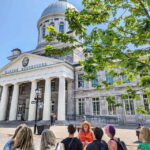
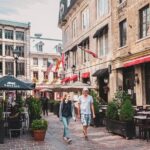

Stop 4: Notre-Dame Basilica surroundings, Art Deco cues, and Place d’Armes
The tour concludes with the grand story bundle around Notre-Dame Basilica. Here, you learn about the basilica’s architecture and history from the outside. That means you’re getting the big visual moment without turning the trip into a timed-entry ticket chase.
You’ll also admire the Art Deco beauty of the Aldred Building, a landmark that shows how Montreal’s skyline kept evolving long after Old Montreal was established as an identity.
Then comes Place d’Armes, where you’ll hear about its historical significance. This is a key stop for understanding why this neighborhood feels like a “center of gravity.” The guide ties the square to pivotal city moments, which helps you feel what the area has meant beyond its looks.
Finally, you’ll see the Old Sulpician Seminary, noted as the oldest standing building in Montreal, and you’ll learn about its history. That’s one of the best kinds of ending: it leaves you with a mental map of which buildings survived, which roles changed, and which stories are still visible in stone.
If you were hoping for a lot of interior time, keep expectations modest. This is an outside-focused highlights tour. You’ll finish with excellent context, which makes it much easier to decide what to visit next on your own.
Optional extension (3-hour option): Centaur Theatre and more Rue Saint-Paul West
If you choose the 3-hour option, you’ll add extra time beyond the core highlights. One added stop is the Centaur Theatre, located in a historic building that once housed Montreal’s Stock Exchange.
That’s a great stop for architecture-minded people. Even if you don’t go inside, the exterior story helps you understand why the building matters and how Montreal’s commercial identity shaped its skyline and institutions.
The extended route also moves you along Saint-Paul Street West. You get additional time to experience the street’s mix of art galleries and shops, with the guide connecting what you see to how the city has shifted over time.
Then you’ll reach Place de la Grande-Paix-de-Montréal, described as a serene square with historical significance. It’s a nice contrast after the busier squares—another way the tour balances major landmarks with quieter pauses.
The final neighborhood area is Chabad of Old Montreal and Griffintown. The tour description frames this as a way to uncover deeper layers of Montreal’s history and culture through a more diverse lens.
Price and value: what you’re paying for at $167.45 per person
At $167.45 per person, this isn’t a “cheap and cheerful” walking loop. You’re paying for a licensed guide, a private route structure, and story-driven interpretation of multiple landmark clusters.
Here’s why the price can still make sense:
- You’re not wasting time figuring out what to see next. The tour builds a logical route that keeps you moving through meaningful areas.
- You avoid ticket headaches for most stops, since the tour focuses heavily on exterior viewing. The itinerary notes free admission tickets at listed stops, and attraction tickets aren’t included anyway.
- Private doesn’t always mean chaotic. Group size is limited to 1–25 guests per guide, and the guide adjusts pace for uneven surfaces or steps. That’s a practical way to keep the experience manageable.
When it might not be worth it: if you’re the type who loves reading guidebooks and walking without explanations, you could recreate much of this route on your own. But if you want context fast—especially around Place d’Armes, Notre-Dame’s surroundings, and the Sailors’ Church trade links—this tour pays for itself in understanding.
Best value usually comes when you share the tour cost with companions. Because it’s private, the experience quality doesn’t drop just because you’re not traveling in a big group.
Tour pace, walking reality, and what to wear
The tour is moderately paced, with about 25–35 minutes on foot (including some uneven surfaces or steps). That doesn’t mean it’s a stroller-friendly stroll. It means you should plan for real Old Montreal ground: cobbles, small elevation changes, and occasional steps between viewpoints.
Wear comfortable shoes you can trust. If you’re visiting in rain or cold, dress for weather and bring a layer. You’ll be outside for the key viewing moments.
Also, because you’re on a structured walking route, it helps to keep essentials accessible. If you’re juggling a daypack, try not to overload your hands. Your guide will be pointing things out, and you’ll want both feet and attention.
Logistics that matter: private tour, mobile ticket, and meeting-point timing
This is a private tour/activity for only your group. You won’t be mixed into a larger crowd on the same guide.
You’ll likely use a mobile ticket, and you’ll get confirmation at booking. The day before, check your email for operator info. That’s where you’ll avoid surprises.
One caution: at least one past booking had a rough start when a guide wasn’t presented at the meeting point and the group had to pivot to another plan. I can’t predict it will happen. But I can tell you what to do to lower your risk: be early, stay at the exact start location, and use the day-before email instructions so you’re not guessing if anything changes.
If you’re traveling later to Québec (or anywhere with firm timing), build in buffer time so one delay doesn’t wreck your day.
Who this tour is best for (and who should skip it)
This tour fits you if:
- you’re seeing Old Montreal for the first time and want a guided map through the highlights
- you care about architecture and want stories tied to buildings, not just dates
- you prefer a private experience with a guide who can adjust pace
- you want an efficient 2–3 hour plan that sets you up for the rest of the day
It might not fit you if:
- you want lots of indoor museum time or ticketed entries
- you’re unwilling to walk on uneven surfaces or take a few steps
- you’re on a super tight schedule and don’t have margin for meeting-point timing
Should you book? My practical verdict
If you’re the kind of traveler who likes Old Montreal to make sense, not just look good, I’d book this. The structure is ideal for building context: Sailors’ Church links to maritime community life, Bonsecours Market ties commerce to the city’s growth, and the ending around Notre-Dame, Place d’Armes, and the Old Sulpician Seminary helps you read the neighborhood with your eyes open.
Choose the 3-hour option if you want extra time on Rue Saint-Paul West and that Stock Exchange-to-theatre building story at Centaur Theatre. Pick the 2-hour option if you want the core highlights without adding more walking time.
Just do two things before you go: wear good shoes and read that day-before email carefully. That’s how you turn a nice guided walk into a smooth, confidence-building afternoon in Montreal.
FAQ
How long is the Old Montreal highlights private walking tour?
It runs about 2 to 3 hours depending on the option you choose.
Where does the tour start?
The tour meets you in front of Hygie Hotel, 401 Notre-Dame St. East, Montreal, QC H2Y 1C9. The meeting instructions say you should not enter the hotel.
Is the tour private or do I join a larger group?
It’s private. Only your group participates. The group size is limited to 1–25 guests per guide.
What language is the tour offered in?
The tour is offered in English.
Are attraction tickets included?
Tickets to attractions are not included. That said, the listed highlights focus heavily on viewing and stories, and the itinerary notes free admission tickets at the stops.
How much walking should I expect?
It’s a moderately-paced walking tour with about 25–35 minutes on foot, including some uneven surfaces or steps. The guide will adjust pace for your group.
Can I cancel for a full refund?
Yes. You can cancel up to 24 hours in advance for a full refund. If you cancel less than 24 hours before the start time, the amount paid is not refunded.