Old Montreal makes sense on foot. This small-group walking tour (up to 14 people) is a friendly, first-timer route through cobblestones, squares, and the Old Port, with stops that can flex to your interests and questions. I also like how the key sights along the way are listed as free to enter, so you’re paying for the guide and pacing—not admission fees. One possible drawback: like any small-tour setup, there’s a small risk of problems (including at least one past report of a guide not showing), so it’s smart to arrive on time and keep an eye on your messages.
You get to choose morning or afternoon timing, it runs about 2 hours, and it ends near the Point-à-Calliere area so you can roll right into lunch. It’s an all-weather activity, and the walk is generally described as easy going (often flat, with time for photos and questions), but you’ll still want good shoes and layers in Montreal weather.
In This Review
- Key highlights worth planning for
- Old Montreal gets clearer fast: what this 2-hour walk does well
- Price and value: why $36.80 can work for your day
- Where it starts and how the route flows (Old Port focus)
- Stop 1: Old Montreal streets and the feel of the oldest core
- Stop 2: Place Jacques-Cartier and the square-as-a-stage story
- The charming street pause—and the de Gaulle 1967 landmark moment
- Stop 3: Phi Centre—modern design with older layers inside
- Stop 4: Old Port views toward the St. Lawrence
- Your guide is the difference: small-group Q&A and real street answers
- Walking comfort: timing, shoes, and weather reality
- Finishing near Point-à-Calliere: what to do after the tour
- Should you book this Old Montreal walking tour?
- FAQ
- How long is the Old Montreal walking tour?
- What does the tour cost?
- Where do you meet for the tour?
- Where does the tour end?
- What language is the tour offered in?
- Is hotel pickup included?
- Is admission included for the stops?
- Does the tour run in bad weather?
- How many people are in the group?
Key highlights worth planning for
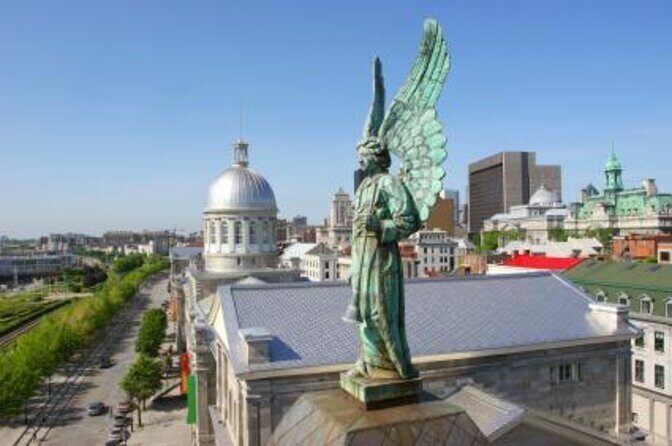
- Small group size (max 14): more chance to ask questions and keep the pace comfortable.
- Your route adapts: the guide can shift emphasis based on your interests and what you ask on the street.
- A clean first-timer circuit: Old Montreal’s core squares plus the Old Port views.
- Free entry at the listed stops: you’re mainly buying guiding, not tickets.
- Art meets old Montreal: Phi Centre mixes modern architecture with older building traces.
- Lots of practical photo and timing moments: time to look closely instead of rushing past everything.
Old Montreal gets clearer fast: what this 2-hour walk does well

Old Montreal can feel like a postcard. The trick is learning what you’re looking at—why the streets bend the way they do, how power changed hands, and how neighborhoods grew around trade and religion. This tour is built for that exact moment when you’re standing in the middle of the Old Port area and thinking, I love this… but what’s the story?
It’s also a good format for people who don’t want to spend half a day zigzagging on their own. The route keeps you moving through the historic core without turning the experience into a marathon. And because the group is capped at 14, you can actually speak to the guide while you’re walking, not just stare at them from the back.
Other Old Montreal tours we've reviewed in Montreal


Price and value: why $36.80 can work for your day
At $36.80 per person for about 2 hours, you’re paying for a local guide plus the structure that saves you time. You also avoid the trap of paying a lot for transportation or museum tickets before you even know what you care about.
Here’s what makes the value feel real:
- The tour includes the local guide and local taxes.
- The stops called out along the way are listed as free for admission.
- You’re not stuck in a scripted, one-size-fits-all loop. The guide is set up to adjust based on what you want to know.
If you’re the type who likes to read a bit, ask questions, then wander independently afterward, this is a smart first buy. If you want deep museum time or a very detailed specialist topic, you may want to pair it with a longer museum visit later—because this walk is intentionally focused on getting you oriented.
Where it starts and how the route flows (Old Port focus)
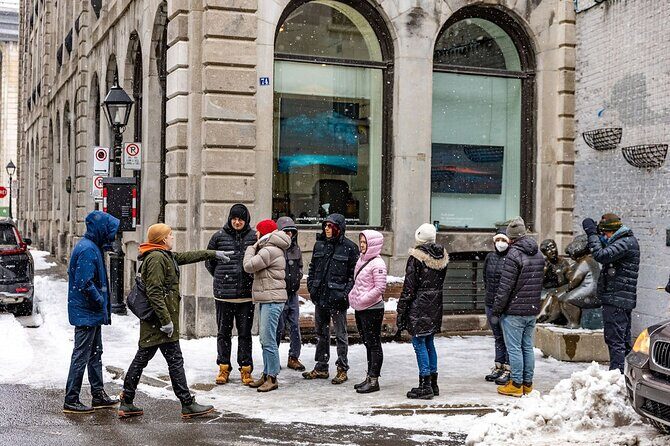
The meeting point is at Hôtel William Gray, 421 Rue Saint-Vincent, Montréal. The walk ends nearby Montreal Museum of Archaeology and History (Point-à-Calliere) on Place Royale, so you finish in an area that already makes sense for lunch plans and follow-up wandering.
The route itself is built around an Old Montreal logic:
- Start by getting your bearings in the historic streets.
- Land in the big public-square moment.
- Move from the old urban fabric into a modern cultural stop.
- Finish with Old Port views toward the St. Lawrence River.
Two practical notes that matter in Montreal:
- This tour is offered in English, so you’ll get the full story without guessing.
- Parking is difficult in Montreal. You’ll be much happier arriving by foot, transit, or a short drop-off rather than trying to drive in.
Stop 1: Old Montreal streets and the feel of the oldest core

You begin with a wander through Montreal’s most historical area, the narrow cobblestone streets of Old Montreal. This is the part that helps your brain lock in the map. Once you’ve walked a few blocks with context—what you’re looking at, what era it hints at, why certain buildings sit where they do—everything feels less random.
What makes this first stop useful:
- You get a quick orientation to street scale and architecture styles.
- It sets up the rest of the tour so later landmarks don’t feel like isolated photo spots.
Possible drawback? The first segment is also where you’re most likely to be adjusting to winter coats or spring layers. If you’re sensitive to cold or wind, dress for the open parts of the Old Port area too, not just the sheltered hotel-to-street segments.
Stop 2: Place Jacques-Cartier and the square-as-a-stage story
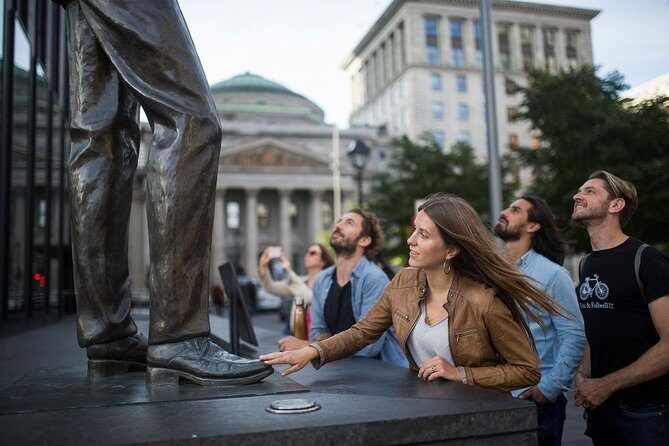
Next up is Place Jacques-Cartier, Old Montreal’s main public square and former marketplace. A square is more than a pretty backdrop. It’s where commerce happened, where crowds gathered, and where the city’s rhythms became visible.
A guide who’s good at street storytelling can make a square feel alive by connecting:
- who used to come here,
- how the square functioned as a marketplace,
- and how Montreal’s European influences show up in the urban layout.
This stop also works well for photos and a quick sit-down reset if you need one. If your feet are already a little sore, you’ll appreciate that the tour isn’t built to drag you through endless hours of standing.
Other walking tours we've reviewed in Montreal






The charming street pause—and the de Gaulle 1967 landmark moment
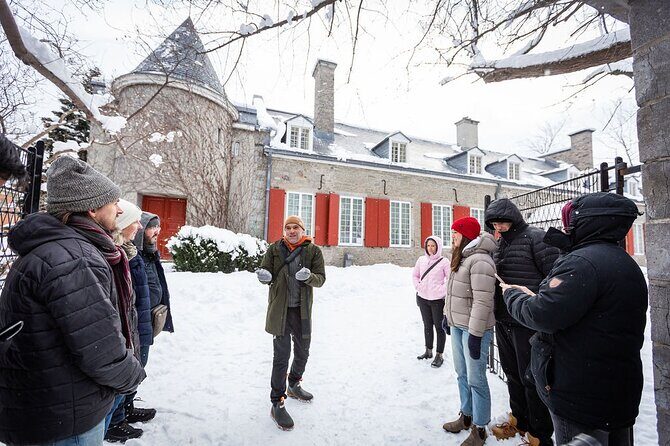
Between the bigger named stops, you’ll get time for one of the city’s most charming streets. Montreal is full of lanes and narrow runs, but the guide’s job is to point out what to notice: stonework details, building rhythm, and the way the street turns create surprise views.
You’ll also pause at a standout building tied to French General Charles de Gaulle’s famous 1967 speech. This is the kind of stop that helps the city feel connected to larger world history, not just local architecture.
Small tip: if you’re the type who loves checking place names later, take a photo of the facade from the street so you can remember what to look up. The tour moves on quickly enough that it’s easy to forget a detail if you don’t capture it in the moment.
Stop 3: Phi Centre—modern design with older layers inside

Phi Centre is an avant-garde art gallery, and it makes a clever contrast to the older streets around it. The modern architecture doesn’t just sit beside history—it incorporates historical structures and even includes part of the old Ruelle des Fortifications.
Why that matters for you:
- You see how Montreal doesn’t treat the past like a museum piece.
- You get an example of how new cultural spaces can be built while leaving older traces visible.
If you like architecture and design (or you just want a visual break from cobblestones), this stop is a strong mid-tour reset. It’s also a good moment to ask your guide for their take on Montreal’s identity—French and British influences, shifting power, and how the city reinvented itself over time.
Stop 4: Old Port views toward the St. Lawrence
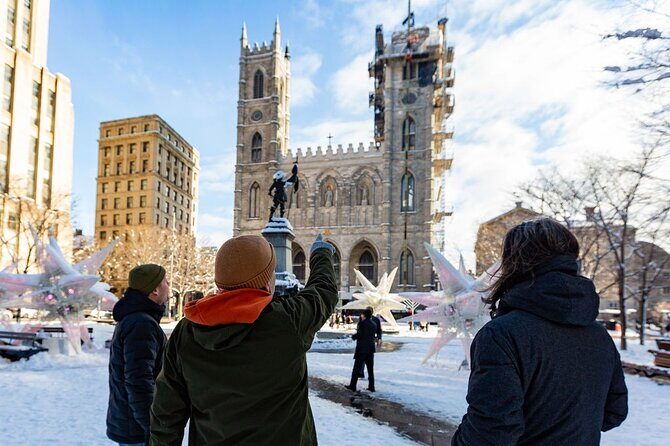
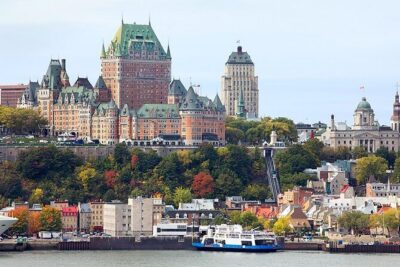
The final major stop is the Old Port of Montreal, where you get wonderful views of the Old Port and the St. Lawrence River. Finishing here is smart because the river changes how you experience the city. Montreal’s history isn’t just on land; it grew around trade routes and water access. Even if you’re not a “history person,” the river view gives the story a real physical anchor.
What I like about ending with a view:
- It makes the tour feel like it has a natural conclusion.
- You can keep wandering after the tour because there’s an obvious direction to walk.
In winter, the wind can be sharp here, so treat this as your cue to check your gloves, not just your camera battery.
Your guide is the difference: small-group Q&A and real street answers
This is where the reviews really point the way. The tour runs best when your guide is comfortable turning a walk into a conversation. The small group helps a lot, but the guide still needs to do the work—explaining, answering questions, and adjusting the pace.
You’ll likely hear storytelling styles from guides such as Frederic, Ann Marie, Anne-Louise, Eduardo, Ronny, Jeff, François, Simona, and JF. Common thread across them: they connect architecture to the real “who/why/when” behind it, and they keep the tone friendly enough that you don’t feel like you’re trapped in a lecture.
If you want a tour that helps you actually understand what you’re seeing, this is one of those setups where you’ll get your money’s worth fastest—especially if you ask questions about:
- building styles and what they signal,
- the city’s French/British/native history shifts,
- and where locals tend to look for good views.
Walking comfort: timing, shoes, and weather reality
The walk is often described as easy and mostly flat, with enough time for photos and questions. One review even mentioned around 5000 steps, which makes this feel like a practical stroll rather than a workout.
Still, don’t ignore Montreal weather. This tour operates in all weather conditions, so you should come ready for rain, wind, or cold. Reviews include examples of guides showing up with hands-warmers or extra gear during winter, which is reassuring. But you shouldn’t bet on that being your plan—plan on dressing in layers and wearing real walking shoes.
One more practical thing: if you’re coming in cold conditions, do the sensible prep before you start—warm up, hydrate, and use facilities when you can. Cobblestones are charming, but they don’t forgive sore feet.
Finishing near Point-à-Calliere: what to do after the tour
The tour ends near Point-à-Calliere, the Montreal Museum of Archaeology and History area. Your guide will suggest lunch options around there, which is exactly what you want at this stage: you’ve been learning for about two hours, and now you want food without hunting blindly.
After the walk, you have two good paths:
- If you want more museums, Point-à-Calliere is the natural next step since you’re already nearby.
- If you want to roam, the area is easy to use as a launching point for more Old Montreal wandering and river-side strolling.
This ending spot also helps you avoid the “tour ends and you’re suddenly lost” feeling. The location gives you a clear next move.
Should you book this Old Montreal walking tour?
Book it if you want:
- a strong first-time Old Montreal orientation,
- a small group experience with real Q&A,
- a route that mixes classic squares, modern culture (Phi Centre), and the Old Port view.
Think twice (or at least go in with a little caution) if:
- you’re very schedule-sensitive and can’t handle a slow start,
- you’d be upset if a last-minute issue disrupted the guide meeting time (rare, but it has happened in one past case),
- or you’re only interested in one deep museum or a long, self-guided history crawl.
My take: this is the kind of tour that pays off quickly. In about two hours, you leave with a mental map, a bunch of story threads to pull later, and an easier time choosing what to do next in Old Montreal.
FAQ
How long is the Old Montreal walking tour?
It runs about 2 hours.
What does the tour cost?
The price is $36.80 per person.
Where do you meet for the tour?
The tour starts at Hôtel William Gray, 421 R. Saint-Vincent, Montréal, QC H2Y 3A4.
Where does the tour end?
It ends nearby the Montreal Museum of Archaeology and History (Point-à-Calliere), at 350 Pl. Royale, Montréal, QC H2Y 3Y5.
What language is the tour offered in?
The tour is offered in English.
Is hotel pickup included?
No. Hotel pickup and drop-off are not included.
Is admission included for the stops?
The listed sights on the route are shown as free admission for the tour stops.
Does the tour run in bad weather?
Yes, it operates in all weather conditions, so dress appropriately. If it’s canceled due to poor weather, you’ll be offered a different date or a full refund.
How many people are in the group?
The tour has a maximum of 14 travelers.