REVIEW · MONTREAL
Jewish Neighborhood Food Tour
Book on Viator →Operated by Round Table Food Tours · Bookable on Viator
A Jewish food tour in Montreal sounds simple, then it turns into a walking story. This one mixes classic eats with street-level neighborhood history, from Outremont to Mile End to Plateau Mont-Royal. You’ll get five to seven tastings and a guide who connects what you’re eating to where the Jewish community built its life in this city.
I especially like the variety. You’re not just doing bagels and calling it a day. You’ll sample smoked-meat-style dishes, rival bagels, falafel, and a dessert stop at a kosher bakery. I also like how the tour is guided by real people with real energy; names that have led past groups include Melissa, Darren, and Frances, and they all show up with the same goal: food plus context, not just photo stops.
One consideration: this is a 3-kilometre walk over about four hours. It can be tough if you use a walker or cane or if you need a slower, less dense pace, since the schedule is built around tasting stops and keeping everyone moving.
In This Review
- Key Highlights at a Glance
- A Jewish Food Tour That Actually Explains the City
- Outremont First: Delis, a Kosher Bakery, and Community Roots
- Mile End Second: Rival Bagels, Falafel, and Writer-Watching on Side Streets
- Plateau Mont-Royal Third: Smoked Meat, a Jewish Bakery, and Landmark Stops
- What You’ll Eat: Five to Seven Samples That Add Up to a Meal
- The Walking Pace and Group Size: Fun for Most, Tight for Some
- Guides Make or Break It: The Storytelling Effect
- Price and Value: What $138.94 Buys You in Real Terms
- Weather, Timing, and Comfort Tips That Actually Help
- Should You Book This Jewish Neighborhood Food Tour?
- FAQ
- How long is the Jewish Neighborhood Food Tour in Montreal?
- What does the tour cost, and what’s included?
- Where does the tour start and end?
- How much walking is involved?
- Is the tour offered in English?
- What if I have dietary requirements?
- Is cancellation free?
Key Highlights at a Glance
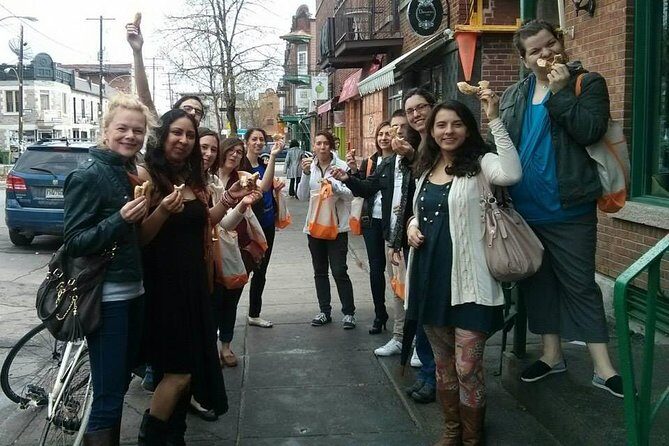
- Three Montreal neighborhoods in one afternoon: Outremont, Mile End, and Plateau Mont-Royal
- Five to seven tastings across deli, bagel shops, falafel, and Jewish-style bakeries
- Kosher dessert stop with classics like babka and rugelach
- History on the sidewalk, including references like Mordecai Richler and landmarks tied to Jewish life
- Small group size with a maximum of 16 people, so questions stay in the mix
A Jewish Food Tour That Actually Explains the City
This isn’t a food-only loop. It’s a guided walk through Montreal neighborhoods where Jewish culture shaped everyday life—what people ate, where they gathered, and how the community settled across the city.
The best part is that food isn’t treated like an add-on. It’s the map. When you stop at a deli that’s famous for smoked-meat style sandwiches, you’re not just tasting salt and steam. You’re tasting a Montreal tradition that shows up again and again in Jewish immigrant stories. When you move to Mile End and hit bagels and falafel, you’re watching how different Jewish-adjacent food styles landed side-by-side in real neighborhoods.
And because the tour is about late morning timing and walking between stops, you get that satisfying rhythm: eat, walk, learn, eat again.
Other Jewish history & food tours in Montreal
Outremont First: Delis, a Kosher Bakery, and Community Roots
You start in Outremont near 1057 Av. Bernard. This is where the tour leans into community structure: the Jewish neighborhoods of Montreal didn’t appear by accident, and your guide frames how settlement patterns formed the areas you’re about to walk through.
You’ll visit a Jewish deli and a kosher bakery right away. That first pairing matters. The deli side gives you the savory backbone of Jewish Montreal—think smoked-meat-style dishes and the kind of comfort food people return to for decades. Then the bakery side shifts your taste buds to sweet classics.
From there, you’ll also get a rundown of what makes Montreal’s Jewish food scene distinct and where the culinary mix fits into the broader city. It’s the kind of context that makes later tastings feel more meaningful instead of random.
What I’d watch for: the tour expects you to keep moving. Outremont sets the pace early, so if you arrive hungry and ready to walk, you’ll feel like you’re in the right place from minute one.
Mile End Second: Rival Bagels, Falafel, and Writer-Watching on Side Streets
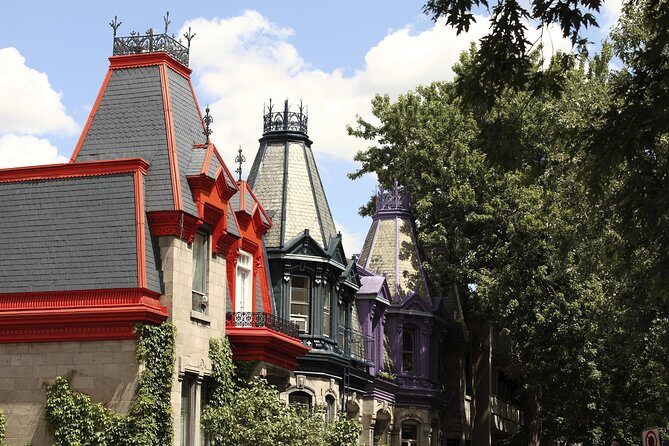
Next is Mile End, where the vibe gets louder and the streets get more photo-worthy. The tour goes after staples you’d normally seek out on separate trips: two rival bagel shops, a falafel shop, and a diner that has its own following.
This is also where you get history that feels less like a lecture and more like you’re reading the neighborhood while you walk it. You’ll see places tied to former synagogues and landmarks connected to writers and famous Montrealers. If you’re a “wait, who lived there?” type, this part delivers.
There’s a bonus mental trick here: when you compare two bagel places back-to-back, you stop thinking of bagels as one item and start thinking of them as competing styles. Your guide may even set up a playful comparison format (like a bagel showdown vibe) that makes it easier to notice texture, crust, and filling choices.
Potential drawback: some food stops are small. If there isn’t much seating, you may eat standing or on the sidewalk. It’s not a deal-breaker when the food quality is the main point, but it helps to know what the environment can feel like.
Plateau Mont-Royal Third: Smoked Meat, a Jewish Bakery, and Landmark Stops
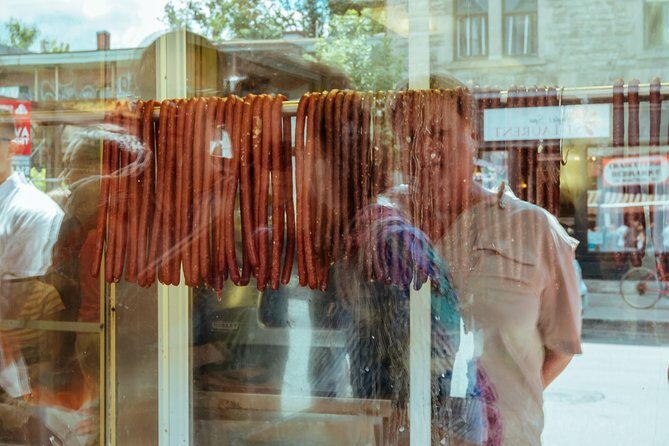
The final stretch runs through Plateau Mont-Royal. This is where the tour ties food to the physical landmarks of Jewish Montreal: synagogues, parks, and buildings tied to Jewish work and cultural life.
You’ll visit a smoked meat establishment and a hip young Jewish bakery during this portion. The goal here is variety. By now you’ve likely had enough savory samples to know what you love, and the bakery stop helps reset your palate for the final bites.
What makes this segment especially satisfying is how many non-food landmarks get woven in. You may spot:
- a synagogue
- a former Yiddish theatre
- a public bath house
- a building that housed Jewish labour organizations
- and a park plus the house of a famous Montreal Jew
Even if you’re not a full-time history person, these stops help you connect the dots. Jewish Montreal wasn’t only about restaurants; it was also about work, performance, community services, and public life.
The tour ends at 3919 Rue Clark (about four hours after you started). By the time you reach the finish, you’ll feel like you’ve covered real ground and not just zig-zagged between storefronts.
What You’ll Eat: Five to Seven Samples That Add Up to a Meal
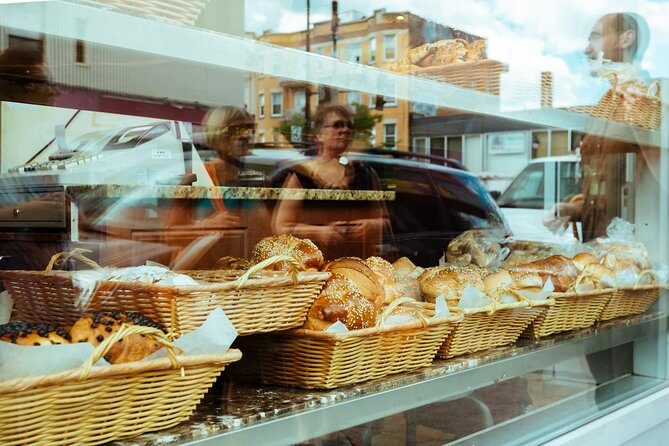
The tour is built around five to seven tastings, and you should plan for it to feel like lunch plus dessert—then some. If you skip breakfast, you’ll enjoy the experience more. If you don’t, you’ll still probably eat, but you might miss the joy of having food spaced just right.
Here’s what you should expect in broad strokes:
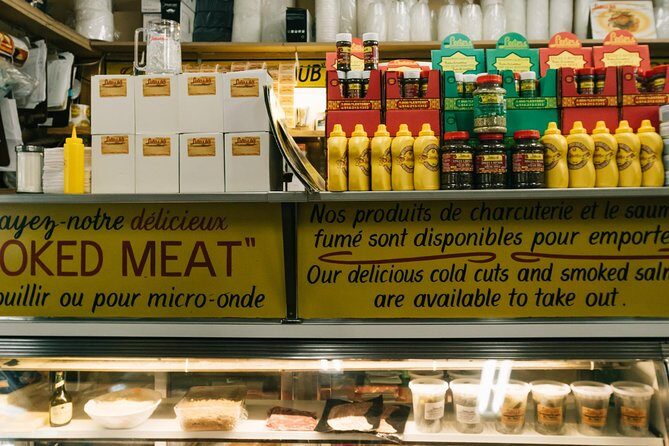
- Smoked-meat-style deli sampling (a signature of Montreal’s Jewish food identity)
- Bagel tastings, including a compare-and-contrast moment between two spots
- Falafel as part of the broader food culture mix
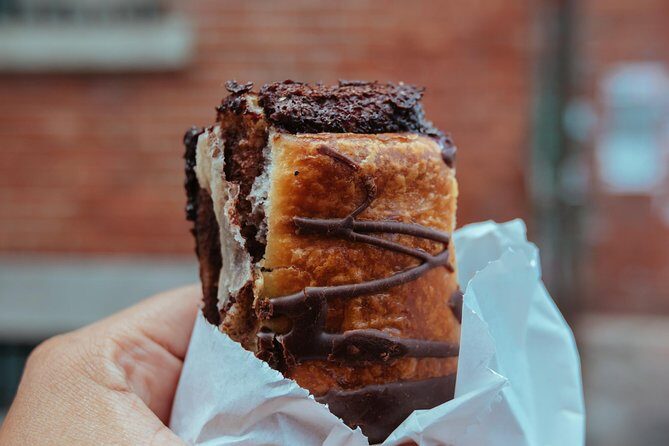
- Kosher bakery desserts, which may include items like chocolate babka, hamentashen (triangular stuffed pastries), rugelach, and poppy seed cake
The dessert stop is worth planning your day around. Babka and rugelach are the kind of foods that can feel special even after one bite, and tasting them in a dedicated kosher bakery setting adds meaning beyond sweetness.
How I’d think about it: the tastings are not random bites. They’re ordered to change your taste buds over time—savory first, then contrasting sweet, with more savory again as the route finishes.
Other food & drink experiences in Montreal




The Walking Pace and Group Size: Fun for Most, Tight for Some
You’ll walk about 3 kilometres (about 1.8 miles) over roughly four hours. That’s a very manageable distance for people who walk comfortably. It’s also why this tour can feel great: it moves, but it doesn’t turn into a half-day grind.
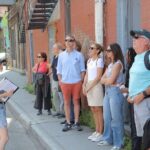
The schedule is built with multiple stops—some tasting, some landmark-focused—so the group moves as one unit. Past groups have described the pace as manageable when everyone can keep up, and the small size helps: the tour caps at 16 people, so it stays interactive instead of chaotic.
The one clear downside shows up in mobility needs. If you use a walker or cane, you may not be able to match the pace without falling behind. When someone can’t keep up, the tour can’t simply stretch indefinitely, since it has to keep the food stops and timing working for everyone.
My practical advice: if your walking is limited, look for a shorter or private style of tour where you can move at your own speed.
Guides Make or Break It: The Storytelling Effect
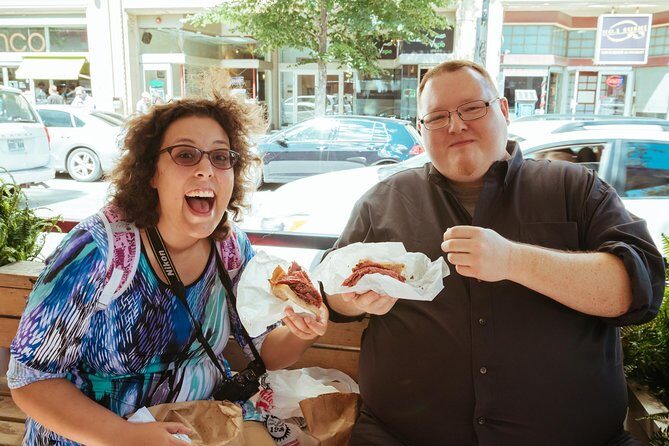
Food tours live or die on the guide, and this one has a strong track record. People often call out guides who:
- link what you’re eating to the neighborhood story
- keep the walk lively with humor and local references
- answer questions without rushing
Guides named in past groups include Melissa, Darren, and Frances, and the common thread in their feedback is clear: they treat the neighborhood like a living class.
One thing I like about that style is the way it helps you remember. You taste something, then your guide points to a nearby building, a writer’s home, or an old cultural site. Suddenly you can picture the story instead of just swallowing it.
Price and Value: What $138.94 Buys You in Real Terms
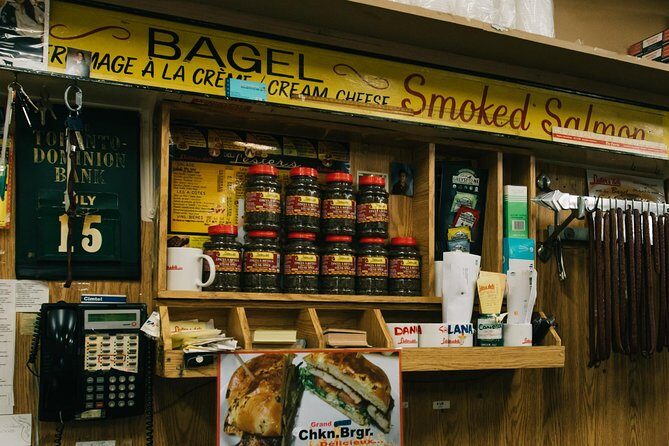
At $138.94 per person for about four hours, you’re not paying for a giant banquet. You’re paying for an efficient plan: a guided route across multiple neighborhoods plus a set number of tastings.
Here’s the value logic I’d use:
- You get five to seven food samples included, which is the biggest cost driver on a tour like this.
- You also get guided interpretation: neighborhood history, settlement patterns, and landmark context tied to real places.
- The route saves time. You don’t have to research which bagel shops to compare or where to stop for the dessert classics.
If you’re the type who would otherwise spend hours hunting for the best stops on your own, the tour price starts to make sense fast. If you only want one or two things—like just bagels—then it’s pricier than a simple self-guided loop. But for people who want a full “eat and learn” afternoon, it’s a strong deal.
Weather, Timing, and Comfort Tips That Actually Help
The tour runs in all weather conditions, so dress for the day you get. Montreal can switch moods fast, and you’ll still walk between stops.
For comfort:
- wear walking shoes
- plan to eat breakfast lightly or skip it
- bring a layer even if the morning starts warm
Also keep in mind the size of some food venues. If seating is limited, you may eat on the sidewalk. That’s not a sign to panic—it’s a sign you’re at places that focus on food more than furniture.
Should You Book This Jewish Neighborhood Food Tour?
I’d book this tour if you want one afternoon that does three jobs at once: food, culture, and neighborhood orientation. It’s especially good if you like Montreal’s iconic eats—bagels, smoked meat-style sandwiches, and Jewish bakery desserts—and you also enjoy learning why those foods matter in the places you walk.
I’d think twice if you:
- need a slower pace or use mobility aids and can’t comfortably keep up for the full route
- have strict expectations about certified kosher at every stop (the tour clearly includes a kosher bakery dessert stop, but not every savory stop is described as fully kosher certified in the information I have)
If you’re somewhere in the middle, you can still make it work by planning for the walk and going in hungry.
FAQ
How long is the Jewish Neighborhood Food Tour in Montreal?
The tour runs for approximately 4 hours.
What does the tour cost, and what’s included?
The price is $138.94 per person. It includes a local guide and five to seven food tastings.
Where does the tour start and end?
It starts at 1057 Av. Bernard, Outremont, QC H2V 1V1, Canada and ends at 3919 Rue Clark, Montréal, QC H2W 1W5, Canada.
How much walking is involved?
The tour involves about 3 kilometres (about 1.8 miles) on foot, with moderate physical fitness required.
Is the tour offered in English?
Yes, it is offered in English.
What if I have dietary requirements?
You should advise any specific dietary requirements at the time of booking.
Is cancellation free?
Yes, there is free cancellation. You can cancel up to 24 hours in advance of the experience for a full refund.