REVIEW · MONTREAL
Montreal: Discover Reso – The Underground City
Book on GetYourGuide →Operated by Explora Montreal · Bookable on GetYourGuide
Rain can’t stop Montreal’s RESO. This 2-hour, small-group route threads 33 km of indoor streets with storytelling from Misha, starting at the Complexe Desjardins fountain and swinging past photo-ready stops like the Berlin Wall piece and the Barbie Expo. I especially like the local wayfinding (you’ll know how to move through it) and the photo-friendly stops that make the underground feel alive. The only real catch: there’s walking and some climbing/stairs, so pack comfy shoes and skip this if you’re dealing with low mobility.
In cold snaps, rainy days, and heat waves, you’re not just sightseeing—you’re staying comfortable while you learn how Montreal works. The tour also includes a quick Metro 101 crash course plus a short ride, so you don’t just leave with great pictures. You leave with a practical shortcut to navigating Montreal on your own.
In This Review
- Key highlights worth showing up for
- Why Montreal’s RESO tour is smart value (especially when weather hits)
- Getting started at Complexe Desjardins (the fountain landmark)
- World Trade Centre of Montreal: Berlin Wall piece and God of the Sea
- Metro 101 and a short ride: the fastest way to stop feeling lost
- Central Station and Place Montreal Trust: where transport feels designed
- 1000 de la Gauchetière: skating at an indoor rink (year-round)
- Cathcart Terrace and Biergarten: a real pause, not just walking
- Stepping outside: The Ring and downtown history framed
- Les Cours Mont-Royal: elegant architecture you’ll want to slow down for
- Eaton Centre (Time Out Market), plus Barbie Expo: fun you won’t regret
- Who this tour fits best (and who should skip it)
- Price and what $29 actually buys you
- Best time to book: cold, rain, and heat waves
- Practical tips to make the 2 hours feel smooth
- Should you book Discover Reso – The Underground City?
- FAQ
- How long is the Discover Reso underground city tour?
- Where does the tour meet?
- What is the group size?
- What languages are offered?
- Is ice skating included?
- Do we take the Metro during the tour?
- What kind of food or drink is included?
- Is the tour accessible for wheelchair users?
- Can I bring a stroller or large luggage?
- How much does the tour cost?
Key highlights worth showing up for
- 33 km of RESO reality: the world’s largest underground network, but explained in a human way.
- Complexe Desjardins fountain start: a clear, landmark meeting point before you head deeper underground.
- World Trade Centre of Montreal art moments: including a piece of the Berlin Wall and the God of the Sea statue.
- Metro 101 plus a ride: not just theory—you get oriented fast.
- Year-round 1000 de la Gauchetière ice rink: skating time when schedules align.
- Barbie Expo selfie zone: silly-fun photos that break up the “only buildings” feeling.
Why Montreal’s RESO tour is smart value (especially when weather hits)
Montreal’s underground city, called the RESO, isn’t just a shelter from the elements. It’s a second downtown with shops, transit connections, dining, and public spaces that you’d never guess are down there. The big win of this tour is that it keeps things usable. You’re not trying to wander a maze on your own for hours.
I like that the pacing fits a short visit. Two hours is enough to hit major landmarks and still learn how the system connects. And the group stays small—limited to 10—so Misha can answer questions and keep you oriented as you move through corridors, atriums, and transit hubs.
One more practical point: the tour is built for bad weather days. If your plans usually get derailed by cold, rain, or hot sun, this is your reset button. Indoors, you can walk comfortably while still seeing plenty of variety.
Other RESO Underground City tours in Montreal
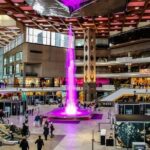
Getting started at Complexe Desjardins (the fountain landmark)
The tour begins at Complexe Desjardins, at 175 René-Lévesque Boulevard West. Once you’re inside, you head downstairs to the main atrium near the large water fountain. That fountain is your beacon: a wide circular basin with water jets that often light up in colorful displays (bring your camera).
This matters more than it sounds. Underground cities can be confusing, and finding your group is half the battle. Starting at a central, easy-to-spot landmark means you’re less likely to waste your first 15 minutes power-walking around the mall-level world.
From there, the route is designed to mix big-name sites with places that feel local. You’re guided toward things you’d likely miss if you only followed obvious signage.
World Trade Centre of Montreal: Berlin Wall piece and God of the Sea
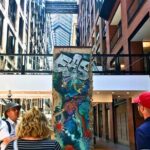
One of the strongest stops is the World Trade Centre of Montreal. Here you get two very “only-in-this-city” photo opportunities: a piece of the Berlin Wall and the God of the Sea statue.
Why it’s worth your time: it gives the underground a bigger story than just shopping. You’re seeing how public spaces get used to communicate culture and memory, even when you’re underground and just trying to get to the next station.
Also, this is a good moment to slow down and look around. The area isn’t only about the objects themselves. The setting helps you understand how Montreal’s indoor spaces create room for art and symbolism, not just foot traffic.
Metro 101 and a short ride: the fastest way to stop feeling lost
Even if you plan to use the Metro later, most first-timers underestimate how quickly it can become confusing—platforms, stations, exits, timing. This tour gives you a Metro 101 crash course and includes a quick Metro ride.
That combination is the key. You’re not just handed directions. You learn by doing, even if it’s short. And since the guide is local, you get the kind of practical guidance that makes the system feel normal after you’ve been shown how it works.
If you want to keep exploring after the tour, this stop pays off. People often leave impressed by what they saw underground. The real long-term benefit is that you’ll have an easier time finding your way on your own afterward.
Central Station and Place Montreal Trust: where transport feels designed
As you move deeper into RESO, you pass through key transit and public areas, including Central Station, the city’s transit hub, and Place Montreal Trust.
These stops are a reminder that the underground is more than passages. It’s built as a network of connected destinations. When you understand how the transit hub fits into the underground flow, you stop thinking of RESO as a single route and start seeing it as a set of linked choices.
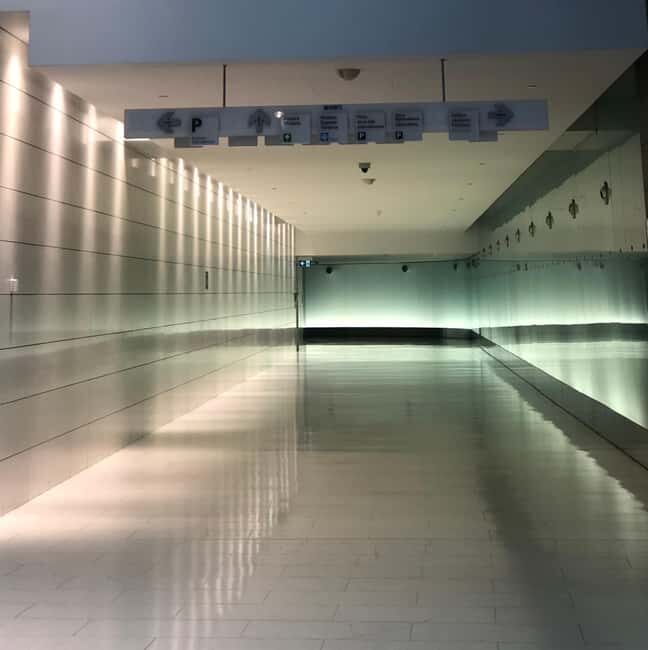
This is also where your camera helps, not just for big moments. The architecture, signage, and open spaces give you clues for navigation. When you see how the flow works once with a guide, it’s easier to recognize patterns later.
Other city tours we've reviewed in Montreal





1000 de la Gauchetière: skating at an indoor rink (year-round)
One of the fun “wait, that’s here?” experiences is the 1000 de la Gauchetière Ice Rink. It’s open year-round, and the tour includes ice skating time.
A quick heads-up: if ice skating is a priority for you, it’s smart to check the rink’s schedule in advance. The tour includes access, but your actual skating window depends on how the rink runs day-to-day.
Why I think this stop works: it breaks up the typical sightseeing rhythm. Even if you’re not a big skater, standing in an indoor rink in the middle of downtown feels weird in the best way. It’s also an easy photo moment—motion + bright winter energy even when it’s not winter outside.
Cathcart Terrace and Biergarten: a real pause, not just walking
You’ll spend time at Cathcart Terrace restaurant and Biergarten. This is one of those stops that turns the tour from pure “look mode” into a more comfortable experience. You get a natural break while still staying within the underground flow.
And when you need to recharge between corridors, there’s an espresso or juice stop in the tunnels. That kind of pause matters on a walking-heavy route. Two hours sounds short until you’re moving through long indoor distances and changing levels.
If you tend to get cold easily, a hot drink is a simple win. If you get sluggish on caffeine, juice is your gentle reset.
Stepping outside: The Ring and downtown history framed
Not everything stays underground. You step outside to see The Ring, a historical window that frames 200+ years of downtown history.
This is a smart contrast point. After lots of interior architecture and tunnel visuals, an outdoor “frame” gives your eyes a new reference. It also helps you connect RESO to the real downtown above—how the underground network relates to street-level history and landmarks.
Bring your camera again. Framed views like this are made for photos, and they help you remember that the underground is part of a living city, not a separate world.
Les Cours Mont-Royal: elegant architecture you’ll want to slow down for
Next up is Les Cours Mont-Royal, known for its elegant architecture. This is the kind of stop where you’ll appreciate the tour even if you’re not obsessed with interiors, because the spaces are photogenic and designed for people to linger.
I like using this kind of stop to catch your breath. It’s also a good chance to look back at how the route has evolved: you start in a landmark atrium, pass major art and transit sites, then reach the “pretty spaces” that make RESO feel less like a transit tunnel and more like downtown living.
Eaton Centre (Time Out Market), plus Barbie Expo: fun you won’t regret
Two of the most playful stops come later: Eaton Centre (Time Out Market) and the Barbie Expo.
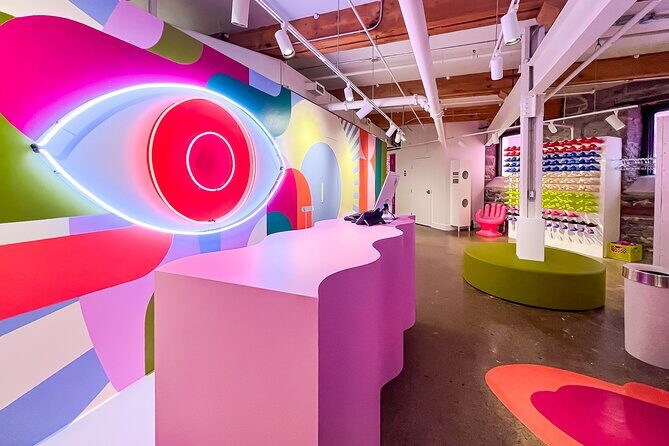
The Barbie Expo is a photo-lover’s paradise with a selfie zone built for snapshots. It’s not the kind of cultural stop you’d pick at random, and that’s exactly why it works. It keeps the tour from turning into only architecture and transit.
Time Out Market at Eaton Centre adds variety too. You get a sense of how RESO supports food and casual hangouts. It’s a good place to connect the underground sightseeing to a practical next step: where you might eat later.
If you’re bringing kids or teens over five, this kind of pop-culture stop can make the underground adventure feel less like an adult-only “we have to do this.”
Who this tour fits best (and who should skip it)
This is a small-group walking tour, and it’s not for everyone.
It’s not suitable for:
- Wheelchair users
- People with low level of fitness
- Children under 5
- Anyone traveling with baby strollers or large luggage
Even with the guide managing the route, there are stairs and level changes. Some parts of RESO feel flat and easy; other sections ask you to climb. If you’re the type who gets winded easily, you’ll enjoy the tour less.
On the flip side, if you’re mobile, comfortable with a lot of indoor walking, and you want to understand Montreal fast, this is a great fit. The small group size also helps you stay engaged instead of trailing behind.
Price and what $29 actually buys you
At $29 per person, this tour is priced like a budget-friendly “orientation + highlights” activity. You’re paying for more than access to a few sites.
What you get for the money:
- A guided route through major RESO landmarks (not just one area)
- A Metro 101 crash course plus a short ride
- Multiple photo-ready stops, including Berlin Wall and the Barbie Expo
- Stops that cover transit hubs, indoor architecture, and a historical window (The Ring)
- Time for an espresso or juice recharge, plus ice rink skating
If you were to do this alone, you’d likely spend extra time figuring out how everything connects. Time is money on vacation. For many people, paying for a guide is what turns RESO from confusing into satisfying.
The tour also runs in English and French, and it keeps groups to 10 people or fewer, which is a big deal in a network this big.
Best time to book: cold, rain, and heat waves
This tour is designed for tough weather. When it’s cold, you’re staying indoors while still moving through real Montreal neighborhoods and landmarks. When it rains, you keep your schedule intact. When it’s a heat wave, you avoid that “sweating through sightseeing” problem while enjoying air-conditioned walking.
It’s also a strong choice early in your trip. Once you understand how RESO connects key areas and stations, the next days of your itinerary feel less stressful.
Practical tips to make the 2 hours feel smooth
A few things will help you enjoy this tour more:
- Wear comfortable shoes. You’re walking and you may climb stairs.
- Bring a camera. The fountain, Berlin Wall piece, and Barbie Expo selfie zone are built for photos.
- Expect temperature changes underground. Layers help.
- If skating matters to you, check the ice rink schedule ahead of time.
- Don’t plan a super tight schedule right after. Even with a guided route, you’ll want a few minutes to breathe, grab water, or plan your next Metro connection.
Should you book Discover Reso – The Underground City?
Book it if you want an easy way to understand Montreal’s underground city in a short time. This is especially worth it when weather is rough, you’re only in town for a couple days, or you hate the thought of wandering a huge network without a plan.
Skip it if you have limited mobility, use a wheelchair, or aren’t up for a walking-and-stairs style tour. Also skip strollers and large luggage—those aren’t part of the allowed setup.
If you’re the kind of traveler who likes practical local guidance and photos you’ll actually look at later, Misha’s RESO route is a smart, fun way to see a side of Montreal most people never figure out on their own.
FAQ
How long is the Discover Reso underground city tour?
It lasts about 2 hours.
Where does the tour meet?
Meet at Complexe Desjardins, 175 René-Lévesque Boulevard West, Montréal, QC H2X 3Y2. Inside, go downstairs to the main atrium near the large water fountain.
What is the group size?
The group is small, limited to 10 participants.
What languages are offered?
The tour is offered in English and French.
Is ice skating included?
Yes. The tour includes ice skating at the 1000 la Gauchetière Ice Rink, which is open year-round, but you should check the rink schedule in advance if you want to skate.
Do we take the Metro during the tour?
Yes. You get a quick Metro 101 crash course followed by a ride.
What kind of food or drink is included?
An espresso or juice stop in the tunnels is included. Meals and drinks are not included unless specified otherwise.
Is the tour accessible for wheelchair users?
No. It is not suitable for wheelchair users.
Can I bring a stroller or large luggage?
No. Baby strollers and luggage or large bags are not allowed.
How much does the tour cost?
The price is $29 per person.