REVIEW · MONTREAL
Old Montreal: Self-Guided Tour from Place D‘Armes to Old Port
Book on Viator →Operated by VoiceMap Audio Tours · Bookable on Viator
Old Montreal is a story you can walk through. This self-guided GPS audio tour turns the streets between Place d’Armes and the Old Port into an easy one-hour-and-a-bit route, with clear stops for the biggest sights and the small details in between. I especially like the flexibility to pause, wander, and pop into a nearby café, and I also love how the narration connects the architecture to real moments in Montreal’s past. One catch: you’ll need your own smartphone and headphones, and you’ll want to keep your audio/app running the whole way.
What makes this work well is the rhythm: you start with a quick orientation square, then the walk escalates through landmark churches, civic buildings, and old harbor sites. I like that it ends at the Clock Tower, so the route has a satisfying finish with St. Lawrence River views. And because it’s offered in English with offline audio and maps, you can plan your day without worrying about constant data coverage.
Before you go, do yourself a favor: charge your phone, download for offline use if prompted, and test your headphones. You’re not “rushing with a group,” but you are managing your own timing—which is exactly why it’s great when you want control.
In This Review
- Key highlights at a glance
- The appeal of Old Montreal with zero scheduling stress
- Place d’Armes to Notre-Dame Basilica: start with the city’s landmarks
- Montreal City Hall and Château Ramezay: civic power with a time-machine feel
- Notre-Dame-de-Bon-Secours Chapel and Bonsecours Market: faith meets the workplace
- Place Jacques-Cartier to Pointe-à-Callière: your break in the middle of the story
- The first hospital site to the Montreal Science Centre: when the past turns practical
- End at the Clock Tower: a great finish with river views
- How long it takes (and why pacing matters)
- Phone, audio, and offline maps: the real logistics that affect your day
- Price and value: $11.99 that feels fair
- Who this is best for (and who should skip)
- Should you book this Old Montreal audio walk?
- FAQ
- How much does the Old Montreal self-guided audio tour cost?
- How long does the tour take?
- What language is the tour available in?
- Where does the tour start and end?
- Do I need to pay for museum entries during the walk?
- What do I need to bring?
- Can I use the tour without an internet connection?
- Is this a private tour?
- What’s included with the purchase?
- Is there a refund if plans change?
Key highlights at a glance
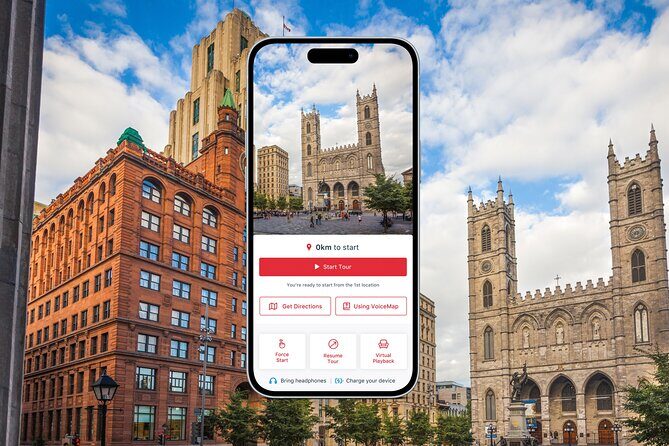
- Self-guided GPS route from Place d’Armes (start) to the Clock Tower (finish)
- Offline access to audio, maps, and geodata for smoother walking
- Unlimited lifetime use, plus virtual playback like an audiobook
- Architectural stops that mix churches, government buildings, and old-port sites
- Easy length of about 1 hour 15 minutes to 1 hour 30 minutes, depending on your pace
- One group only (private activity for your party), but you walk on your own schedule
The appeal of Old Montreal with zero scheduling stress
This is the kind of walk I like in a city like Montreal: compact enough to finish in a short session, but packed with different eras. Old Montreal changes every few blocks, so an audio guide helps you connect what you’re seeing—stone facades, church interiors, civic buildings, and the harbor edge—into one coherent story.
The big value for you is control. You can speed up when the streets are clear, slow down when you spot a photo angle, and stop when you want something to eat or drink near Place Jacques-Cartier. The tour isn’t trying to keep you on rails; it’s there to keep you informed while you roam.
Other Old Montreal tours we've reviewed in Montreal



Place d’Armes to Notre-Dame Basilica: start with the city’s landmarks
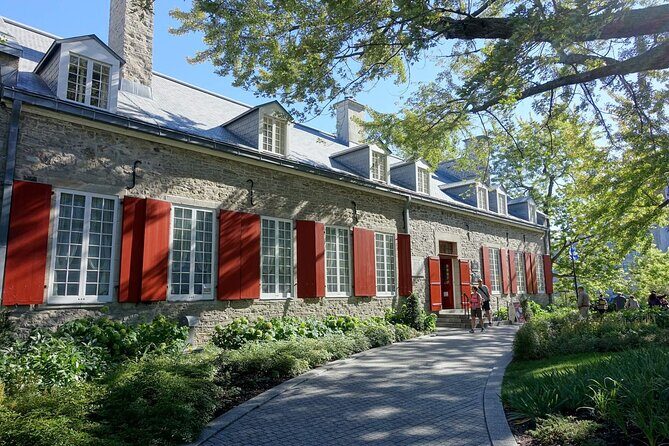
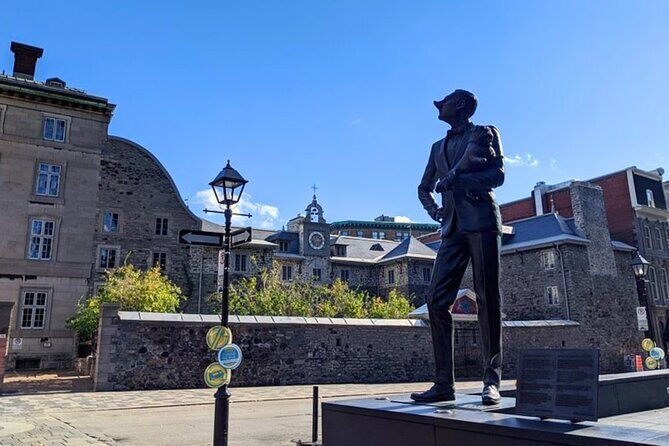
Your walk begins at Place d’Armes, a historic square that gives you a quick “big picture” view of Old Montreal. You’ll pass the statue of Paul de Chomedy, and you’ll also get sightlines toward the Bank of Montreal and the old Saint-Sulpice Seminary. Even if you don’t go inside anything here, this stop helps you orient fast.
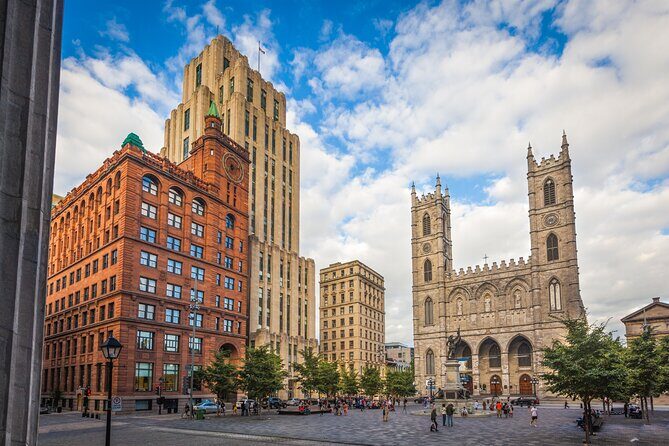
Then you hit Notre-Dame Basilica, which is Canada’s most famous church and one of the top visited monuments. If you’re into architecture, this is where you’ll feel the drama. The tour spotlights the Gothic Revival design and prepares you to notice the interior details once you’re there. If you’re short on time, you can still get a lot from standing back, looking up, and letting the audio frame what you’re seeing.
Practical tip: plan your pace at the Basilica. It’s a magnet for visitors, so if you want photos without as much jostling, give yourself a few minutes to choose your angle and timing.
Montreal City Hall and Château Ramezay: civic power with a time-machine feel
Next up is Montreal City Hall, described as an impressive example of Second Empire architecture. This is one of those spots where the building itself teaches you something: it signals ambition, government presence, and the way the city tried to project authority through grand design. The narration helps you read that in the stonework, not just admire it.
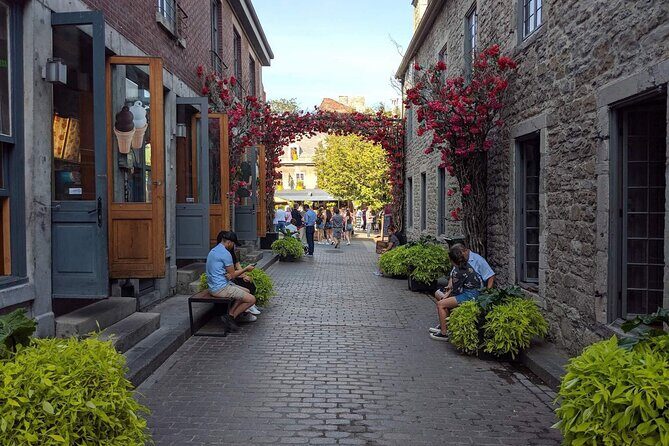
Right after, you’ll encounter Château Ramezay, a historic building with layered ownership. It has been occupied by the French, the British, and briefly by the Americans, and today it operates as a museum showing Montreal’s history. Even if you don’t buy museum tickets during your walk, it’s still useful as a context stop. It reminds you that the city’s identity didn’t snap into place once; it shifted across empires and eras.
One good way to use this part of the route: treat it like a “pattern check.” After a church and then a civic building, your brain starts noticing how architecture changes its job—spiritual awe versus public messaging.
Notre-Dame-de-Bon-Secours Chapel and Bonsecours Market: faith meets the workplace

A short walk brings you to Notre-Dame-de-Bon-Secours Chapel, often called the Sailors’ Church. The key payoff here is how connected it is to maritime life. You’ll see beautiful interior elements and maritime artifacts in the setting the name implies—this isn’t a church that feels separated from daily work. It’s the kind of site where the narration can help you understand why sailors and coastal communities would care about a place of worship.
From there, you’ll pass Bonsecours Market, an especially interesting civic structure with multiple roles over time. The tour notes that it has housed Parliament of the United Province of Canada, City Hall, and later the headquarters of Montreal’s Housing and Planning Department. Today, it functions as a retail space.
This stop is a great example of why self-guided audio works: you can keep walking and still understand that the same walls have served different needs. If you like places that evolve with the city, you’ll probably linger here.
Place Jacques-Cartier to Pointe-à-Callière: your break in the middle of the story
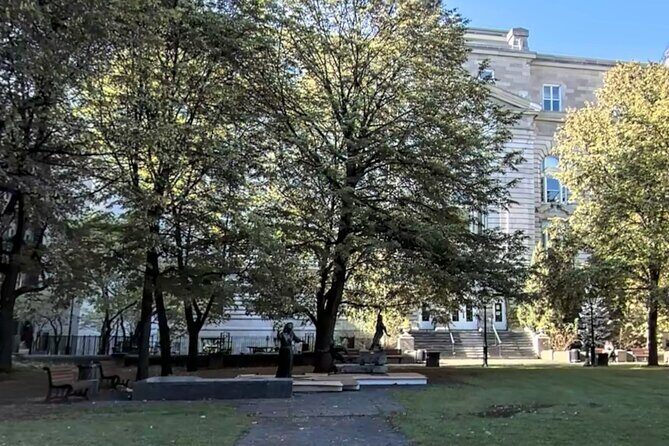
Once you reach Place Jacques-Cartier, the atmosphere changes from “landmark viewing” to “human-scale Montreal.” It’s a lively square lined with restaurants and shops, and it’s a natural spot to reset. This is also where you can take advantage of the self-guided format: pause the audio, grab a snack, and come back when you’re ready.
Then the route shifts back into deeper time with Pointe-à-Callière, the Montreal Museum of Archaeology and History. The tour points out that it’s at Montreal’s birthplace, using archaeology to explain how the city began beneath the surface. You might find that this stop works best if you’re the type of traveler who likes origins—layers of settlement, not just modern street life.
Important note: museum tickets or entrances aren’t included. So think of this as a “see and learn the context” stop unless you decide to pay separately.
Other guided tours in Montreal






The first hospital site to the Montreal Science Centre: when the past turns practical

As you keep walking along the Old Port promenade area, you’ll pass the site of Montreal’s first hospital, opened by the Grey Nuns of Montreal. This adds a different angle than the usual church-and-government route. The narration spotlights early medical history and the role Catholic missionaries played in delivering care. It’s a reminder that city stories aren’t only about buildings; they’re also about services and people.
After that, you’ll pass the Montreal Science Centre. This is a good contrast point near the harbor: modern learning alongside maritime heritage. The tour keeps it simple—interactive exhibits and technology-focused ideas—so you can decide on the spot whether you’re in the mood for a deeper stop or prefer to keep walking.
End at the Clock Tower: a great finish with river views

Your self-guided walk ends at the iconic Clock Tower at the Old Port. The narration frames it as a prominent reminder of Montreal’s maritime heritage, and the location naturally rewards you for finishing here—because St. Lawrence River views help the route feel complete.
If you’re the type who likes “last photo first,” save a little energy for the end. The finish area is also where you can decide what comes next: another walk along the water, a longer meal, or just sitting for a while while Montreal does its thing.
How long it takes (and why pacing matters)
This tour is roughly 1 hour 15 minutes to 1 hour 30 minutes. That time range makes sense because the route is designed as a steady walk between major points, but you can stretch it when you pause for photos or read a church interior slowly.
If you want the full experience without feeling rushed, I’d plan for about 90 minutes and treat it like a first pass through Old Montreal. Then, if you fall in love with a spot—like a chapel interior or a market facade—you can return later on your own time.
A small but important pacing strategy: don’t try to “do everything inside” at each stop unless you already know you want that. The audio tour is built to keep you moving through context, not to force a museum marathon.
Phone, audio, and offline maps: the real logistics that affect your day
This experience is designed for your phone. You’ll bring your own smartphone and headphones, and the tour gives you directions to the start so you can begin once you’re in the right place.
You also get offline access to audio, maps, and geodata. That matters because Old Montreal streets can be busy, and you don’t want your screen constantly searching for signal. Once you’ve got the audio loaded, you can focus on walking and looking.
Another plus: you get unlimited lifetime use of the tour before and after your booking date. That means if you walk it once and want to revisit later—maybe in different light—you can. There’s also a virtual playback option, so you can listen like an audiobook from anywhere, which is great if you want to refresh what you learned on a later day.
One practical note from what I’d watch out for: if you’re sharing the same phone between two people, you’ll both want the audio and the map view at the same time. It’s smoother if each person has their own device so no one has to hand off the phone mid-walk.
Price and value: $11.99 that feels fair
At $11.99 per person, this is priced like an easy add-on rather than a heavy guided tour. The value isn’t just the low cost—it’s what you’re getting for it: offline maps, a structured route, directions to start, and a narrated walk that helps you understand what you’re seeing without paying for multiple separate guides.
You’re also getting a format that scales with your style. If you love architecture and want to learn while you wander, this is a great match. If you prefer full control and hate waiting around for a group, the self-guided setup is the point.
Where you might question the value: if you’re the kind of traveler who only wants a quick stroll and doesn’t care about context. In that case, you’d get less out of the audio. But if you like knowing why a building matters, the price makes a lot of sense.
Who this is best for (and who should skip)
I’d steer you toward this tour if you:
- Want an easy Old Montreal walk without committing to a fixed group schedule
- Enjoy historic architecture and want the story connected to what you’re seeing
- Like short routes you can finish and then keep exploring on your own
- Travel in English and want the narration in that language
I’d skip it if you want a live guide answering questions in real time, because this is self-guided. Also, if you’re expecting museum entry included at stops along the way, you’ll be disappointed since tickets aren’t part of the package.
Should you book this Old Montreal audio walk?
If you’re trying to make the most of limited time in Montreal, I think this is a smart buy. It gives you a clear route between major sights, keeps your learning moving at walking speed, and ends with a satisfying landmark view at the Clock Tower.
Book it if your travel style matches self-guided walking: you like wandering, you’re comfortable using your phone with headphones, and you enjoy reading the city as you go. Just budget a little attention to logistics—download for offline use when needed, and make sure you start and end where the app expects—so the audio sync feels right.
If you want Old Montreal with structure but without a rigid schedule, this is an excellent fit.
FAQ
How much does the Old Montreal self-guided audio tour cost?
It costs $11.99 per person.
How long does the tour take?
Plan for about 1 hour 15 minutes to 1 hour 30 minutes.
What language is the tour available in?
The tour is offered in English.
Where does the tour start and end?
It starts at Côte de la Place d’Armes and Rue Saint-Jacques in Montreal, QC, and ends at the Clock Tower at 1 Rue Quai de l’Horloge, Montréal, QC.
Do I need to pay for museum entries during the walk?
No. Tickets or entrance fees to museums or attractions en route are not included.
What do I need to bring?
You need your own smartphone and headphones.
Can I use the tour without an internet connection?
Yes. The tour includes offline access to audio, maps, and geodata.
Is this a private tour?
Yes. Only your group participates.
What’s included with the purchase?
You get directions to the starting point, unlimited lifetime use before and after your booking date, virtual playback like an audiobook, GPS self-guided flexibility, and offline access to audio and maps.
Is there a refund if plans change?
You can cancel for free, with a full refund if you cancel at least 24 hours in advance. If you cancel less than 24 hours before the start time, the amount paid is not refunded.